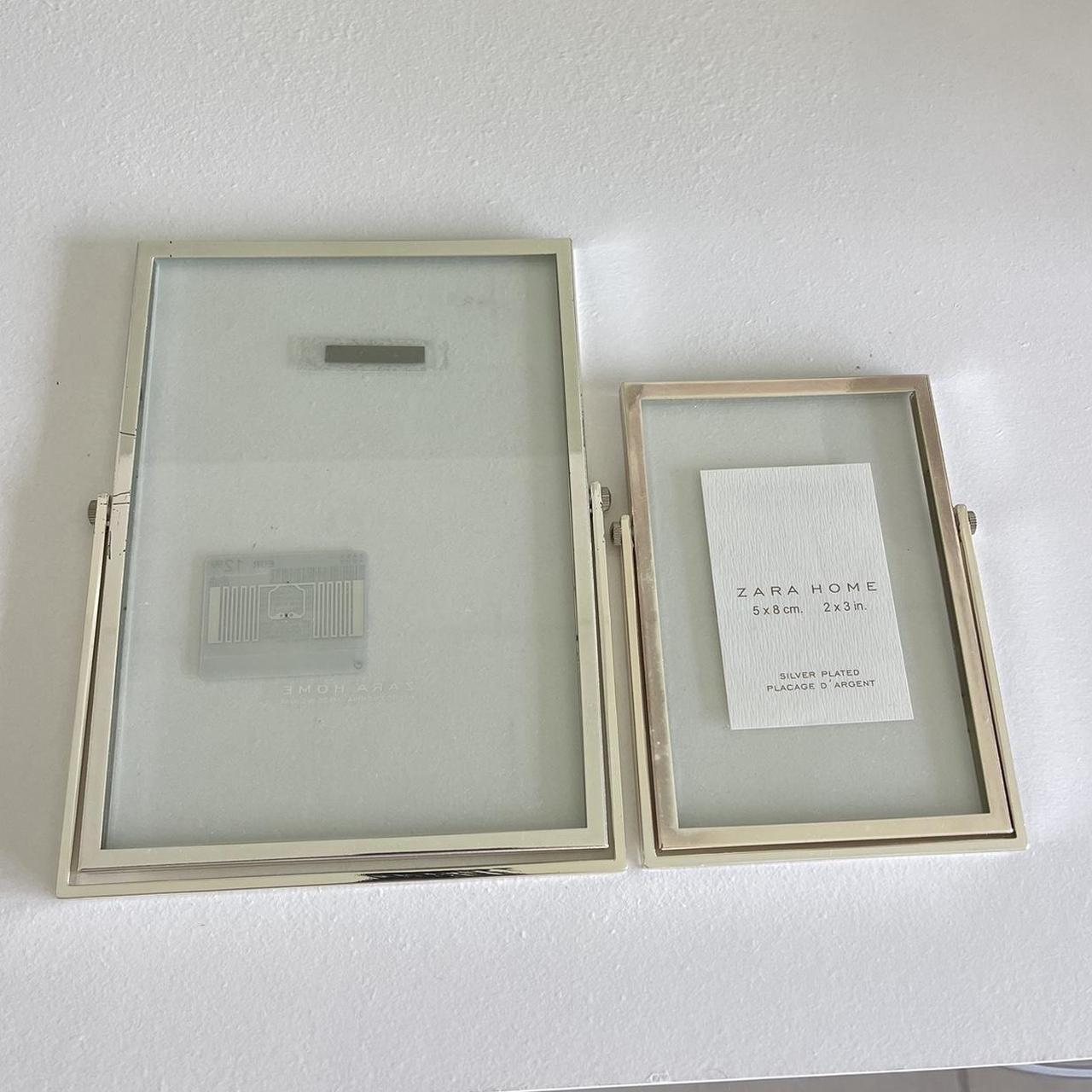
Let's be honest. Most of us treat picture frames as an afterthought. You buy a nice print, or maybe you finally get around to printing that photo from your trip to the Amalfi Coast, and then you panic-buy a cheap, flimsy frame from a big-box store. It’s thin. It’s plastic. It feels like it might snap if you breathe on it too hard. Then you wonder why your living room looks a bit... unfinished. This is exactly where Zara Home picture frames come into play, and they’ve quietly become the go-to for people who want their homes to look like a Nancy Meyers movie set without actually spending three months' rent on a single piece of decor.
The thing about Zara Home is that they don't really do "basic."
If you walk into their store—or, more likely, scroll their app at 11 PM—you aren't going to find those generic, black composite wood frames that everyone had in their college dorm. Instead, you're looking at heavy brass, textured linen, silver-plated metal, and actual marble. It's about weight. It's about the fact that when you pick up one of their bone-inlay frames, it actually feels like something.
The Quality Gap: What You're Actually Paying For
People often ask if Zara Home is just "fast fashion for the house."
In some categories, maybe. But with their framing, they tend to lean into traditional materials that age better than the stuff you'd find at their sister brand, Zara. While a polyester shirt might fall apart after three washes, a Zara Home picture frame made of solid wood or metal is going to sit on your shelf for a decade. They use real glass, not that reflective acrylic that scratches the moment you wipe it with a paper towel.
Take their silver-plated collections. These aren't just "silver-colored." They are often made with a thin layer of actual silver over metal, which gives them that specific, cool-toned luster that fake finishes just can't replicate. Does it tarnish? Yes, eventually. But that's the point. It develops a patina. It looks real because it is real. If you want it shiny again, you polish it. That’s a level of "old money" aesthetic that most high-street brands skip over because it's easier to sell spray-painted plastic.
Wood, Bone, and Resin: A Texture Game
Texture is really where these frames win.
Most people stick to smooth surfaces, which is a mistake. Your eyes get bored. When you look at the Zara Home bone inlay frames, there’s a slight irregularity to the pattern. One piece might be a fraction of a millimeter off from the next. That’s good. It suggests craftsmanship, even if it’s produced at scale. They also do these incredible linen-wrapped frames. Honestly, if you have a black-and-white family photo, putting it in a cream linen frame completely changes the vibe. It makes the photo feel like an artifact rather than a digital print.
Common Mistakes When Buying Zara Home Picture Frames
Don't just buy the one that looks "cool" in the studio lighting of the website.
Scale is the biggest trap. Zara Home loves a "mini" frame. They are adorable. They are also about the size of a credit card. If you buy a 2x3 inch frame and try to put it on a massive mahogany sideboard, it’s going to look like a toy. You have to group those tiny ones. They belong in clusters. If you’re looking for a statement, you need to go for their A3 or A4 sizes, but even then, pay attention to the border width. A thin frame is modern; a wide, chunky wooden frame is traditional. Mixing them is fine, but you have to be intentional.
Another thing? The backing.
Cheap frames have those annoying metal tabs that ruin your fingernails. Most Zara Home frames use a sliding mechanism or high-quality swivel tabs. It sounds like a small detail until you’re trying to change photos and you don't end up bleeding on your artwork.
How to Style Them Like a Professional
Stop centering everything.
Seriously. If you have a mantelpiece, don't just put one frame dead center. It looks stiff. Instead, grab a large Zara Home wooden frame and lean it against the wall. Then, take a smaller, silver-plated frame and overlap it slightly in front of the larger one. This creates depth. Professional interior designers call this "layering," but basically, it just makes your house look like someone actually lives there and has good taste.
- The Kitchen Lean: Put a small, glass-and-brass frame on your kitchen counter next to your cookbooks. Put a recipe in it, or a photo of your grandmother. It adds soul to a functional space.
- The Gallery Grid: If you're doing a gallery wall, Zara Home is great because they keep certain styles in stock for years. You can start with four and add more later without worrying that the "gold" finish won't match.
- The Minimalist Float: Their glass-on-glass frames (the ones where the photo looks like it's hovering) are perfect for pressed flowers or ticket stubs.
Sustainability and Materials
Let's talk about the elephant in the room: mass production. Zara Home is part of the Inditex group. They’ve made big claims about their "Join Life" initiative, aiming for better water management and more sustainable raw materials. For frames, this often translates to the use of recycled wood or responsibly sourced timber. While they aren't a small-batch artisan workshop, the durability of their metal and stone frames means you aren't throwing them in a landfill in two years. They are built to last, which is the most basic form of sustainability.
Why Some People Get Frustrated
It's not all perfect. The sizing can be... weird.
Since Zara is a European company, they often use metric standards. If you’re in the US or UK and you buy a standard 4x6 or 5x7 print, it might not always fit perfectly in a frame designed for European dimensions. Sometimes there’s a slight gap, or you have to trim your photo by a few millimeters. It’s annoying. You might need to buy a custom mat or just be comfortable with a bit of "white space" around the edges.
Also, the glass is fragile. Ordering online is usually fine, but their packaging can be bulky. If you’re buying in-store, check the corners. Sometimes the floor models get bumped by shoppers, and the wood can chip.
Comparison: Zara Home vs. H&M Home vs. High-End Brands
If you go to H&M Home, you'll save ten bucks. But you'll notice the frames are lighter. They use more MDF (medium-density fiberboard) and less solid wood. If you go to a place like Williams Sonoma or a boutique framer, you’ll spend $150 for a single frame. Zara Home sits in that "sweet spot." You get the weight and the material quality of a luxury brand, but you’re usually paying between $20 and $60.
The Practical "Do This Now" List
If you’re ready to upgrade your space, don't go out and buy twenty frames at once. That's how you end up with a house that looks like a catalog page.
- Audit your photos. Find the three most meaningful photos you have. Not the "coolest" ones, but the ones that actually make you feel something.
- Pick a "material theme." If your room has a lot of warm wood, go for Zara Home brass or gold-toned frames. If you have a very modern, cool-toned space, look at their black marble or silver-plated options.
- Measure twice. Don't guess. Take a tape measure to the spot where you want the frame to go. Remember that the "frame size" listed on the website is the size of the photo it holds, not the total exterior dimensions.
- Buy one "Statement Frame." Look for their larger, textured options—like the carved wood or the mother-of-pearl styles. Let that be the anchor for your bedside table or your desk.
- Mix the old with the new. Put a Zara Home frame next to a vintage find from a thrift store. The contrast makes the Zara frame look more expensive and the vintage frame look more intentional.
Looking Forward
The trend right now is moving away from the "perfect" gallery wall. People are tired of everything looking like a grid. We're seeing a shift toward "collected" looks. This means mismatched frames, different materials, and varied heights. Zara Home is leaning into this with more irregular shapes—think circular frames or oval designs that feel a bit more Victorian or Art Deco.
In the end, a frame is just a border. But the right border tells everyone that what’s inside is worth looking at. Whether it's a high-end art print or a drawing your kid did at school, putting it in a heavy, well-made frame from Zara Home changes the narrative from "clutter" to "collection."
Go check your current frames. If they're peeling, plastic, or lopsided, it's time to swap them out. Start with one heavy metal or solid wood piece and see how much more "adult" your room feels. You'll probably be surprised.
To get started, head to the Zara Home website and filter by "Materials." Look specifically for "100% Wood" or "Silver Plated" to ensure you're getting the best bang for your buck. Skip the resin if you can afford the extra five dollars for the real stuff. Your walls will thank you.