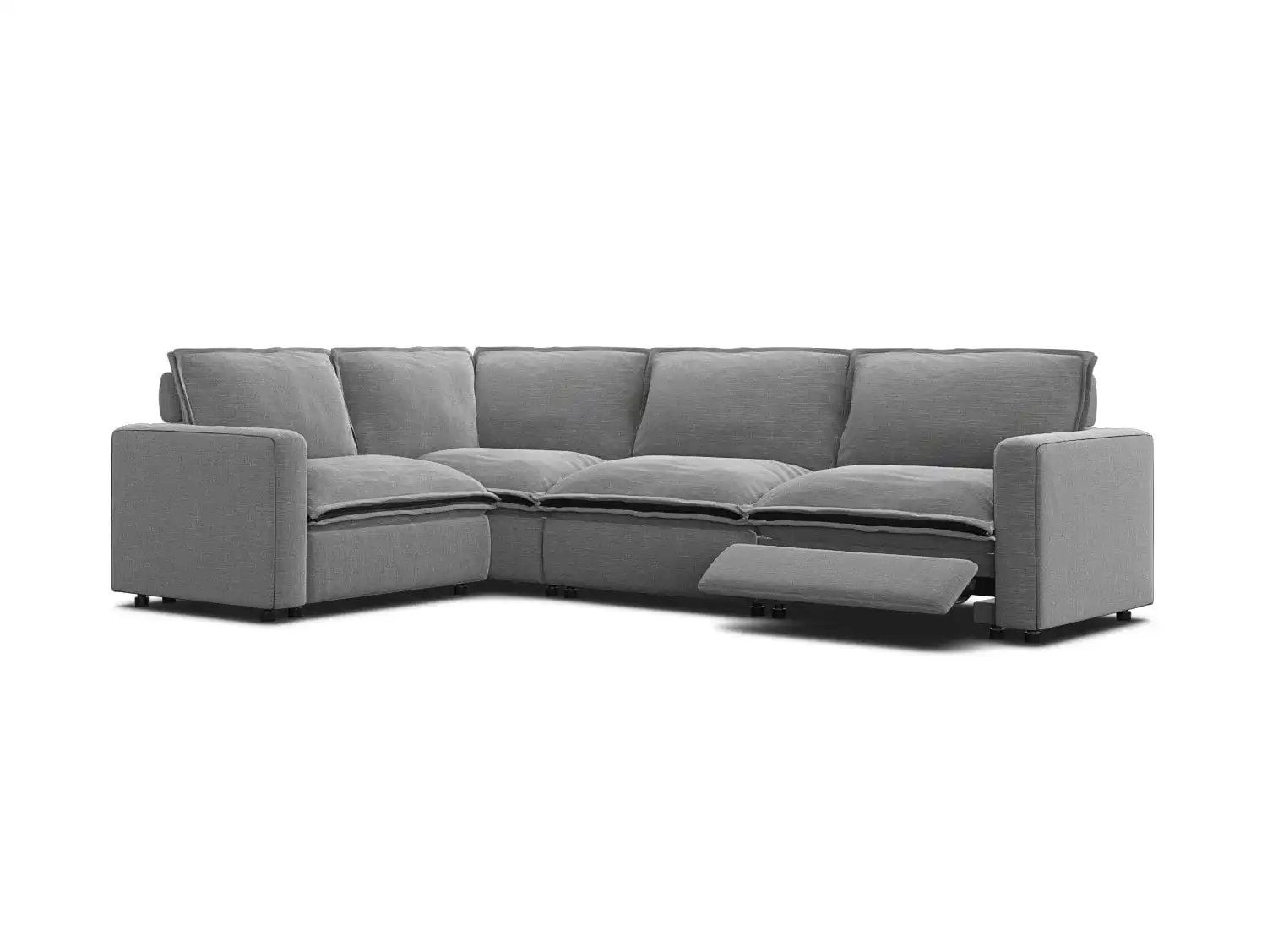
You’ve seen it. Even if you didn't know the name, you’ve definitely scrolled past it on a high-end real estate listing or spotted it in a minimalist loft on Instagram. The Room and Board Metro sofa is one of those rare pieces of furniture that manages to be everywhere without feeling "basic." It’s the white t-shirt of the interior design world. It just works.
But why?
Furniture trends move fast. We went through the mid-century modern obsession, the velvet-everything phase, and now we’re deep into "organic modernism" with its curved edges and bouclé fabrics. Yet, the Metro stays. It’s been a bestseller for Room and Board for decades, manufactured with a level of consistency that’s actually becoming harder to find in an era of fast-furniture shipping delays and plummeting quality control.
Honestly, buying a sofa is a nightmare. You're stuck between $800 "flat-pack" couches that feel like sitting on a wooden pallet and $7,000 Italian designer pieces that you're too scared to eat popcorn on. The Metro sits right in that sweet spot. It's an investment, sure, but it's one that doesn't feel like a pretension.
What Makes the Metro Different From the Sea of Gray Sections?
If you look at a photo of a Metro, it looks simple. Maybe even a little plain. But the "magic" is in the proportions.
Most sofas are either too deep—where your knees are hitting the edge and you’re forced to lounge—or too shallow, making you feel like you’re in a waiting room. The Metro comes in two distinct depths: 35 inches and 43 inches. That might not sound like a huge difference, but in the world of ergonomics, it’s a chasm. The 35-inch depth is the "conversation" depth. It’s for people who want to sit upright, drink coffee, and actually be able to stand up without a core workout. The 43-inch depth? That’s for the binge-watchers. It’s deep enough to lose a remote in, and frankly, it’s deep enough to sleep on comfortably without even removing the back cushions.
The construction is where Room and Board separates itself from the Wayfairs of the world. The Metro is made in the USA—specifically in North Carolina, which is basically the holy land of American upholstery. They use kiln-dried hardwood frames.
Why does kiln-dried matter? Because wood has moisture. If you don't bake that moisture out in a kiln before building the frame, the wood will warp over time as your home's humidity changes. That’s how you get those annoying squeaks every time you sit down. A Metro doesn't squeak. It’s solid. It feels like a piece of architecture rather than a piece of furniture.
The Cushion Conundrum: Foam vs. Down
The most common complaint people have with modern sofas is the "butt print." You sit in it for six months, and suddenly there’s a permanent indentation where you watch Netflix.
Room and Board handles this with high-resiliency foam cores wrapped in fiber or a feather-and-down blend. If you go with the standard cushion, it’s surprisingly firm at first. Don't panic. It’s designed to "break in" over the first few months, much like a good pair of leather boots. If you want that cloud-like feeling, you opt for the down-blend, but be warned: you will have to fluff those cushions. Regularly. If you’re the type of person who leaves the house without making the bed, don't get the down cushions. Stick to the high-density foam. It looks cleaner and requires zero maintenance.
The Versatility of the Metro Sectional
One of the biggest reasons designers keep coming back to the Room and Board Metro sofa is the sheer number of configurations. This isn't just a three-seater. It’s a literal Lego set for adults.
You can get it as a:
- Classic love seat or apartment-sized sofa (perfect for those 600-square-foot city dwellings).
- Massive L-shaped sectional with a chaise.
- U-shaped "conversation pit" for larger families.
- Armless chair components to extend an existing setup.
The "wedge" corner is a particularly smart piece of engineering. Most corner units in sectionals are "dead space"—nobody wants to sit there because there’s no legroom. The Metro’s wedge design actually allows for a comfortable corner seat, making the sofa feel more social.
Then there’s the fabric. Room and Board offers over 200 options. If you have kids or a dog that thinks he’s a human, you look at the "Performance" fabrics. Their "Sunbrella" and "repreve" options are basically bulletproof. We’re talking about fabrics that can handle spilled red wine or a muddy paw print with nothing more than a damp cloth and some mild soap.
Why the Price Tag Actually Makes Sense
Let’s be real: a Metro isn't cheap. Depending on the size and fabric, you’re looking at anywhere from $2,200 to $6,000+.
In a world of $900 sofas from big-box retailers, that’s a tough pill to swallow. But here is the reality of the furniture industry: the "cheap" sofa lasts three years. The springs sag, the fabric pilling makes it look 20 years old, and eventually, it ends up in a landfill.
If you keep a Metro for 15 years—which is the average lifespan owners report—the "cost per year" is significantly lower than buying three cheap sofas over the same period. Plus, Room and Board’s delivery service is legendary. They don't just drop a box at your door. They bring it in, set it up, level it, and take the packaging with them. In 2026, when "white glove" service usually means "we didn't break it on the driveway," that actually matters.
Common Misconceptions About the Metro
A lot of people think the Metro is "too modern" for a traditional home. That’s a mistake. Because the lines are so clean and the legs are so discreet (you can choose between wood and metal finishes), the sofa acts like a chameleon.
If you put it in a room with an Oriental rug and oil paintings, it looks classic. If you put it against a concrete wall with a neon sign, it looks industrial. It’s the ultimate "safe" bet that doesn’t feel like a compromise.
Another misconception? That the low profile makes it hard for older people to get out of. While it does have a contemporary silhouette, the seat height is actually quite standard. Unlike those ultra-low "marshmallow" sofas that are popular right now, the Metro keeps your hips at a reasonable angle.
How to Style the Room and Board Metro Sofa
Since the Metro is essentially a big, comfortable rectangle, you need to add some texture to keep the room from looking too "blocky."
- Vary your pillow shapes. Don't just throw four square pillows on it. Mix in a lumbar pillow or something round to break up the straight lines of the Metro’s arms.
- Watch the scale of your coffee table. Because the Metro is a substantial piece of furniture, a tiny, spindly coffee table will look ridiculous next to it. You need something with a bit of "weight"—think a thick wood slab or a heavy marble top.
- Rug placement. If you have a Metro sectional, make sure the rug is large enough that all the front feet of the sofa sit on it. This "anchors" the sofa and prevents it from looking like it’s floating in the middle of the room.
The Resale Value: A Surprising Bonus
Check Facebook Marketplace or Craigslist in any major city. Look for "Room and Board Metro." You’ll notice two things. First, there aren’t many of them available. People tend to keep them until they move. Second, when they do pop up, they hold their value.
A used Metro in good condition often sells for 50-60% of its original retail price. Try doing that with a sofa from a generic online-only brand. You’d be lucky to get $100 for it. Buying a Metro is one of the few furniture purchases that feels like an asset rather than an immediate expense.
Is It Right For You?
If you want a sofa that makes a "loud" fashion statement—something with tufted velvet, gold legs, or an avant-garde shape—the Metro will bore you. It isn't a "look at me" piece.
But if you want the sofa that you don't have to think about for the next decade? If you want the sofa that survived your toddler’s juice box explosion and your golden retriever’s shedding season? Then the Metro is probably the one.
It’s built for real life. It’s built for Sunday afternoon naps where you wake up three hours later feeling actually refreshed because you weren't cramped. It's built for the house where people actually live, not just the house that exists for photos.
Practical Steps for Buyers
- Measure your doorways. This is the number one mistake. The Metro is a sturdy piece and it doesn't "bend" around tight corners. Check the "Fit Guide" on the Room and Board website before you hit order.
- Order the free swatches. Screen colors are liars. The "Tivoli Grey" you see on your MacBook might look like "Muddy Blue" in your living room's natural light. Get the physical swatches and look at them at 10:00 AM and 8:00 PM.
- Consider the "Micro-Suede" for pets. If you have cats, stay away from loose weaves. The Metro in a tight-knit performance basketweave or micro-suede is much harder for cats to get their claws into.
- Check the "Outlet" locations. If you live near a Room and Board outlet (like the ones in Chicago or Golden Valley), you can sometimes find Metro floor models for 30-50% off. You have to be fast, though; they usually disappear within hours of hitting the floor.
At the end of the day, a sofa is just a place to sit. But the Room and Board Metro sofa reminds us that there's a huge difference between "sitting" and "being supported." It’s a quiet, well-made constant in an increasingly loud and disposable world. Whether you go with a simple two-seater or a massive corner sectional, you're buying a piece of American manufacturing history that actually lives up to the hype.