You know the song. You’ve probably hummed it in a grocery store aisle or belted it out at a wedding after two drinks. "Hey There Delilah" is one of those rare cultural artifacts that feels like it’s always existed, a piece of acoustic folk-pop DNA that defined the mid-2000s. But honestly, if you think the Plain White T’s are just the "Delilah" guys, you’re missing out on a much weirder, more interesting career that spans over two decades of pop-punk evolution.
They didn't just fall out of the sky in 2006.
The band actually formed in 1997 in Lombard, Illinois. That’s nearly thirty years ago. Tom Higgenson, the frontman and creative engine, started this thing when the world was still obsessed with Third Eye Blind and The Wallflowers. They were kids playing in garages, trying to figure out how to bridge the gap between the raw energy of the Chicago punk scene and the melodic hooks that make a song stick in your brain like gum on a shoe.
The Acoustic Accident That Changed Everything
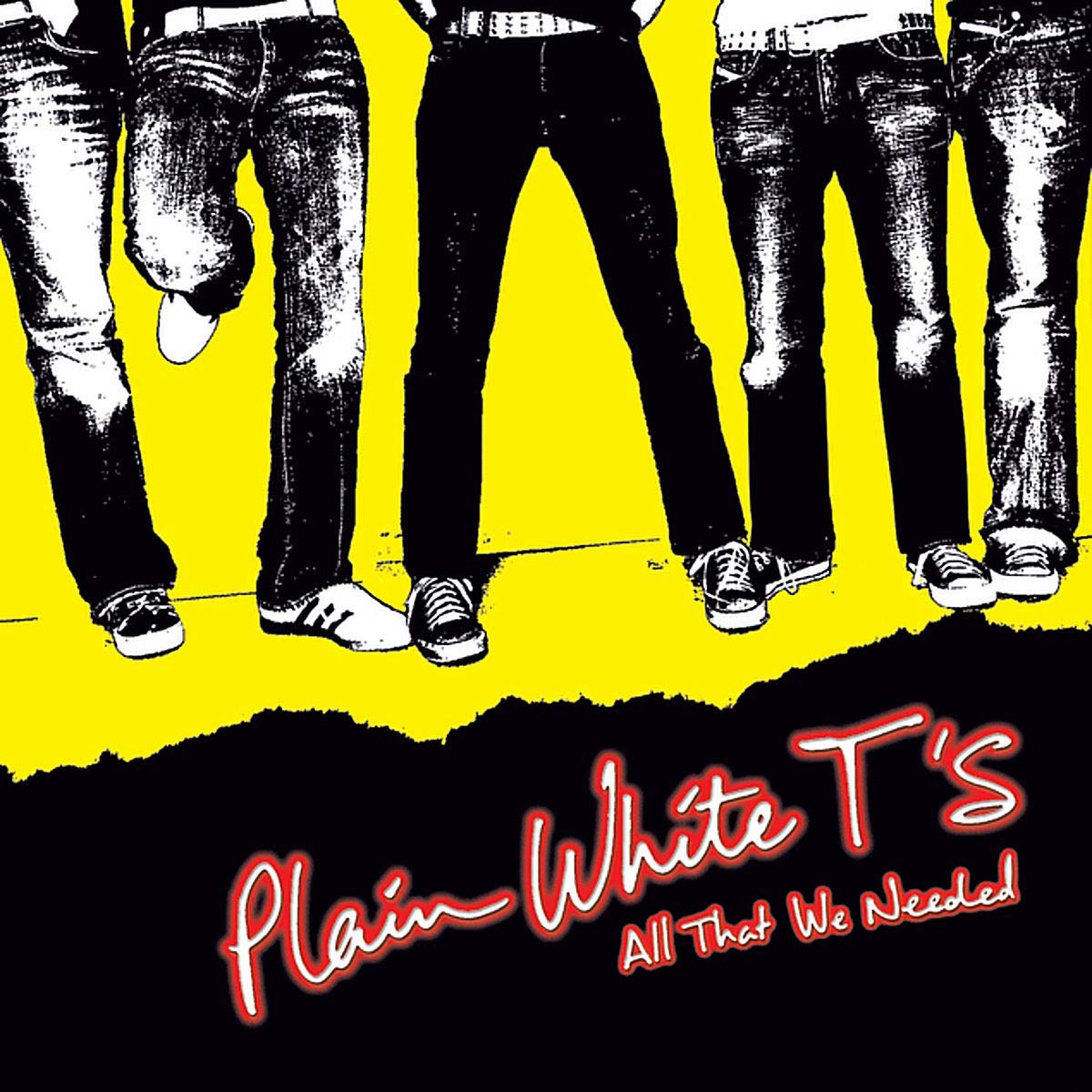
Most bands have a sound. The Plain White T’s had several, but the world only cared about one for a long time. When All That We Needed dropped in 2005 under Fearless Records, it was a solid power-pop album. It had "Take Me Away," which was a modest hit on MTV2. But buried at track 15 was this little acoustic ditty.
"Hey There Delilah" wasn't even a single at first. It was a sleeper hit in the truest sense of the word. It took two years—and a re-release on the album Every Second Counts—for it to hit Number 1 on the Billboard Hot 100.
The backstory is actually pretty grounded. Tom wrote it for Delilah DiCrescenzo, a real-life steeplechase runner he met through a mutual friend. He told her he’d write a song for her. He did. She wasn't his girlfriend. She never was. In fact, she even attended the Grammys with him as a guest while she had a boyfriend at home. It’s kinda awkward when you think about it, but that tension is exactly what made the song feel so earnest. It was a long-distance pining anthem for a generation that was just starting to use MySpace to stay connected.
Beyond the Shadow of "Delilah"
Success is a double-edged sword. Once you have a diamond-certified single, everything else you do gets measured against it. The Plain White T’s spent years trying to prove they weren't just "The Delilah Band."
Look at "1, 2, 3, 4." It’s another massive hit, but it’s completely different in vibe—bouncy, upbeat, and unapologetically pop. Then you have "Rhythm of Love," which leans into a breezy, California-folk aesthetic. They were pivoting constantly. Some fans loved the variety; others felt the band was losing their punk-rock edge.
If you go back and listen to Stop, their 2002 debut, it’s crunchy. It’s fast. It sounds like a band that grew up listening to The Descendents. By the time they got to Wonders of the Younger in 2010, they were experimenting with circus themes and orchestral arrangements. It was ambitious. Maybe too ambitious for a radio landscape that just wanted another three-chord acoustic ballad.
The Reality of Being a Working Band in 2026
Being a legacy act isn't easy. You aren't the shiny new thing on TikTok anymore. But the Plain White T’s have managed to survive by being incredibly prolific and leaning into their independent roots. They eventually left Hollywood Records and went back to Fearless Records, the label that first "got" them.
Their self-titled 2023 album is actually a great example of what happens when a band stops trying to chase a Top 40 hit and just writes what they like. It’s got that signature Tom Higgenson snark, but the production feels modern. They aren't trying to be teenagers anymore.
Why the "Sellout" Labels Never Stuck
In the mid-2000s, "selling out" was the ultimate sin. If you were a punk band and you had a hit on the radio, people turned on you. The Plain White T’s avoided the worst of this because they were always honest about liking pop music. They didn't pretend to be the Sex Pistols. They liked The Beatles. They liked Cheap Trick.
They embraced the "pop" in pop-punk.
- They stayed together through lineup changes.
- They kept touring small clubs when the arenas stopped calling.
- They maintained a sense of humor about their biggest hit.
Most bands from that era broke up by 2012. The fact that Dave Tirio, Tim Lopez, and Tom are still doing this says something about their work ethic. They’re basically the blue-collar workers of the power-pop world.
The Technical Side of Their Sound
Musically, they aren't reinventing the wheel, but they do something very specific with vocal harmonies that most of their peers ignored. Tim Lopez (guitar/vocals) has a much smoother, higher register than Tom’s slightly nasal, storytelling delivery. When they lock in on a chorus—think "The Truth"—it creates a wall of sound that feels much bigger than a four-piece band should produce.
They also use a lot of "marching" rhythms. A lot of their songs have a 4/4 stomp that feels like a heartbeat. It’s simple, but it’s the reason their songs work so well in commercials and movie trailers. It’s visceral.
What People Get Wrong About Their Career
People think they disappeared. They didn't. They just moved into a different phase of the industry. Tom Higgenson started his own label, Humans Were Here, and began developing other artists. He became a mentor.
There's also this misconception that they are a "soft" band. If you see them live, you realize very quickly that they are a loud, energetic rock band. The acoustic stuff is just one tool in the shed. "Hate (I Really Don't Like You)" is a quintessential breakup anthem that has way more spite than you’d expect from the guys who wrote "Delilah." It’s basically a middle finger wrapped in a catchy melody.
Actionable Insights for Fans and New Listeners
If you’re looking to actually understand this band beyond the radio hits, you need a roadmap. Don't just shuffle their "This Is" playlist on Spotify. It’s too polished.
- Start with "Stop" (2002). It’s the rawest version of the band. It’ll give you a sense of where they came from before the big budgets arrived.
- Listen to "Every Second Counts" for the songwriting. This is where they peaked in terms of structure. Every song is a masterclass in the "hook-verse-hook" format.
- Check out Tom Higgenson’s side projects. If you like his voice, check out TLB (The Limited Bonsai). It’s weirder and more experimental.
- See them live. They still tour relentlessly. The energy in a room of 500 people singing "Hey There Delilah" is genuinely moving, regardless of how many times you’ve heard the song.
- Support the new stuff. Their 2023 self-titled album is arguably their most cohesive work since 2008.
The Plain White T’s represent a specific era of American music where a band could go from a basement in Illinois to the top of the charts just because they wrote a song that felt real. They aren't an AI-generated product. They’re a group of guys who have spent thirty years trying to write the perfect three-minute pop song. Sometimes they hit it out of the park; sometimes they don't. But they’re still at the plate, and in an industry that discards artists like yesterday's trash, that's a legacy worth respecting.
Go back and listen to "Our Time Now." It’s a reminder that before they were the "acoustic guys," they were just a band that wanted to make you jump. That energy hasn't really left them; it’s just matured. Whether you’re a nostalgic Millennial or a Gen Z listener discovering them through a movie soundtrack, there’s a lot more depth to the white T-shirt than the name suggests.