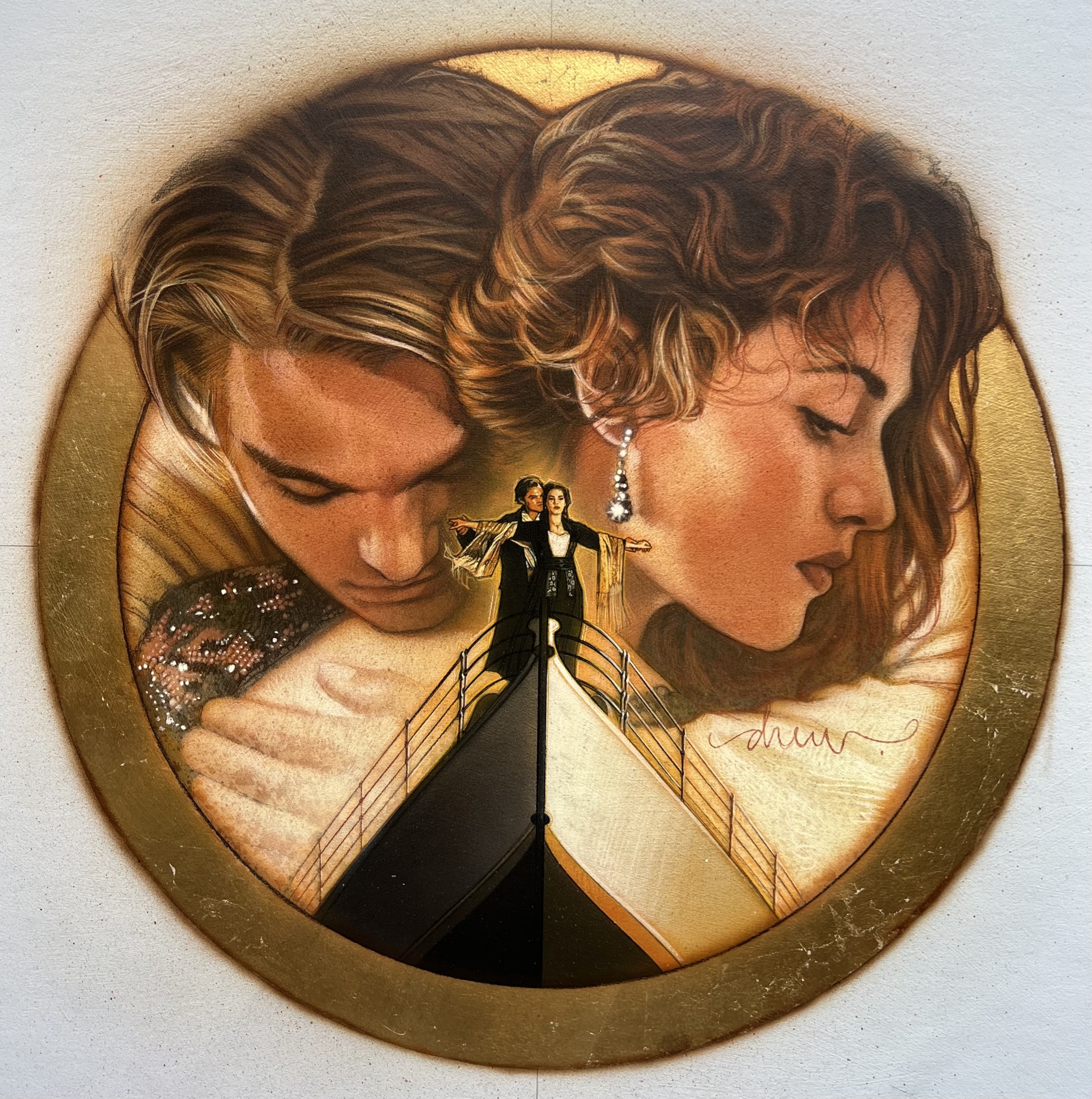
It’s been decades. Decades since James Cameron’s 1997 epic redefined what a "blockbuster" could actually be. Most people remember the iceberg, the sinking, or the Celine Dion ballad that played on a loop for three straight years. But honestly? The most intimate, culturally persistent moment in the whole film is the drawing scene from Titanic. It’s the scene that launched a thousand memes and made charcoal pencils look incredibly romantic to an entire generation of teenagers.
You know the one.
"Draw me like one of your French girls."
It’s iconic. It’s also a masterclass in tension. But if you look past the soft lighting and the Heart of the Ocean diamond, there is a whole layer of technical filmmaking and real-world history that most people completely miss.
The hands you see aren't Leonardo DiCaprio's
Let’s get the biggest misconception out of the way immediately. Leonardo DiCaprio is a phenomenal actor, but he isn’t a sketch artist. When the camera zooms in on those charcoal strokes—the ones capturing Rose DeWitt Bukater’s likeness—those are actually the hands of James Cameron himself.
The director.
Cameron is a surprisingly talented artist. He’s the one who actually drew the famous sketch of Kate Winslet. There’s a funny bit of movie magic here, though. DiCaprio is right-handed, and Cameron is left-handed. To keep the continuity from breaking the illusion, the production team had to mirror the film in post-production so it appeared as if the artist was using his right hand.
It’s a tiny detail. Most viewers never notice. But it shows the level of personal obsession Cameron had with this project. He didn't just want a prop; he wanted the art to feel "right." The sketches seen in Jack’s portfolio throughout the movie were also produced by Cameron, based on photos of Kate Winslet and other reference models.
Why the scene feels so "real" compared to modern CGI
Movies today feel sanitized. Everything is green-screened to death. But the drawing scene from Titanic feels tactile. You can practically smell the charcoal dust and the wood shavings.
The chemistry wasn't faked, either.
Kate Winslet famously "flashed" DiCaprio earlier in the production to break the ice, knowing they had this vulnerable scene coming up. It worked. When Jack stammers, "Over on the bed... the couch," it was actually a genuine mistake by DiCaprio. He was supposed to just say "the couch," but he tripped over his words. Cameron loved the nervous energy so much that he kept it in the final cut.
It’s that awkwardness that makes it human.
In the late 90s, this was a massive deal. It was a bridge between the stiff, formal romance of Old Hollywood and the more raw, realistic portrayals we see now. The lighting was kept low, orange, and flickering, meant to mimic the kerosene lamps of a 1912 stateroom. It wasn't just about the nudity; it was about the shift in power. Rose is taking control of her image, choosing how she wants to be seen, which is the core of her character arc.
The actual history of the "French Girls" line
Everyone quotes it. It’s become a shorthand for any time someone poses for a photo. But in the context of the film, Jack is talking about the street portraits he drew in Paris.
Was there a real Jack Dawson? Sorta.
There was a "J. Dawson" on the Titanic. His name was Joseph Dawson, but he wasn't a bohemian artist from Wisconsin; he was a coal trimmer from Dublin who worked in the boiler rooms. He died in the sinking and is buried in Halifax, Nova Scotia. His gravestone (No. 227) became a pilgrimage site for fans after the movie came out, much to the surprise of historians who knew the real man had a very different life.
The art style itself, however, is very much grounded in the era. The sketches Cameron produced for the film are reminiscent of the charcoal and graphite studies popular in the early 20th century. They have a "street" quality to them—quick, gestural, and focused on the essence of the subject rather than a polished, academic finish. This tells us more about Jack than any dialogue could. He’s a voyeur. An observer. He sees the "truth" of people, which is exactly why Rose trusts him.
The fate of the actual drawing prop
People always ask: what happened to the drawing?
You might think it’s sitting in a museum or tucked away in a dusty archive at Paramount. In reality, the "Rose" sketch is a high-value collector's item. In 2011, the original drawing used in the film—the one signed "J.D." and dated April 14, 1912—was sold at an auction.
It went for roughly $16,000.
To a movie memorabilia collector, that’s actually a bit of a steal considering the film’s multi-billion dollar legacy. The drawing is a piece of cinema history, representing the exact moment the "ship of dreams" narrative shifts from a class-struggle drama into a full-blown tragedy.
Interestingly, the sketch in the movie is found inside a leather portfolio that had been submerged in salt water for 84 years (in the movie’s timeline). The production team had to "age" several versions of the drawing to make it look like it had survived the deep-sea pressure and the tanning of the leather case.
Technical breakdown: How they shot it
Shooting a scene like this is incredibly technical. You have to balance the lighting so it looks natural but doesn't wash out the texture of the paper.
- Camera angles: Cameron used tight close-ups on the eyes. This creates an "internal" feeling, making the audience feel like they are intruding on a private moment.
- Sound design: If you listen closely, the sound of the charcoal on the paper is amplified. That scratching sound is rhythmic. It acts almost like a heartbeat for the scene.
- Color Palette: The scene is dominated by ambers and deep browns. This contrasts sharply with the "cold" blue tones used later during the sinking, making the memory of the room feel warmer and safer than it actually was.
Why we are still talking about it in 2026
It’s easy to be cynical about 90s blockbusters. But the drawing scene from Titanic stays relevant because it captures a universal feeling of being truly "seen."
Rose is a woman trapped in a gilded cage. Jack is a man with nothing but his vision. When he draws her, he isn't just looking at her; he’s documenting her soul, at least according to the internal logic of the movie. That’s why the line "I'm putting it in the safe" is so poignant. It’s her act of rebellion. She’s leaving a permanent record of her true self for her captors (Cal and her mother) to find, knowing the ship is about to hit the fan.
It’s also just a really well-paced piece of film. There’s no rush. In an age of TikTok-length attention spans, a three-minute scene dedicated to someone drawing on a piece of paper feels like a luxury.
How to appreciate the scene's craft today
If you’re a fan or a student of film, don't just watch the scene for the plot. Look at the edges.
- Watch the eye contact: Notice how Jack looks at the paper more than he looks at Rose. This is a real artist's technique. You draw what you see, but you spend more time translating it to the page.
- Listen to the silence: There is very little music at the start of the scene. The score creeps in only when the drawing is nearly finished.
- Check the lighting transitions: Notice how the shadows on Kate Winslet’s face change as the scene progresses, mimicking the movement of a ship on the water even though they were on a soundstage.
If you want to dive deeper into the technical side of the film, look for the "Behind the Scenes" features on the 4K Blu-ray releases. They specifically show James Cameron at the drawing board. It’s a rare look at a director literally putting his own hand into his masterpiece.
The drawing itself remains a symbol of the film’s duality: it is both a beautiful piece of art and a tragic relic of a world that was about to disappear forever. Understanding the work that went into those three minutes makes the experience of watching the movie entirely different. It’s not just a romance; it’s a meticulously crafted moment of human connection that survived the "unsinkable" ship.
Next time you watch, pay attention to the charcoal. You’re seeing the director’s own handiwork, mirrored and edited to fit the face of a 22-year-old superstar. That’s the real magic of Hollywood.