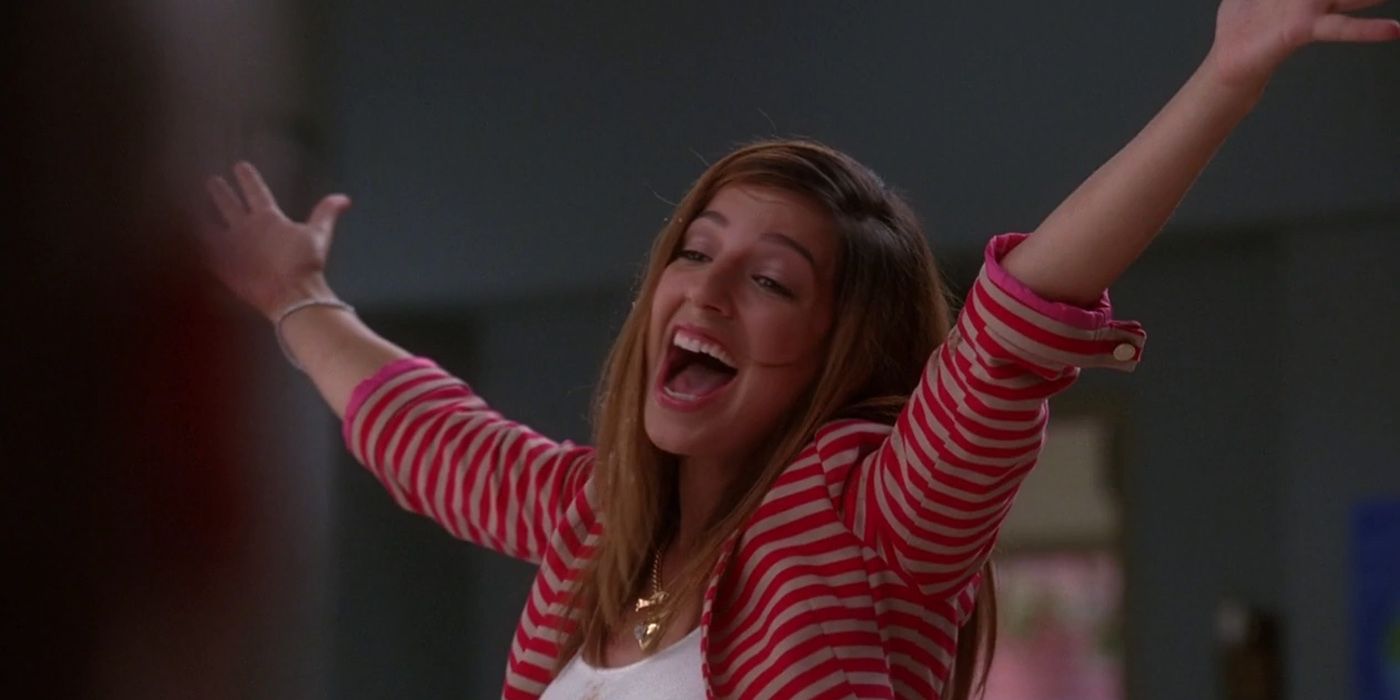
Sugar Motta from Glee was a fever dream. Honestly, there is no other way to describe her. She burst into the McKinley High choir room during the Season 3 premiere, "The Girl Next Door," and basically set the established hierarchy on fire. She didn't care about the rules of musical theater or the "underdog" narrative the New Directions had spent two years cultivating. She was rich, she was blunt, and she was—by her own admission—completely tone-deaf.
Vanessa Lengies played the role with this weird, chaotic energy that the show desperately needed by 2011. While the original cast was getting bogged down in increasingly heavy drama, Sugar was there to remind everyone that high school is often just absurd. She claimed to have "Self-Diagnosed Asperger’s," a plot point that, looking back, was definitely one of the show's more questionable writing choices, used mainly as a vehicle to let her say incredibly mean things to Rachel Berry’s face.
But here is the thing: Sugar Motta from Glee wasn't just a gimmick. She represented a massive shift in how the show functioned.
The Audition That Changed Everything
When Sugar first walked into that audition, she didn't sing a ballad. She didn't try to prove her worth. She sang "Big Spender" and it was, objectively, a disaster. It was pitchy, screechy, and lacked even a hint of rhythm. For a show built on the "talent wins" mythos, Sugar was a slap in the face.
The New Directions rejected her. It was the first time they had actually turned someone away for being bad. This led to the creation of the Troubletones, the rival all-female group funded by Sugar’s wealthy, "top-tier" father. This plot twist actually gave us some of the best musical arrangements in the show’s history, like the Adele mashup "Rumour Has It/Someone Like You."
Without Sugar’s ego and her dad’s checkbook, the Troubletones wouldn't have existed. Mercedes and Santana would have stayed in Rachel's shadow. Sugar was the catalyst for the show finally acknowledging its own internal biases.
Money as a Superpower
Let's talk about the money. In the world of Glee, most characters were struggling. They were outsiders. Then comes Sugar, wearing designer clothes and literally buying her way into the spotlight. It was a cynical take on the "pay to play" nature of the arts. She didn't need to be good because she was rich.
It was a meta-commentary on Hollywood itself. How many "pop stars" have we seen who are essentially Sugar Mottas with better auto-tune? The show rarely gets credit for how self-aware it was being with her character. She wasn't meant to be relatable; she was a disruptor.
Why We Still Quote Her
Vanessa Lengies has talked in various interviews and on the And That’s What You REALLY Missed podcast about how much of Sugar was just her having permission to be "the worst." There’s a freedom in playing a character who has zero filter.
Remember the "Sugar’s Soiree" Valentine’s Day party? She spent the whole episode being a benevolent dictator. She wanted the perfect party, she wanted the best performance, and she didn't care whose feelings she hurt to get there. In a show that often drowned in its own earnestness, Sugar’s total lack of empathy was a breath of fresh air. It was funny. It was sharp.
She also had some of the most bizarre lines in the script. Lines like, "I'm a self-diagnosed visionary," or her constant references to her father's "business" (which everyone assumed was the mob).
The Mystery of the Disappearing Motta
One of the weirdest things about Sugar Motta from Glee is how she just... stopped appearing. By the end of Season 4, she was basically gone. No big send-off. No graduation scene where she cried over her diploma. She just vanished back into the mist of Lima, Ohio.
This happened to a lot of "New" New Directions. Characters like Joe Hart (the dreadlocked Christian) and Sugar just stopped being written into scripts. It’s a testament to Lengies’ performance that people still ask about her. She made an impression with very little screen time. She wasn't a lead, but she owned every frame she was in.
The Troubletones Legacy
The Troubletones (Santana, Mercedes, Brittany, and Sugar) remain a fan-favorite era of the show. While Sugar mostly just did the choreography in the background and looked fabulous, her presence allowed the other three to truly shine.
The vocal power of Naya Rivera and Amber Riley needed a platform where they weren't fighting for a solo against Rachel Berry. Sugar provided that platform. Literally. She paid for the stage.
How to Appreciate the Sugar Era Today
If you're doing a rewatch, don't just dismiss Sugar as a secondary character. Watch her in the background of scenes. Her facial expressions are gold. She is constantly judging the other characters, and usually, her judgment is spot-on.
- Watch the "Big Spender" audition: Notice the silence in the room afterward. It’s one of the few times the show allowed a performance to be genuinely uncomfortable.
- Track the outfits: Her costume design was consistently more "runway" than "Midwest high school."
- Listen for the insults: She says the things the audience is thinking but the other characters are too "nice" to say.
Sugar Motta was the antithesis of everything Glee stood for—hard work, underdog spirit, and "making it" on talent alone. By existing, she proved that the Glee club was just as messy and elitist as the rest of the world. She was the reality check the show didn't know it needed.
To get the most out of her arc, look for the Season 3 episodes "I Am Unicorn" and "Mash Off." These are the peak Sugar episodes where her influence on the plot is undeniable. She didn't need a redemption arc because she never thought she did anything wrong. That’s the real Sugar Motta legacy: unapologetic, wealthy, and beautifully, hilariously terrible at singing.
Identify the moments where the show uses her to break the fourth wall. Often, her reactions to the "inspirational" speeches are the most relatable part of the scene. She isn't buying the melodrama, and neither are we. Enjoy the chaos she brings to the screen; it was a short-lived but vital part of the show's peak years.