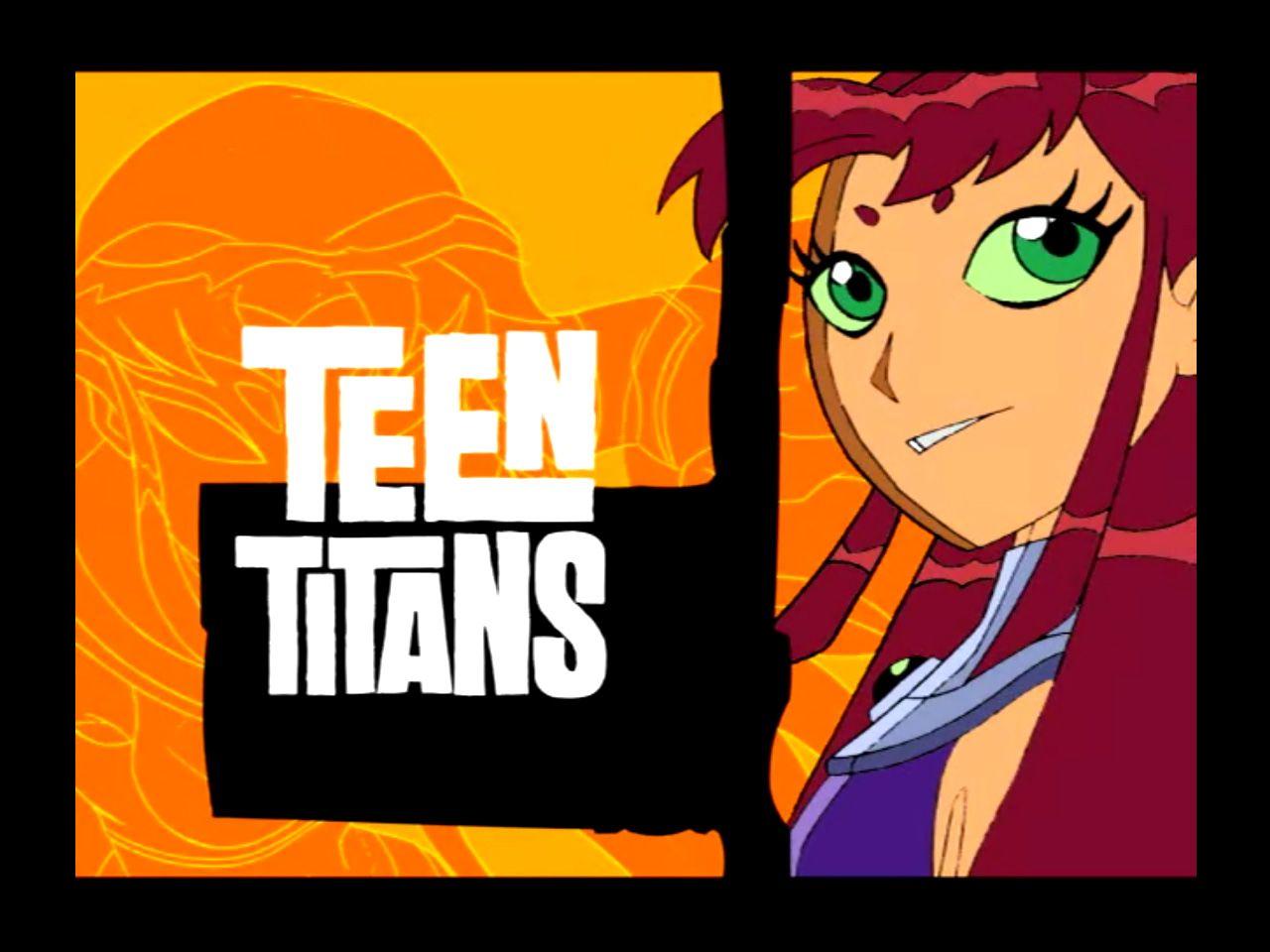
Honestly, if you grew up in the early 2000s, you probably have a very specific image of Princess Koriand'r in your head. It isn't the hyper-sexualized warrior from the New 52 comics or the gritty, street-smart version from the live-action Titans show. It’s the orange-skinned, wide-eyed alien with the fiery hair. Starfire Teen Titans 2003 remains a masterclass in how to adapt a complex comic book character for a younger audience without stripping away her soul.
She was weird. She was powerful. She was deeply kind.
But she was also a literal war survivor. While the show's vibrant colors and slapstick humor might make you forget, Starfire's backstory is incredibly dark. Glen Murakami and the rest of the creative team at Warner Bros. Animation managed to walk a razor-thin line. They gave us a character who struggled with English idioms and "the mustard" while simultaneously dealing with the trauma of a sister who tried to sell her into slavery. It’s a lot to process.
The Alien Fish-Out-of-Water Done Right
Most writers lean too hard into the "clueless alien" trope. It gets annoying fast. But in the 2003 series, Starfire’s confusion felt earned. She wasn't stupid; she was just from Tamaran.
Hynden Walch, the voice actress behind the character, deserves a massive amount of credit here. She brought this airy, melodic quality to Starfire’s voice that could shift into a terrifying gutteral growl the second a villain threatened her friends. It was all about the contrast. One minute she’s insisting on eating a "zorkberry," and the next she’s leveling a city block with starbolts because Cinderblock looked at Robin the wrong way.
Her design was also a huge departure from the George Pérez era of the 1980s. In the comics, Starfire was tall, statuesque, and—let’s be real—designed for the male gaze. The 2003 show went for a "creature" look. Her eyes were huge and green, with no visible pupils most of the time. Her proportions were lanky. She looked like she belonged in a different atmosphere. That visual distinction made her feel like a true outsider, which is the core of her character arc.
Why the Tamaranean Lore Still Hits Hard
We can't talk about Starfire without talking about Blackfire. "Sisters," the second episode of the entire series, set the tone for their relationship. It wasn't just a sibling rivalry. It was political. It was personal.
Blackfire, or Komand'r, was everything Koriand'r wasn't: cynical, manipulative, and cool. The show explored the idea that Starfire’s kindness was a choice, not a default setting. She chose to be good despite being treated horribly by her own people. Later, in the episode "Betrothed," we see the weight of her royal duty. She was willing to marry a disgusting swamp creature just to save her planet. That’s not a "kids' show" plot; that’s a Shakespearean tragedy wrapped in neon animation.
The world-building of Tamaran in the 2003 series was surprisingly dense. We learned about the "Transformation," a Tamaranean version of puberty where they turn into giant chrysalises and grow extra ears or turn purple. It was gross. It was funny. It was a perfect metaphor for the awkwardness of being a teenager.
The Robin and Starfire Dynamic
Let's get into the shipping. People are still arguing about "RobStar" in 2026.
The 2003 series played the long game. Unlike modern shows that rush a romance in the first season, Robin and Starfire had three years of "will-they-won't-they" tension. It wasn't just about blushes and stolen glances, though there was plenty of that. It was about mutual respect. Robin was the strategist, the intense workaholic who forgot to eat or sleep. Starfire was his emotional anchor.
She was the only one who could truly get through to him when he went off the deep end, like during the "Apprentice" arc or when he was obsessed with Slade. Their chemistry peaked in Teen Titans: Trouble in Tokyo, where we finally got the kiss fans had been waiting for. It felt earned because they had built a foundation of friendship first.
Cultural Impact and Why Fans Are Still Obsessed
Why does this specific version of Starfire still dominate fan art and cosplay?
- Accessibility: She was a gateway for young girls into superhero media.
- Emotional Intelligence: She taught kids it was okay to be sensitive and loud about your feelings.
- Power Fantasy: She was arguably the strongest member of the team, capable of interstellar flight and massive energy projection.
There’s a common misconception that the 2003 version was "dumbed down" compared to the New Teen Titans comics. I'd argue the opposite. By removing the heavy focus on her sexuality, the writers were forced to focus on her personality, her heritage, and her fierce loyalty. They made her a leader in her own right.
Even in Teen Titans Go!, which is a complete tonal 180, the DNA of the 2003 Starfire is still there. But it lacks the stakes. The 2003 series gave Starfire stakes. When she cried, you felt it. When she got angry, you were a little bit scared of her.
What Most People Get Wrong About Her Powers
People think she just shoots green lasers. It's more than that. In the 2003 lore, her powers are strictly tied to her emotions.
- Starbolts: Fueled by righteous fury.
- Flight: Fueled by unbridled joy.
- Strength: Fueled by the need to protect.
This is a brilliant writing mechanic. It means Starfire can't just "power up" whenever she wants. If she’s depressed or heartbroken, she literally can’t fly. We saw this in "Stranded," where her inability to process her feelings for Robin caused her powers to glitch out. It makes her vulnerable in a way that Superman rarely is. She is a solar battery that runs on feelings.
How to Revisit the Series Today
If you're looking to dive back into the world of Starfire Teen Titans 2003, don't just random-watch episodes. There is a specific path to understanding her character growth.
- Start with "Sisters" (Season 1, Episode 2): This establishes her origin and her conflict with Blackfire.
- Watch "Transformation" (Season 2, Episode 7): This deals with her alien biology and the fear of change.
- Don't skip "Betrothed" (Season 3, Episode 3): This is the peak of Tamaranean political drama.
- Finish with "Go!" (Season 5, Episode 10): This is the flashback episode that shows exactly how she met the Titans. She arrived on Earth as a prisoner in chains, terrified and violent. Seeing her transition from that "monster" into the heart of the team is the most satisfying arc in the show.
Check out the Blu-ray "Complete Series" sets rather than relying on compressed streaming versions. The colors in the 2003 show were specifically designed to pop, and the higher bitrate makes a huge difference in the action sequences. For those interested in the deeper lore, look for the Teen Titans Go! comic series (the one from 2004, not the current one), specifically issue #46, which gives more backstory on her life before Earth.
The 2003 version of Starfire isn't just a nostalgic memory. She’s a blueprint for how to write an alien character who feels more human than the humans around her. She remains a symbol of radical kindness in a world that, quite frankly, could use a lot more of it.