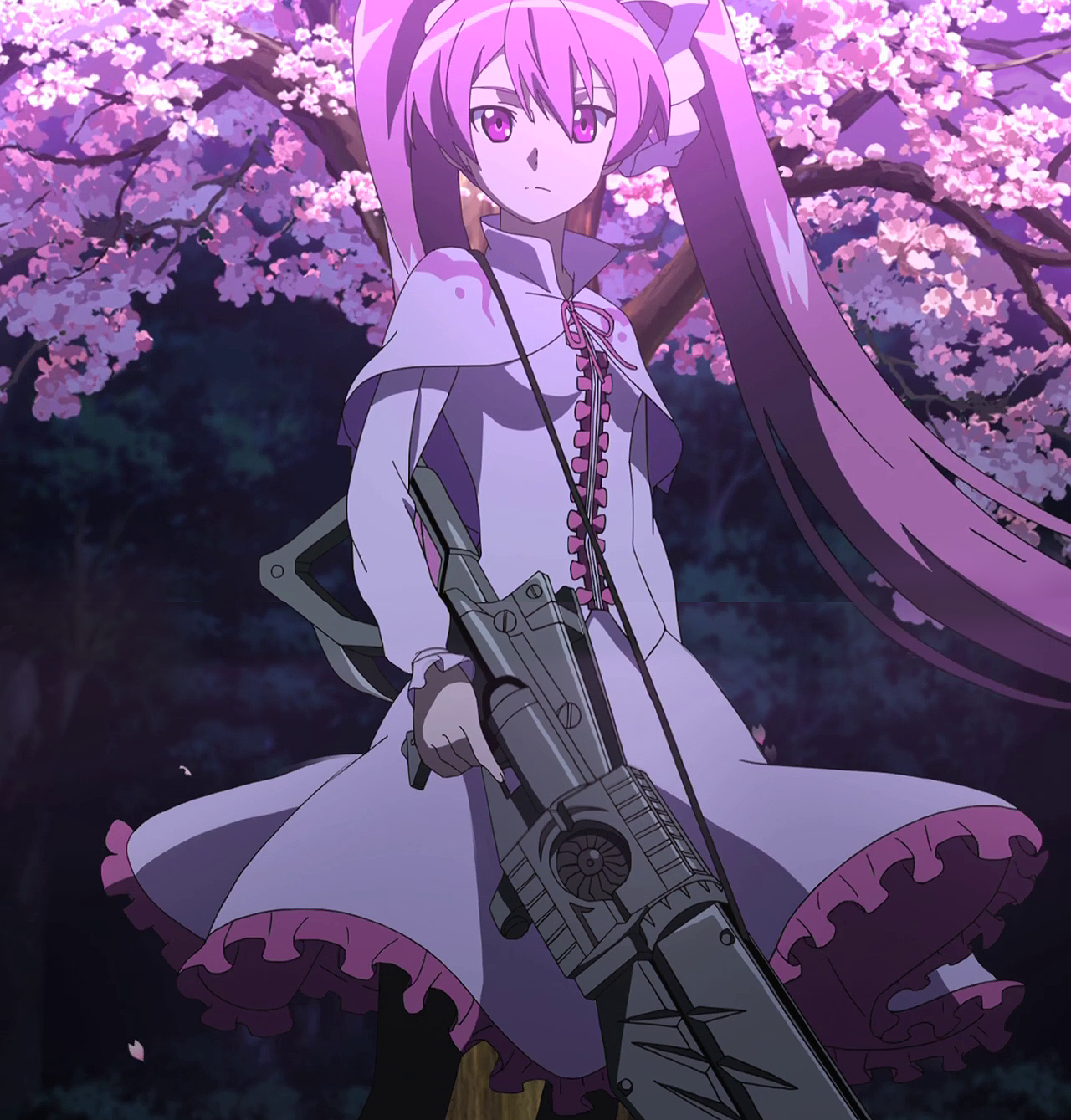
Mine is polarizing. You either love the "Genius Sniper" of Night Raid or you find her pink-clad, tsundere energy absolutely grating. But if you're looking at Akame ga Kill Mine as just another anime trope, you're missing the entire point of her arc. She isn't just the girl with the big gun. She’s the emotional anchor of a story that otherwise feels like a relentless meat grinder of character deaths.
Honestly, her introduction makes her look like a brat. She's mean to Tatsumi. She's arrogant about her skills with Pumpkin. But beneath that exterior is a backstory rooted in the kind of systemic racism that the Empire thrives on. Being a half-foreign child in the Capital wasn't just "hard"—it was a death sentence of neglect. She didn't join the Revolutionary Army because she wanted to be a hero. She joined because she wanted a world where kids like her didn't have to grow up in gutters.
The Mechanic of Pumpkin: Why Emotion Matters
Let's talk about her Teigu, Roman Artillery: Pumpkin. It's one of the most unique weapons in the series because its power scales directly with the user's "danger." But it's not just physical danger. It's the psychological pressure.
The more she feels backed into a corner, the more devastating her shots become. This is a brilliant narrative tool. It forces Mine to constantly stay in high-stress situations to remain effective. It means her combat prowess is literally fueled by her trauma and her fear. Most snipers in fiction want to be calm and detached. Mine has to be the opposite. She has to feel everything—the terror, the anger, the desperation—to win.
When you see her facing off against Seryu Ubiquitous, that isn't just a fight between a sniper and a bio-engineered freak. It’s a clash of ideologies. Seryu represents the "blind justice" of the Empire, while Mine represents the "ugly truth" of the victims. The sheer power output she generates in that fight shows exactly how much weight she carries.
The Manga vs. Anime Divide
If you only watched the anime, you probably think Mine's story ends in a tragic, bittersweet sacrifice. It’s a tear-jerker. She gives her all to save Tatsumi, they share a final kiss, and she fades away.
But wait.
The manga tells a completely different story. In the original source material by Takahiro, Mine doesn't die. She falls into a comatose state after the massive exertion of her spirit during the fight with Budo. It’s a much slower, more agonizing burn for the reader. Eventually, she wakes up. She and Tatsumi (who is in a permanent dragon form, by the way) actually get a "happily ever after" in the outskirts.
Why does this matter? Because the manga version of Akame ga Kill Mine offers a rare glimpse of hope in a series defined by nihilism. The anime went for the "easy" shock value of killing her off, but the manga suggests that survivors can actually find peace, even after being broken by war.
Breaking Down the Tsundere Label
People call her a "classic tsundere." It’s a lazy label. Sure, she yells and blushes, but look at the context. She’s a professional assassin who watches her friends die every other Tuesday. Bullying Tatsumi wasn't just a personality quirk; it was a defense mechanism. If you don't get close to people, it doesn't hurt when they get decapitated or tortured by the Jaegers.
Her relationship with Sheele is the best evidence of her depth. When Sheele dies early in the series, Mine is the one who takes it the hardest. She blames herself. She carries Sheele's memory not as a burden, but as a reason to keep her finger on the trigger. That’s not a trope. That’s a survivor’s guilt that many fans overlook because they're too focused on her pink pigtails.
The Reality of Her "Genius" Sniper Status
Mine calls herself a genius constantly. Is she? Probably.
Her accuracy is statistically insane. In the battle against the Three Beasts and later the Jaegers, her positioning is almost always flawless. She understands the battlefield better than most of Night Raid. While Akame is the brawler and Leone is the tank, Mine is the tactician. She provides the overwatch that allows the others to even survive their missions. Without her, the team’s casualty rate would have been 100% within the first five episodes.
What Most Fans Get Wrong About Her End
The biggest misconception is that Mine is "weak" because she relies on a long-range weapon. In reality, her physical endurance is some of the highest in the series. Consider the toll Pumpkin takes on her body. Every time she fires a high-output blast, the kickback and spiritual drain are massive.
By the time she faces General Budo, she is basically running on fumes and pure spite. Most characters in the Empire would have folded under Budo’s lightning. Mine didn't just stand her ground; she pushed back until her weapon literally shattered. That's not a glass cannon. That's a titanium one.
If you're revisiting the series, keep these points in mind:
- Watch her eyes during the Sheele revenge arc; the animation shows a shift from bratty child to hardened killer.
- Compare her dialogue with Tatsumi before and after the death of Bulat. You'll see her stop testing him and start trusting him.
- Notice the distance. She stays far away not because she's scared, but because she knows her death would leave the team without any cover.
Moving Forward With the Series
If you want to truly understand her character, you have to read the manga. Start around chapter 30 to see where the anime begins to deviate significantly. The nuance in her recovery and her final fate provides a much more satisfying conclusion to her "Genius Sniper" persona than the rushed ending of the TV show.
Don't just take the "pink girl" at face value. Look at the scars the Capital left on her. That's where the real story of Mine lives.