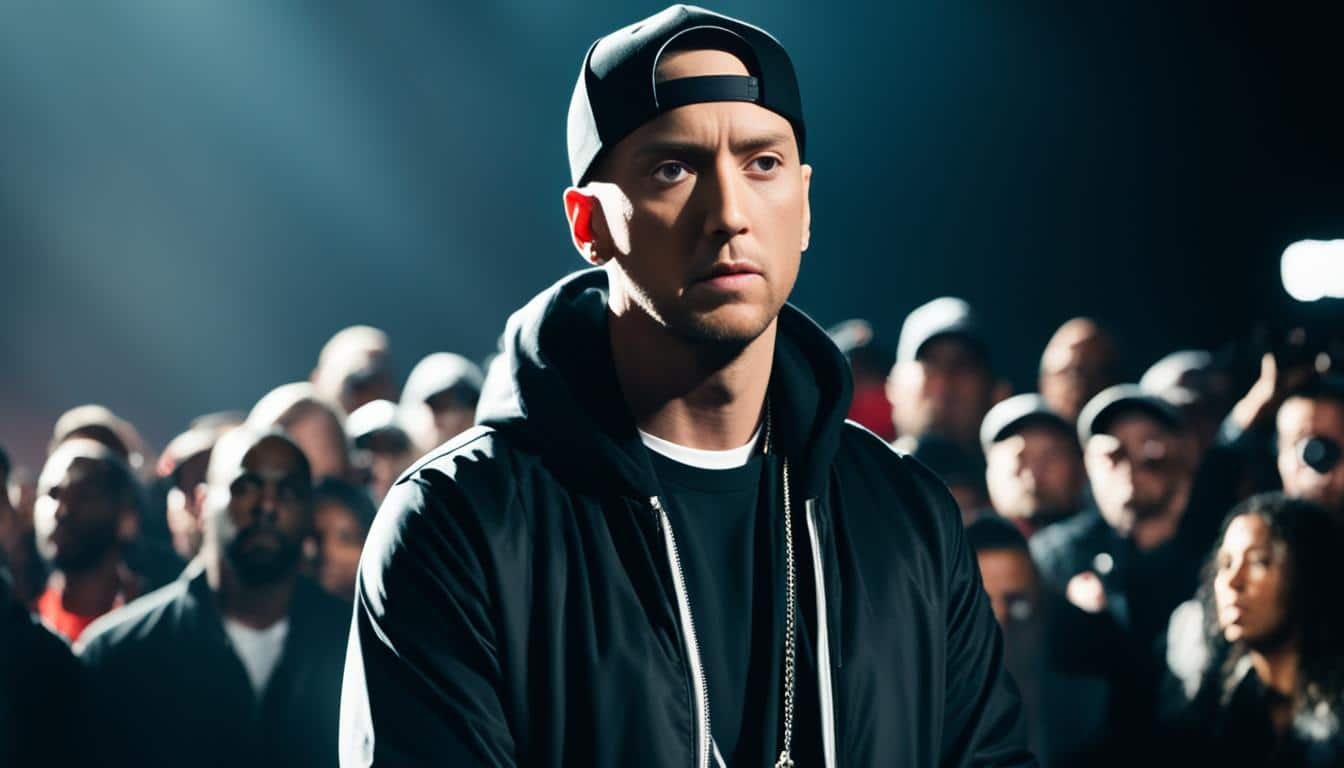
Marshall Mathers isn't exactly known for a quiet lifestyle. If you grew up in the late nineties or early 2000s, you remember the chaos. It was everywhere. The bleach-blonde hair, the baggy sweats, and the constant, relentless headlines about his personal life. People often ask, "Why did Eminem go to jail?" expecting a story about a long prison stint, but the reality is more about a series of high-stakes legal brushes and probation periods that nearly derailed the biggest career in hip-hop history.
He didn't spend years behind bars. That’s a common misconception. Instead, he faced significant jail time and ended up with a record that followed him for years.
The year 2000 was a pressure cooker for Eminem. He was at the absolute peak of his "Slim Shady" notoriety. He was also dealing with a crumbling marriage to Kim Mathers and a volatile relationship with his mother, Debbie Nelson. Everything boiled over in June 2000. It happened in a parking lot. Specifically, the Hot Rocks Café in Warren, Michigan.
The Hot Rocks Incident
Eminem saw a man named Douglas Dail kissing his then-wife, Kim. He didn't just walk away. According to police reports and court testimony, Marshall pulled out an unloaded 9mm semi-automatic handgun. He was charged with carrying a concealed weapon and felonious assault.
Think about that for a second. The biggest star in the world, caught in a suburban parking lot with a piece.
He was facing up to five years in prison. For a guy whose career was just hitting the stratosphere, five years is an eternity. It’s a career-killer. But he had a high-powered legal team. They fought it hard. Eventually, the assault charge was dropped as part of a plea deal.
He didn't go to prison for years, but he didn't walk away scot-free either. The judge, Antonio Viviano, handed down two years of probation. He was also ordered to undergo drug testing and counseling.
"You were very lucky, Mr. Mathers," the judge told him. Honestly? He was.
The Insane Clown Posse Feud Spills Over
Just a day before the Hot Rocks incident, something else happened. It’s often overshadowed because the Kim drama was so much more "tabloid-friendly." Eminem got into it with a member of the Douglas Crew, who were associates of the rival rap group Insane Clown Posse.
This happened in Royal Oak, Michigan.
Again, a gun was involved. This resulted in another set of charges: carrying a concealed weapon and brandishing a firearm in public. If you're counting, that's two gun-related incidents in less than 48 hours. Most people would be under the jail for that.
The legal system moved slowly. By 2001, he was sentenced to another year of probation for the Royal Oak incident, which ran concurrently with his other sentence. He had to pay fines. He had to stay clean. He was basically on a very short leash held by the State of Michigan.
Why Didn't He Go to Prison?
It comes down to the plea bargain.
In the American legal system, if you have a clean record—which Marshall did at the time—and you have the resources for a top-tier defense, you can often avoid "hard time." His lawyers argued that the gun was unloaded during the parking lot confrontation. They argued he was a distressed husband.
It worked.
But probation isn't a "get out of jail free" card. It’s a prison sentence you serve in your own house. You can't leave the state without permission. You can't drink. You can't touch a weapon. For a touring artist, this was a nightmare. He had to get special permission from the court every time he wanted to go on tour or attend an awards show. Every time he stepped on a stage, he was one mistake away from those five years in a cell.
The Impact on the Music
You can hear the paranoia and the anger in The Eminem Show. Songs like "Say Goodbye Hollywood" and "Soldier" aren't just metaphors. They are literal accounts of his headspace during the trials.
"I'm a soldier, these shoulders hold up so much, they won't budge..."
He felt hunted. Between the lawsuits from his mother and the looming threat of jail, the Slim Shady persona started to get darker. The humor of the first album was replaced by a gritty, defensive realism.
He was also dealing with a lawsuit from a former school bully, DeAngelo Bailey, who sued him for $1 million over the lyrics to "Brain Damage." The judge eventually threw that case out, famously delivering the ruling in a rap-style poem. But the cumulative weight of all this litigation was massive.
The 2006 Setback and Beyond
While the 2000/2001 era was the primary answer to why did Eminem go to jail (or almost go to jail), his legal troubles didn't vanish. His addiction to prescription pills—Valium, Vicodin, Ambien—became a legal and medical liability.
In 2006, his best friend Proof was killed. This sent Marshall into a tailspin. While he didn't catch new major criminal charges during this period, his proximity to violence and his escalating drug use put him in constant danger of violating his previous standing or getting into new trouble.
He eventually sought help. He got sober in 2008. Since then, the "legal drama" has mostly been about copyright disputes and trademarking the "Slim Shady" name. It’s much more boring, which is exactly what you want when you're a father and a legend.
Fact-Checking the Rumors
You might have seen clickbait headlines saying Eminem is currently in jail. Or that he died in prison and was replaced by a clone.
Stop.
Those are YouTube conspiracy theories designed to get views from people who don't remember the actual timeline. Marshall Mathers is a free man. He lives in a highly secured mansion in Clinton Township, Michigan. He stays out of the public eye unless he’s dropping an album or performing at the Super Bowl.
The "jail" he went to was mostly the local precinct for processing and the agonizing months of waiting for a verdict that could have ended his life as he knew it.
Understanding the Reality of Celebrity Justice
Some people argue he got off easy because of his fame. Others say he was targeted by police who wanted to make an example of the "bad boy of rap."
The truth is likely in the middle. The police in Warren and Royal Oak weren't fans. They saw him as a nuisance. But the courts also recognized that he didn't actually fire the weapon and he had no prior violent history.
If you're looking for the "why," it's simple: He was a young man with a massive temper, a lot of money, and a loaded (or unloaded) gun in a moment of emotional crisis.
Moving Forward
If you're interested in the intersection of hip-hop and the law, there are a few things you can do to get a better handle on the context of that era:
- Listen to 'The Eminem Show' Chronologically: Pay attention to the lyrics in "Soldier" and "Say Goodbye Hollywood." They serve as a primary source for his mental state during the 2001 sentencing.
- Research the 1990s Michigan Gun Laws: Understanding the specific concealed weapon statutes of the time explains why the charges were so serious and why the plea deal was considered a victory for his defense team.
- Look into the 'Douglas Dail' Testimony: Reading the actual accounts from the man at the center of the Hot Rocks incident provides a much less "glossy" version than what appeared in the music videos.
The story of Eminem's legal battles is a reminder that even at the height of global fame, one impulsive decision in a parking lot can almost erase everything. He escaped a long-term prison sentence, but the shadow of those charges defined his music and his public persona for a generation.
The lesson here isn't just about rap beef or celebrity privilege. It's about the thin line between a legendary career and a cautionary tale. Marshall Mathers stayed on the right side of that line, but only by the skin of his teeth and the skill of some very expensive lawyers.