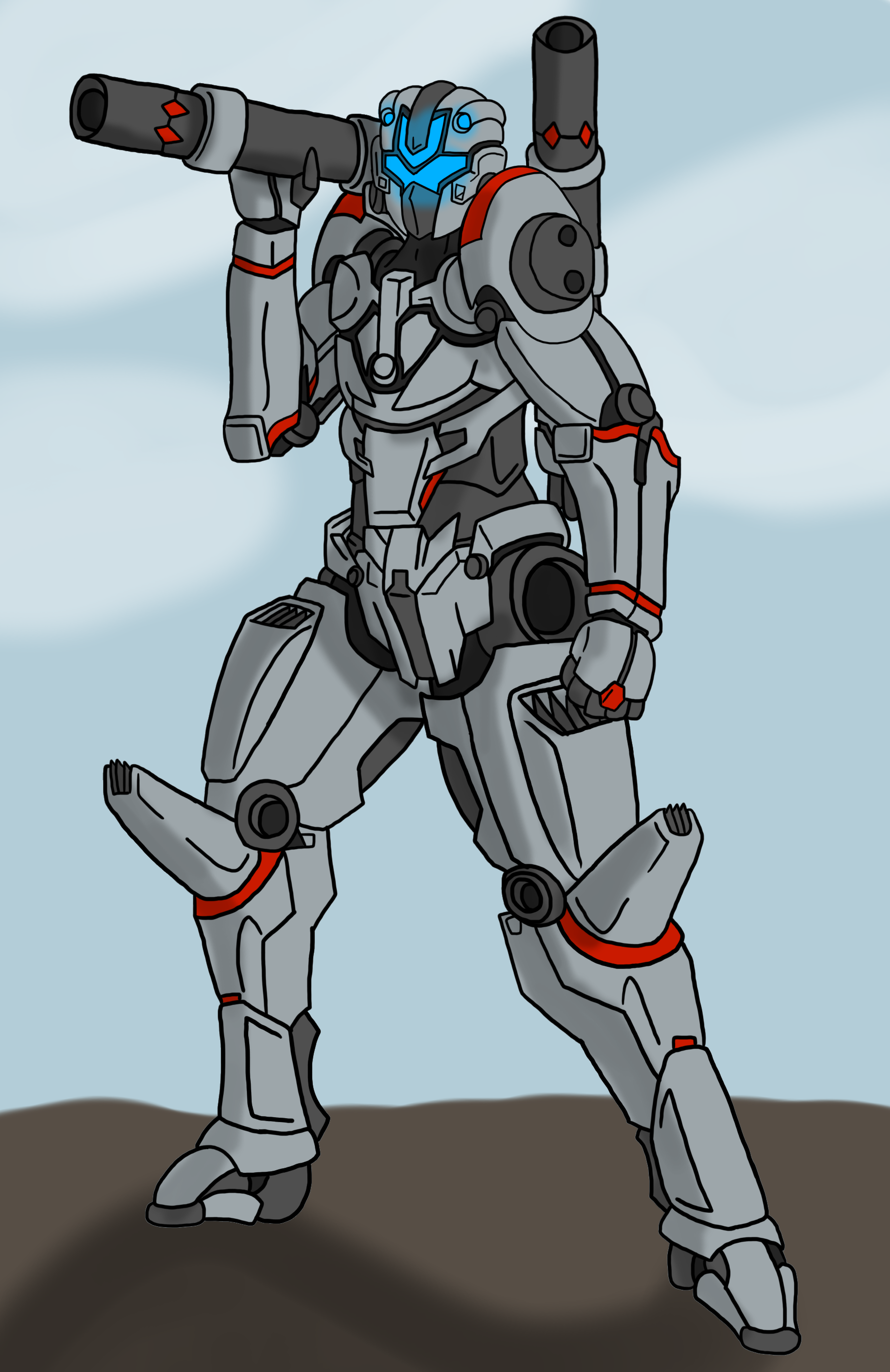
You probably remember the silhouette. It’s that tall, spindly thing with two massive cannons sticking out over its shoulders like a pair of oversized cigars. That is Coyote Tango. It isn't the shiny, neon-lit Gipsy Danger or the bulky tank that was Cherno Alpha. Honestly, it looks a bit outdated because, well, it is. It’s a Mark-1. It was built in a rush when the world was literally screaming in terror because giant monsters were walking out of the ocean and leveling cities like they were made of LEGO bricks.
Most people just think of it as "the one Stacker Pentecost piloted." That's true, but it’s also a gross oversimplification of a machine that basically defined why the Jaeger program was both a miracle and a complete nightmare for the people involved.
The Brutal Reality of the Mark-1 Program
Coyote Tango was the second Mark-1 Jaeger ever launched. It came out of the Tokyo Shatterdome. Think about the timeline for a second. The K-Day attack in San Francisco happened in 2013. By 2015, Japan was launching this massive, nuclear-powered middle finger to the Kaiju. They didn't have years to refine the tech. They were building the plane while it was crashing.
The Mark-1s were famously "dirty." That’s the term the lore uses, and it’s not just flavor text. These things were powered by unshielded nuclear reactors. You read that right. The pilots were essentially sitting on top of a live atomic bomb with minimal lead lining because shielding was heavy and they needed the Jaeger to actually move. It’s a miracle anyone survived the cockpit, let alone the fight.
Stacker Pentecost and Tamsin Sevier were the ones who took the stick. They were the original duo. But here is where the tragedy starts to bake into the metal. Mark-1 pilots didn't just get medals; they got cancer. The radiation exposure was a death sentence disguised as a hero’s journey.
The Onibaba Incident and the Solo Pilot Myth
We see a snippet of this in the first Pacific Rim movie during Mako Mori’s "drift memory." A young Mako is crying in the streets of Tokyo, a red shoe in her hand, while a giant crustacean-looking monster—Onibaba—chases her down. Then, out of the dust, Coyote Tango appears.
It looks heroic. It is heroic. But the cost was insane.
During that fight, Tamsin Sevier blacked out. The neural strain of the Drift—the bridge between two brains—is a lot for any human, but the early tech was glitchy and punishing. Stacker Pentecost did something that was supposed to be impossible. He stayed in the Drift alone. He piloted Coyote Tango solo for three hours to finish the fight and kill Onibaba.
- He saved Mako.
- He saved Tokyo.
- He effectively ended his own career and shortened his life.
The human brain isn't wired to handle the data output of a skyscraper-sized robot by itself. It’s like trying to run a modern high-end video game on a calculator from 1994. It’ll melt the hardware. Stacker’s "hardware" survived, but he was never the same. He suffered from severe radiation sickness and neurological damage that meant he could never pilot again without it literally killing him.
Design Specs: Form Following Desperation
If you look at the design of Coyote Tango, it’s incredibly lean compared to later models. It’s tall. It’s 280 feet of light-weight alloy and ambition. Unlike the Mark-3s which were more balanced, Tango was a long-range specialist.
Those shoulder cannons? Those are Ballistic Mortar Cannons.
The strategy was simple: don't get close. Mark-1 armor was thin. If a Kaiju like Onibaba got its claws into Tango, the Jaeger was going to fold. So, the pilots used the cannons to soften the target from a distance. It was a sniper in a world of brawlers.
It also had an Energy Caster in the chest, but it was rarely used because of the massive power draw. Basically, if you fired the chest laser, you might not have enough juice left to walk home. It’s that kind of desperate engineering that makes the early lore of the franchise so much more grounded than the sequels. This wasn't a superhero story. It was a story about engineers and soldiers trying to stop a leak in a dam with their bare hands.
What Happened to the Machine?
A lot of fans ask what happened to the physical unit. After Pentecost and Sevier were retired due to illness, Coyote Tango didn't just go to a museum. It stayed in the fight. New pilots took over—Gunnar and Vic Tunari.
It eventually met its end during the "St. Lawrence Island" incident. It wasn't some grand, cinematic sacrifice like Gipsy Danger’s final run. It was just another day in the meat grinder of the Kaiju War. The Jaeger was destroyed, and the era of the Mark-1s effectively ended with it. It’s sort of poetic that the machine which saved Mako Mori and defined Stacker Pentecost’s legacy ended up as scrap metal long before the events of the first film actually began.
Why We Should Care About the Legacy of Coyote Tango
It represents the "Experimental Era." Today, we’re used to tech that works. Your phone doesn't give you radiation poisoning just because you made a call. But in the world of Pacific Rim, the first generation of defenders were essentially human sacrifices.
There’s a grit to Coyote Tango that the later, sleeker Jaegers lack. It was ugly. It was dangerous to its own pilots. It was a product of a world that had no other options. When you see it standing in the ruins of Tokyo in Mako’s memory, you aren't just seeing a robot. You’re seeing the moment humanity decided to stop running and start swinging back, even if it cost them everything.
Surprising Facts You Might Have Missed
- The Color Scheme: Most people think it’s just grey. It’s actually a navy blue and tactical grey mix, meant to mimic the Japanese maritime defense forces.
- The Height: It’s actually one of the tallest Jaegers relative to its weight. This gave it a high center of gravity, making it prone to tipping if it got hit hard—hence the long-range cannon focus.
- The Speed: For a Mark-1, it was surprisingly fast on its feet. It had a "Swift" movement rating that beat out many of the heavier Mark-2s that followed.
Actionable Insights for Fans and Lore Buffs
If you want to actually "experience" Coyote Tango beyond the five minutes of screentime it gets, you have to look into the expanded media.
- Read "Pacific Rim: Tales from Year Zero": This graphic novel gives much more context to the Tokyo attack and the internal toll the Drift took on Tamsin and Stacker. It’s where the "soul" of the machine is really explained.
- Check the Model Kits: If you’re a collector, the NECA or Bandai figures of Tango show off the hydraulic systems and the "exposed" look of the Mark-1s. It helps you appreciate the scale and the vulnerability of the design.
- Watch the Mako Memory Scene in 4K: Pay attention to the sound design. You can hear the mechanical screaming of the mortar cannons. It’s not a clean sound; it sounds like metal grinding against metal.
The story of humanity’s survival isn't just about the victories. It’s about the machines that held the line when we were losing. Coyote Tango was the line. It was a flawed, radioactive, clunky masterpiece that bought the world enough time to build something better. It deserves more than being a footnote in a Wikipedia entry. It’s the reason there was a world left to save in the first place.