If you’ve ever spent a Saturday morning with a toddler, you know the theme song. It’s catchy. It’s loud. It’s basically the soundtrack to modern parenting. Blaze and the Monster Machines isn’t just another show about trucks; it’s a STEM-heavy powerhouse that teaches kids about trajectory, friction, and buoyancy while they think they’re just watching a race. But honestly, the heart of the show isn’t the science. It’s the cast.
The characters in Blaze and the Monster Machines are surprisingly distinct for a show aimed at preschoolers. You have the hero, the rival, the comic relief, and the technical genius. It’s a classic ensemble cast, just with more tires and high-octane boosters.
Why Blaze is More Than Just a Red Truck
Blaze is the star. Obviously. He’s the only truck in Axle City with a human driver, AJ, which always felt a little weird if you think about it too hard. Does Blaze have a soul? Does AJ own him? We don’t go there. We just enjoy the Blazing Speed.
Blaze is unique because of his transformation ability. He can turn into anything—a hydrofoil, a crane, a hair dryer—provided he understands the engineering behind it. This is where the show’s educational "MVD" (Mass, Velocity, Distance) elements kick in. Kids see Blaze encounter a problem, and they watch him solve it through physical adaptation. It’s a brilliant way to introduce engineering concepts without being boring.
He’s also the moral compass. Blaze never cheats. He’s the guy who stops to help a fallen competitor even if it means losing the race. That’s a heavy burden for a monster truck, but he carries it well.
AJ: The Kid Behind the Wheel
AJ is eight. He’s a tech prodigy. While most eight-year-olds are struggling with long division, AJ is calculating the exact angle of a jump using his Visor View.
The dynamic between AJ and Blaze is one of pure partnership. AJ provides the data; Blaze provides the power. It’s a symbiotic relationship that highlights the "Machines" part of the show's title. Interestingly, AJ is one of the few humans we ever see. Axle City is mostly populated by sentient vehicles, which makes you wonder about the world-building, but again, don't overthink it. AJ’s role is to be the audience surrogate, asking the kids at home to help him count or identify shapes.
Gabby: The Mechanic Every Team Needs
You can’t run a racing team without a mechanic. Gabby is the best in the business. She’s nine years old and runs the Monster Wash and the garage.
- She uses a pneumatic wrench like a pro.
- Gabby often provides the specialized tools Blaze needs for his more complex transformations.
- She’s a great example of breaking gender stereotypes in STEM-focused media.
Gabby doesn't just fix trucks; she understands them. When Starla loses a piston or Zeg cracks a chassis, Gabby is the one who keeps the wheels turning.
The Rivalry: Crusher and Pickle
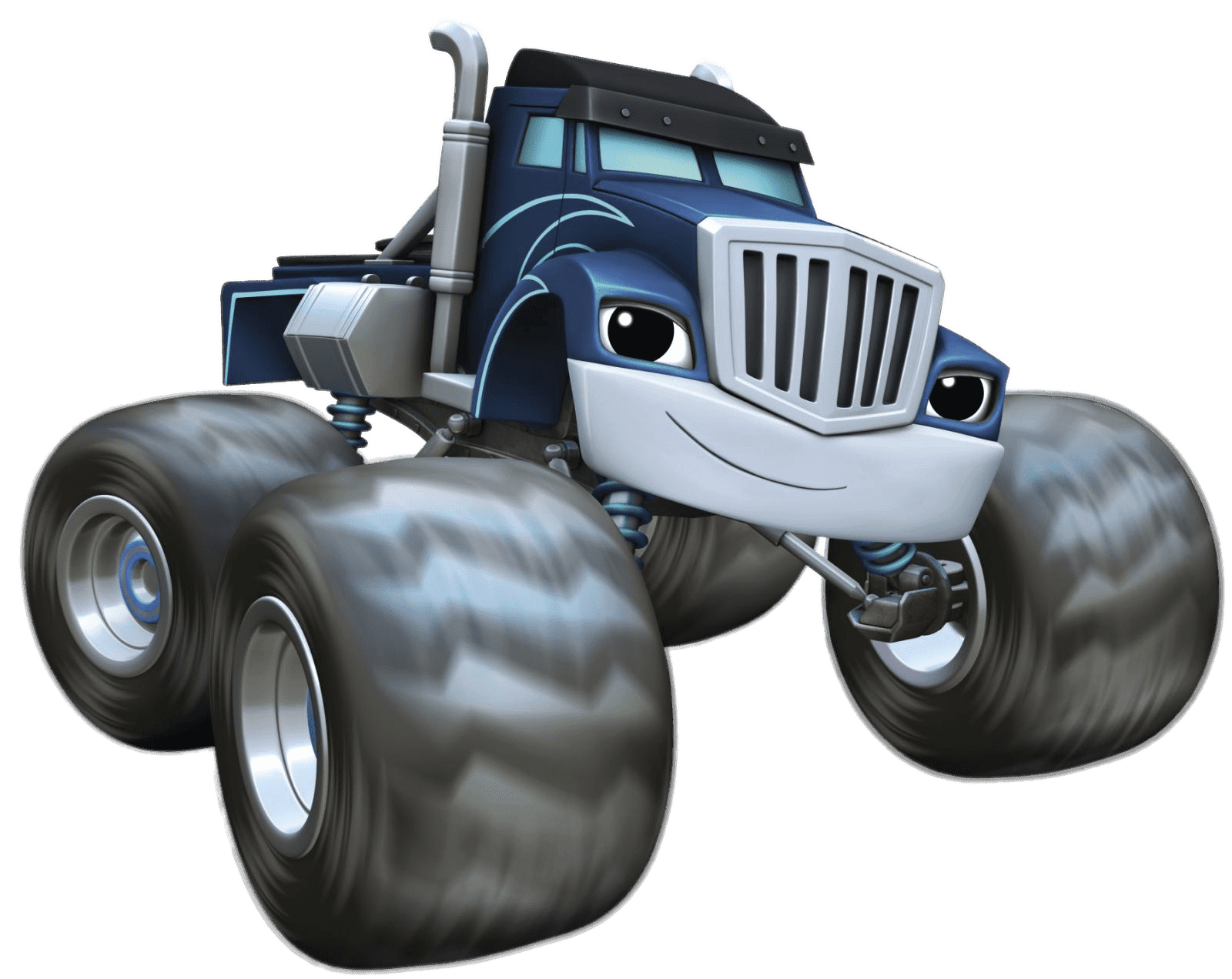
Every hero needs a foil. Enter Crusher. He’s a massive blue tractor-trailer who is, quite frankly, terrible at winning fairly. Crusher is the quintessential "bad guy" for the preschool set. He isn't truly evil—he's just deeply insecure and incredibly lazy.
Crusher’s whole brand is cheating. He builds "cheating gadgets" in every episode. Usually, these gadgets backfire in a spectacular, slapstick fashion. It's a classic trope, but it works because it teaches kids that shortcuts usually lead to a giant mess.
Then there’s Pickle.
Pickle is Crusher’s sidekick and, honestly, the best character in the show. He’s a tiny green monster truck who serves as Crusher’s conscience, though Crusher never listens. Pickle is the one who points out the obvious flaws in Crusher's plans. He’s funny, he’s sweet, and he’s remarkably loyal to a guy who treats him like a footstool. Their dynamic is the comedic backbone of the series.
The Rest of the Monster Machine Crew
The supporting characters in Blaze and the Monster Machines bring the variety. They aren't just background noise; they represent different personalities and interests.
Starla is a cowgirl truck. She’s got a lasso and a thick Southern accent. She’s all about grit and determination. If there’s a problem that requires a "yee-haw" and some rope-slinging, Starla is on it. She adds a bit of flair to the group and is often the one pushing the others to be brave.
Stripes is a tiger truck. He can climb anything. His claws are basically all-terrain anchors. Stripes brings the "animal" element to the show, behaving a bit more instinctively than the others. He’s the one you want when the race heads into the jungle.
Zeg is part dinosaur, part monster truck. He speaks in the third person. "Zeg smash!" He’s the brute force of the group. While Blaze is about precision and engineering, Zeg is about momentum and power. He’s also surprisingly sensitive for a guy made of prehistoric metal.
Darington is the ultimate showman. He lives for stunts. He loves the spotlight. Sometimes his ambition outweighs his ability, leading to some pretty epic crashes, but he always gets back up. He represents the "daredevil" aspect of automotive culture.
Watts is a newer addition to the main roster. She’s an electric truck! This was a smart move by the creators to modernize the show. Watts runs on electricity, has specialized electric tires, and her driver is Gabby (sometimes). She brings a whole new set of "power" concepts to the STEM curriculum, specifically focusing on circuits and charge.
The Science of Axle City
When we talk about characters in Blaze and the Monster Machines, we have to talk about how they interact with their environment. The show uses "The Big Bad" (usually Crusher's latest scheme) to teach a specific lesson.
Let’s say Crusher tries to blow Blaze away with a giant fan. The show will stop and explain Air Pressure. It’s not just a plot point; it’s a vocabulary lesson. The characters are essentially delivery vehicles for these concepts. When Blaze asks for "Blazing Speed," he’s not just going fast; he’s demonstrating the relationship between fuel, combustion, and velocity.
Why It Works for Kids
The characters are color-coded and personality-coded. It’s easy for a four-year-old to track.
- Red is the leader (Blaze).
- Blue is the grumpy one (Crusher).
- Yellow is the daredevil (Darington).
- Pink/Orange is the cowgirl (Starla).
This simplicity allows the show to get away with much more complex educational content. You can explain centripetal force to a toddler if you use a bright yellow truck and a loop-de-loop.
Common Misconceptions About the Show
People think it's just for boys. Not true. Gabby and Starla are two of the strongest characters, and Watts has become a fan favorite. The show leans heavily into the idea that anyone can be a mechanic or an engineer.
Another misconception is that it’s just mindless "vroom vroom" action. If you actually sit down and watch an episode, the amount of technical terminology is staggering. They use words like "acceleration," "torque," and "adhesion" correctly. It’s essentially a remedial physics course disguised as a toy commercial. And hey, it works.
Actionable Tips for Parents Using Blaze for Learning
If your kid is obsessed with these characters, you can actually use that to sneak in some real-world learning. It’s easier than you think.
- Gravity Experiments: Use toy cars and a piece of cardboard. Change the height of the "ramp" and ask your kid which character would go fastest. (Hint: It’s always Blaze, but let them figure out why).
- Simple Machines: Point out levers and pulleys in real life. Call them "Gabby tools." It sticks.
- Vocabulary Reinforcement: When you’re at the park, talk about "force" when pushing them on a swing. Use the terms AJ uses. They will feel like they’re part of the show.
- Problem Solving: When a toy breaks or a block tower falls, ask "What would Blaze do?" This encourages them to look at the "how" and "why" of a situation rather than just getting frustrated.
The characters in Blaze and the Monster Machines have staying power because they are more than just vehicles. They are teachers, friends, and sometimes, very silly trucks who get covered in giant meatballs because a cheating trailer-truck's gadget exploded. Whether it's Blaze's leadership or Pickle's jokes, there's a reason this show remains a titan of preschool television.
Next Steps for Enthusiasts
To get the most out of the show's educational value, start by identifying your child's favorite character and focusing on their specific "specialty." If they love Stripes, focus on biology and climbing. If they love Watts, talk about batteries and electricity. You can find printable STEM journals online that follow the show's format, allowing kids to "track" their own experiments just like AJ does with his visor. This moves the experience from passive screen time to active engagement with the physical world.