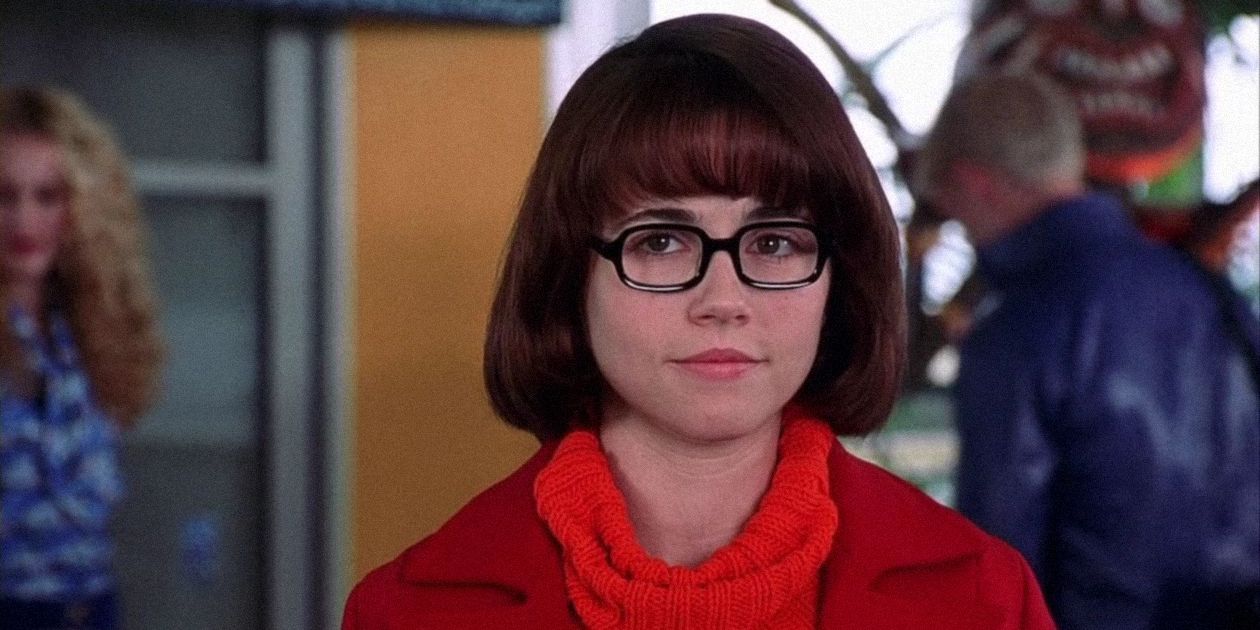
When you think of Velma Dinkley, you probably picture the thick-rimmed glasses, the orange turtleneck, and that specific "I lost my glasses!" energy. But honestly, identifying who played Velma in the Scooby-Doo movies is a bit of a rabbit hole because the character has been reimagined so many times across live-action and voice acting. It isn't just one person. It's a legacy.
She is the brains. Without her, Mystery Inc. is basically just a guy in an ascot and a hungry Great Dane running in circles. Over the last two decades, Hollywood has tapped everyone from indie darlings to pop stars to fill those iconic shoes.
The Definitive Live-Action Velmas
Most people start their search with the 2002 theatrical film. That was the moment Scooby-Doo jumped from Saturday morning cartoons to a big-budget Hollywood spectacle.
Linda Cardellini is, for many, the definitive live-action Velma. She took on the role in the 2002 Scooby-Doo and its 2004 sequel, Scooby-Doo 2: Monsters Unleashed. Cardellini didn't just play a caricature; she brought a weirdly relatable, slightly cynical depth to the part. James Gunn, who wrote the screenplay, actually intended for Velma to be explicitly queer in those early drafts, though the studio famously watered that down. Cardellini’s performance still carries that dry wit that makes those movies cult classics today. You've likely seen her since in Dead to Me or as Laura Barton in the Marvel Cinematic Universe, but she’ll always be the girl in the orange sweater to a certain generation.
Then things got a little more "made-for-TV."
In 2009 and 2010, Cartoon Network released two prequel films: Scooby-Doo! The Mystery Begins and Scooby-Doo! Curse of the Lake Monster. Here, Hayley Kiyoko stepped into the role. Long before she was known as the "Lesbian Jesus" of pop music, Kiyoko was solving mysteries. She played a younger, slightly more energetic version of the character. It’s a fascinating bit of trivia because Kiyoko’s casting was one of the first times we saw a person of color take on the role in live-action, a trend that would continue later on.
Eventually, the franchise tried a different spin with the 2018 spin-off Daphne & Velma. This time, Sarah Jeffery played the titular brainiac. It was a more modern, tech-focused origin story that didn't feature the rest of the gang. It’s a bit of an outlier, but if you're counting every person who played Velma in the Scooby-Doo movies, Jeffery is a key part of that timeline.
The Voice Behind the Mystery
Live-action is only half the story. If we’re being real, the "movies" also include the massive library of direct-to-video animated features that have been coming out yearly since the late 90s.
For a massive chunk of that history—specifically from 2002 to 2015—Minday Cohn was the voice. You might remember her from The Facts of Life. Cohn’s voice became the standard for Velma in films like Scooby-Doo! and the Loch Ness Monster and Chill Out, Scooby-Doo!. She had this raspy, intelligent quality that felt like a natural evolution from the 1969 original.
After Cohn stepped down, Kate Micucci took over the mantle. Micucci, one half of the comedy duo Garfunkel and Oates, brought a quirkier, high-pitched neurosis to the character. She has voiced Velma in almost every animated movie since 2015, including the crossovers with Batman and Courage the Cowardly Dog.
And then there's the big-budget 2020 animated reboot, Scoob!.
In an effort to bring in "star power," the studio cast Gina Rodriguez. While the movie received mixed reviews, Rodriguez tried to ground Velma with a more confident, modern tone. It was a departure from the traditional "nerdy" archetype, showing just how much the character can bend without breaking.
The Adult Animation Shift
We have to talk about the 2023 Max series Velma.
It’s polarizing. Some people loved the meta-commentary; others... well, they didn't. Mindy Kaling voiced this version of the character, which was a significant departure from the mystery-solving teen we knew. This Velma was cynical, self-aware, and the lead of her own adult-oriented show. While technically a TV series, its impact on the "who played Velma" conversation is massive because it completely reshaped the character's public image for a new era.
Why Velma Changes So Much
It’s about the archetype. Velma represents the "smartest person in the room," but how we view "smart" changes every decade.
In the 70s, she was the bookish girl in the background. By the 2000s, Linda Cardellini made her a bit of a frustrated genius. By the 2020s, she became a symbol of diverse intelligence and even a queer icon. Every actress who takes the role adds a layer of their own personality to that foundation.
A Quick Summary of Notable Velmas:
- Linda Cardellini: The theatrical icon (2002–2004).
- Hayley Kiyoko: The prequel pioneer (2009–2010).
- Sarah Jeffery: The spin-off lead (2018).
- Mindy Cohn: The long-running animated voice (2002–2015).
- Kate Micucci: The current animated mainstay.
- Gina Rodriguez: The big-screen voice reboot (Scoob!).
- Mindy Kaling: The adult-animation reimagining.
If you’re looking to dive back into the franchise, the best way to see the evolution is to watch the 2002 Scooby-Doo followed immediately by 2020's Scoob!. The difference in how Velma is written and performed is staggering.
To truly appreciate the character's history, check out the various behind-the-scenes features on the Scooby-Doo 2: Monsters Unleashed home releases, where Linda Cardellini discusses the physical comedy required for the role. You can also track the character's shifting identity through fan communities like the Scooby-Doo subreddit or the extensive archives at the Hanna-Barbera wiki.
The next time you see a girl in a turtleneck and glasses on screen, you'll know she's standing on the shoulders of some seriously talented performers. Keep an eye on future casting announcements, as the "multiverse" of Scooby-Doo shows no signs of slowing down.
Next Steps for Fans:
- Watch the Prequels: If you've only seen the Cardellini films, find Scooby-Doo! The Mystery Begins to see a young Hayley Kiyoko bring a different energy to the role.
- Compare the Voices: Listen to a clip of Mindy Cohn versus Kate Micucci to hear how the "sound" of Velma has shifted from a low rasp to a high-pitched quirk.
- Explore the Origins: Look up Nicole Jaffe, the original 1969 voice actress, to see where the "Jinkies!" catchphrase actually started.