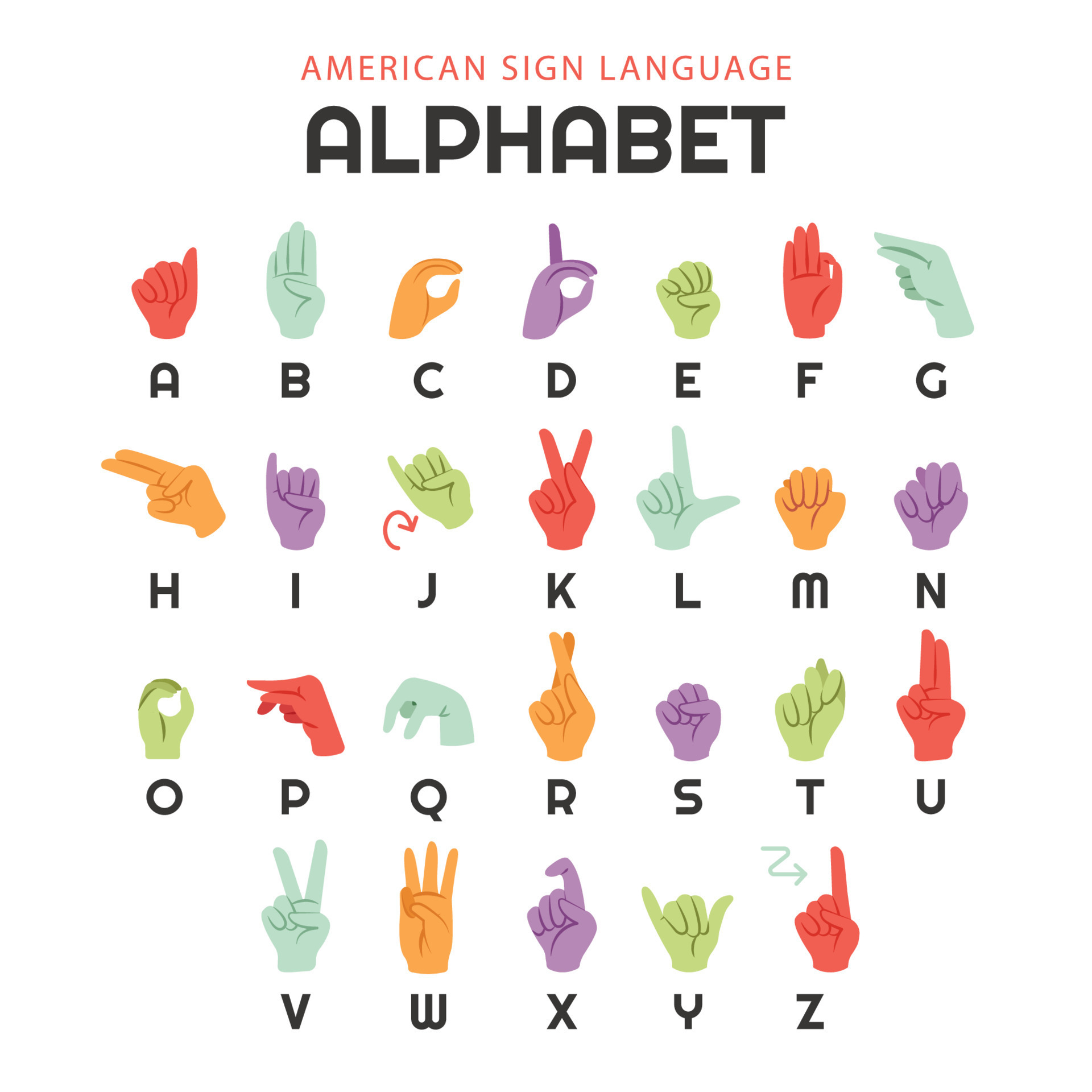
Honestly, if you grew up as a Deaf person in America, the "TV show in ASL" experience used to be pretty much non-existent. You had two choices. You could watch a hearing actor stumble through three weeks of sign language training to play a "miracle" patient on a medical drama, or you could squint at those tiny, blurry closed captions that lagged five seconds behind the actual jokes. It was exhausting. It wasn't entertainment; it was a chore.
But something shifted. It wasn’t just one thing. It was a slow burn that turned into a full-on cultural movement where American Sign Language (ASL) isn't just a gimmick or a "special episode" theme anymore. It’s the star.
The Evolution of the TV Show in ASL
We’ve moved past the "Cocker Spaniel" era of Deaf representation. That’s what some advocates call the old trope where Deaf characters were just there to be cute, pitied, or rescued. Now, we’re seeing shows where ASL is the primary language of the narrative. This isn't just about putting a sub-picture of an interpreter in the corner of the screen—though that has its place in news and emergency broadcasts. It’s about "Deaf Gain."
Take Switched at Birth. It’s probably the most cited example for a reason. It was the first mainstream scripted series to feature multiple Deaf and hard-of-hearing series regulars. They even did an entire episode—"Uprising"—completely in ASL with no spoken dialogue. That was 2013. It felt like a revolution. Seeing a TV show in ASL on a major network like ABC Family (now Freeform) proved that hearing audiences wouldn't just turn the channel if they had to read subtitles. They actually liked it. The silence wasn't "empty." It was full of information.
Why authentic casting is a non-negotiable now
You can't talk about ASL on screen without talking about the "nothing about us without us" mantra. For decades, Hollywood thought they could just "learn" the hands. They were wrong. ASL is a 3D language involving the face, the torso, and the space around the body. When a hearing actor tries to fake it, native signers can tell in two seconds. It looks "accented" or, worse, completely unintelligible.
Look at Echo on Disney+. Alaqua Cox, who is Deaf and Indigenous, brings a physicality to the role that a hearing actor simply couldn't mimic. The way she signs is gritty. It’s fast. It’s real. The show doesn't treat her deafness as a disability to be overcome; it's just her reality. The showrunners even made sure the camera angles were wide enough to capture her hands—a technical detail that many directors miss because they're too used to tight "talking head" shots.
How to actually find a good TV show in ASL today
If you're looking for content where ASL is the heartbeat, you have to know where to look. Netflix has been a surprisingly strong player here. Deaf U was a massive talking point a few years back. It’s a reality show following students at Gallaudet University. It wasn't polished or "inspirational" in that annoying way. It was messy. It was about dating, cliques, and the "Deaf Elite." It showed the nuances of ASL—how some people sign "Black ASL," how some use more English-influenced signs, and how others are fiercely proud of their "Profoundly Deaf" identity.
Then there’s This Close on Sundance Now. Created by, written by, and starring Shoshannah Stern and Josh Feldman, both of whom are Deaf. This is probably the gold standard for a TV show in ASL because it wasn't filtered through a hearing lens. The humor is specific to the community. The frustrations—like people shouting at you because they think it helps you hear better—are relatable but told with a sharp, comedic edge.
The technical shift: Subtitles vs. Direct Expression
We need to be clear about something: closed captions are not the same thing as an ASL version of a show. Captions are a translation of English. ASL is its own language with its own grammar and syntax. When you watch a TV show in ASL, you’re watching a different grammatical structure.
- English: "I am going to the store."
- ASL: "STORE ME GO." (With specific facial markers for tense and intent).
Because of this, many Deaf viewers prefer content originally created in ASL rather than just dubbed or captioned versions of hearing shows. It’s the difference between reading a translation of a poem and hearing the original.
The "Quiet" Revolution in Kids' Programming
Don't sleep on what's happening in children's television. It's actually where some of the most consistent ASL integration is happening. Sesame Street has been doing this for decades with Linda Bove, but newer shows like Barney’s World or Sesame Street’s recent introductions of recurring Deaf characters (like TJ) are making signing a "normal" part of the landscape.
There is also the "Sign Language Version" feature that some streamers are experimenting with. For example, Disney+ added an "ASL version" for Ant-Man, The Avengers, and The Little Mermaid (2023). This isn't just a guy in a box. It’s a full-screen, synchronized performance by a Deaf actor who interprets the entire film. It’s a massive step for accessibility because it allows a Deaf child to see the emotion of the dialogue, which text captions often fail to convey. Text can't show sarcasm or fear as well as a skilled ASL performer can.
Misconceptions that still linger
A lot of people think that if a show has ASL, it’s "educational." It’s not. Or at least, it shouldn't have to be. People watch The Last of Us to see a gripping survival story. When the show introduced Sam, a young Deaf character, it didn't stop the plot to explain how ASL works. It just used the language to deepen the bond between the characters. Keivonn Woodard, the actor who played Sam, became the youngest Emmy nominee in his category. That’s the goal: for the language to be a vehicle for elite storytelling, not a lesson plan.
Another misconception is that ASL is universal. It really isn't. If you watch a TV show in ASL and then watch a British show featuring BSL (British Sign Language), you won't understand much. They are completely different language families. ASL is actually more closely related to French Sign Language (LSF). This is a detail Hollywood sometimes fumbles, but audiences are getting smarter. They notice when the "signer" is just waving their hands around randomly.
What’s next for ASL on the small screen?
The future looks like more "Open Access." We’re starting to see more Deaf creators behind the camera. That’s the real shift. When the director, the writer, and the editor understand the visual rhythm of ASL, the final product changes. You get fewer cuts during a conversation. You get more creative uses of "POV" shots. You get stories that aren't just about "being Deaf" but are about being a spy, a chef, or a detective who happens to sign.
We are also seeing the rise of "ASL-first" digital platforms. DPAN.tv (The Deaf Professional Artists Network) has been a pioneer in this, creating news and entertainment specifically for the community. While mainstream TV catches up, these independent hubs are where the real innovation happens.
Practical ways to support and find ASL content
If you’re a hearing person trying to learn or a Deaf person looking for something new, here’s how you navigate this world without wasting your time on "fake" representation.
- Check the credits. If there isn't a DASL (Director of ASL) listed, be skeptical. A DASL ensures that the signs used are culturally and grammatically correct. They are as essential as a stunt coordinator.
- Look for "ASL Version" in the "Extras" or "Bonus Content" tabs. On Disney+ and some Netflix titles, these are often hidden in the sub-menus rather than being listed as a separate show.
- Follow Deaf critics. People like Rikki Poynter or outlets like The Daily Moth provide legitimate reviews of how ASL is handled in new releases. They’ll tell you if the signing is "SODA" (Signer Of Deaf Ancestry) quality or just someone who watched a YouTube tutorial five minutes before the cameras rolled.
- Support indie Deaf film. Festivals like Easterseals or the Seattle Deaf Film Festival often showcase pilots and shorts that eventually get picked up by bigger networks.
The reality is that a TV show in ASL isn't just for a niche audience. It's a different way of experiencing narrative. It forces you to look at the actors. Truly look at them. You can't scroll on your phone and "watch" a show in ASL. It demands your full attention, your eyes, and your presence. In an age of distracted viewing, that might be its greatest strength.
The industry is finally realizing that the "Deat Talent" pool is deep. We’ve seen Marlee Matlin win an Oscar, Troy Kotsur win an Oscar, and now we’re seeing a new generation—actors like Lauren Ridloff (The Walking Dead, Eternals) and Millicent Simmonds (A Quiet Place)—proving that ASL is a cinematic language. It’s expressive, it’s fast, and it’s beautiful. If you haven't sat down to watch a series where the hands do the talking, you're missing out on one of the most vibrant parts of modern television. Just turn off your phone, turn on the subtitles, and watch the story unfold in 3D.
Next Steps for Enthusiasts:
- Search for "ASL" in your streaming app search bar. Many platforms have finally started tagging content correctly so you can find movies and series with signing characters in one place.
- Support "Coda" and "Echo" on their respective platforms. High viewership numbers for these titles tell executives that there is a massive, underserved market for ASL-centric stories.
- Learn the basics. If you find yourself captivated by a show, apps like Lingvano or ASL Bloom offer lessons taught by Deaf instructors, ensuring you learn the culture alongside the signs.