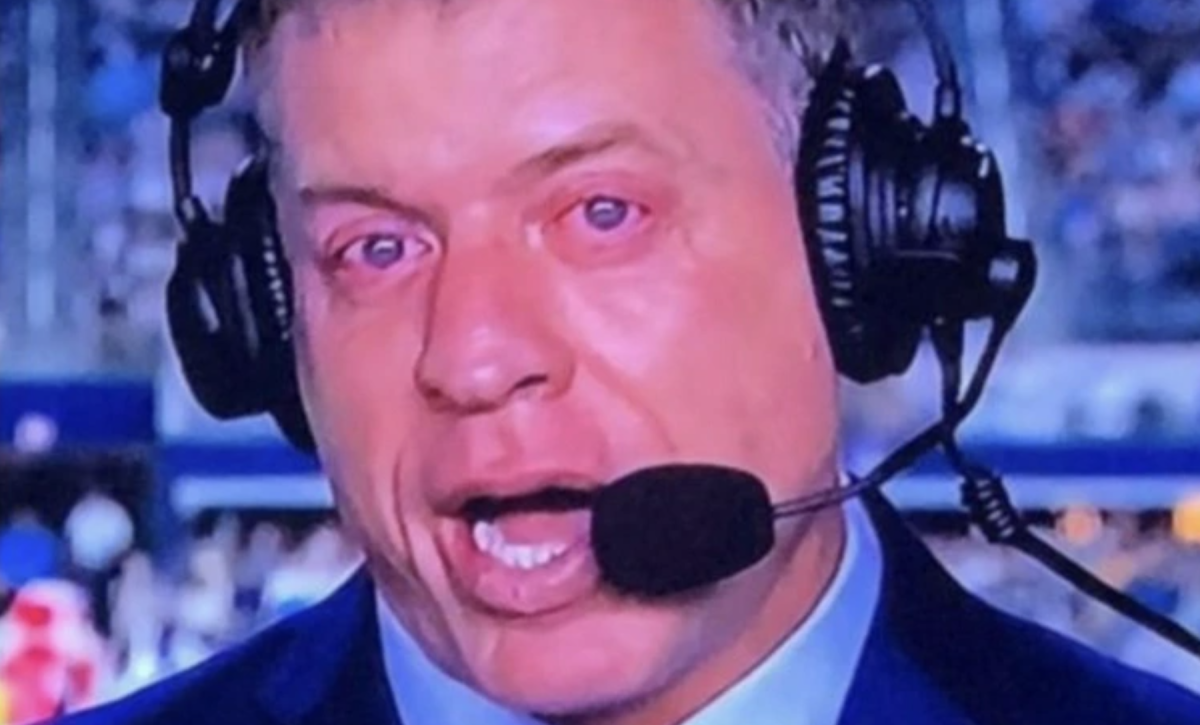
Money in sports is weird. One day you're winning Super Bowls and taking home a few million bucks, and the next, you're sitting in a climate-controlled booth talking about those same games for triple the paycheck. That’s the reality for Troy Aikman. If you’ve tuned into Monday Night Football lately, you aren’t just hearing the voice of a Dallas Cowboys legend. You’re hearing one of the most expensive voices in the history of television.
Honestly, the numbers are a bit staggering.
When Aikman made the jump from Fox to ESPN in 2022, he didn't just switch jackets. He reset the entire market for what a "color commentator" is worth. For twenty years, he was the stable, slightly dry, but incredibly sharp voice alongside Joe Buck at Fox. Then, Disney backed up the Brink’s truck.
The Massive Payday: Breaking Down the Numbers
So, let's get into the weeds. Troy Aikman salary as announcer currently sits at roughly $18.5 million per year.
His contract with ESPN is a five-year deal worth an estimated $92.5 million in total. Think about that for a second. That is nearly $20 million a year to work about 20 to 22 nights a year. If you break it down by game, he’s pocketing nearly **$1 million every time he puts on the headset**.
It’s a massive jump from his previous life. Back at Fox, he was reportedly making around $7.5 million annually. While that’s "buy a private island" money to most of us, in the world of elite broadcasting, he was actually underpaid compared to the new wave of talent like Tony Romo.
The market shifted, and Aikman knew it.
How He Compares to the Competition
Sports broadcasting has turned into an arms race. It basically started when CBS gave Tony Romo $18 million a year, which made everyone else in the industry look at their paystubs and realize they were getting the short end of the stick.
- Tom Brady: The current king of the hill. He’s pulling in $37.5 million a year from Fox. It makes Aikman’s $18.5 million look like couch change, which is wild to say out loud.
- Tony Romo: Still sitting pretty at about $18 million per year with CBS.
- Kirk Herbstreit: He’s diversified. Between his Amazon Thursday night gig and his ESPN college work, he’s right there in the $18 million club too.
- Joe Buck: Aikman’s longtime partner isn't doing too bad either. He’s making somewhere between $12 million and $15 million a year at ESPN.
It’s a tight circle at the top. These guys aren't just announcers anymore; they’re brand ambassadors.
Why Does ESPN Pay This Much?
You might be wondering why a network would drop nearly $100 million on a guy to talk about football. It feels like a lot. And it is.
But for ESPN, this was a "fix the flagship" move. For years, Monday Night Football felt a little... off. They went through a carousel of booths—remember the "Booger Mobile"?—and the ratings reflected the lack of stability. By hiring Aikman and Buck, ESPN bought instant credibility. They bought the "A-Team."
There’s also the "Sizzle Factor." Having a three-time Super Bowl winner in the booth gives the broadcast a level of authority that's hard to fake. When Aikman criticizes a quarterback for a bad read, people listen because he’s been there. He’s seen the blitz coming.
Also, let’s be real: networks are terrified of losing viewers to streaming. High-profile talent is one of the few ways they can guarantee an audience stays tuned in for the commercials.
More Than Just the NFL
Aikman’s deal isn't strictly limited to showing up on Monday nights. Part of that $18.5 million involves him appearing on other Disney-owned properties. You’ll see him on Get Up, SportsCenter, and occasionally contributing to ESPN+ original content.
Basically, if there’s a major NFL story breaking, ESPN wants their $90 million man on the screen to talk about it.
The Irony of Player Salaries
Here is a fun fact that usually blows people's minds. During his entire 12-season playing career with the Dallas Cowboys, Aikman earned roughly $55.5 million in total.
He will earn significantly more than his entire NFL playing career earnings in just three years of his current ESPN contract.
The league has changed, the TV money has exploded, and Aikman is the primary beneficiary of that timing. He played in an era where $16 million was a massive yearly take-home (which he did in 1999). Now, that’s just the entry fee for a top-tier analyst.
What This Means for the Future
The "Aikman Effect" is real. We’re seeing it with the way networks are scouting active players before they even retire. Everyone is looking for the next guy who can command that $18 million+ salary.
But there’s a ceiling.
Industry insiders often wonder if the bubble will pop. Can networks keep paying $30 million or $40 million to analysts if the ratings don't see a massive, direct spike? Probably not. But for now, Aikman is safe. He’s the gold standard of the "traditional" booth. He’s reliable, he’s prepared, and he doesn’t shy away from being critical when a team is playing like hot garbage.
If you’re looking to track how these salaries evolve, keep an eye on the next round of TV rights negotiations. The more the NFL charges the networks, the more the networks will feel the pressure to have the biggest stars behind the mic.
What You Should Do Next
- Check the Standings: If you're curious if Aikman is "earning" that paycheck, pay attention to the Monday Night Football schedule. High-stakes games usually mean more eyes and more pressure on the booth.
- Compare the Booths: Next Sunday, flip between CBS (Romo) and Fox (Brady) to see the different styles. Aikman is the "old school" technician compared to Romo’s "excitable energy" or Brady’s "new guy" polish.
- Follow the Business: If you’re a sports business nerd, sites like Front Office Sports or Andrew Marchand’s reporting are the best places to see if these contracts get restructured or if the next big star is about to break the bank.
Troy Aikman's salary isn't just a number; it's a reflection of how much we, as a culture, value the NFL as entertainment. As long as we keep watching, the checks will keep getting bigger.