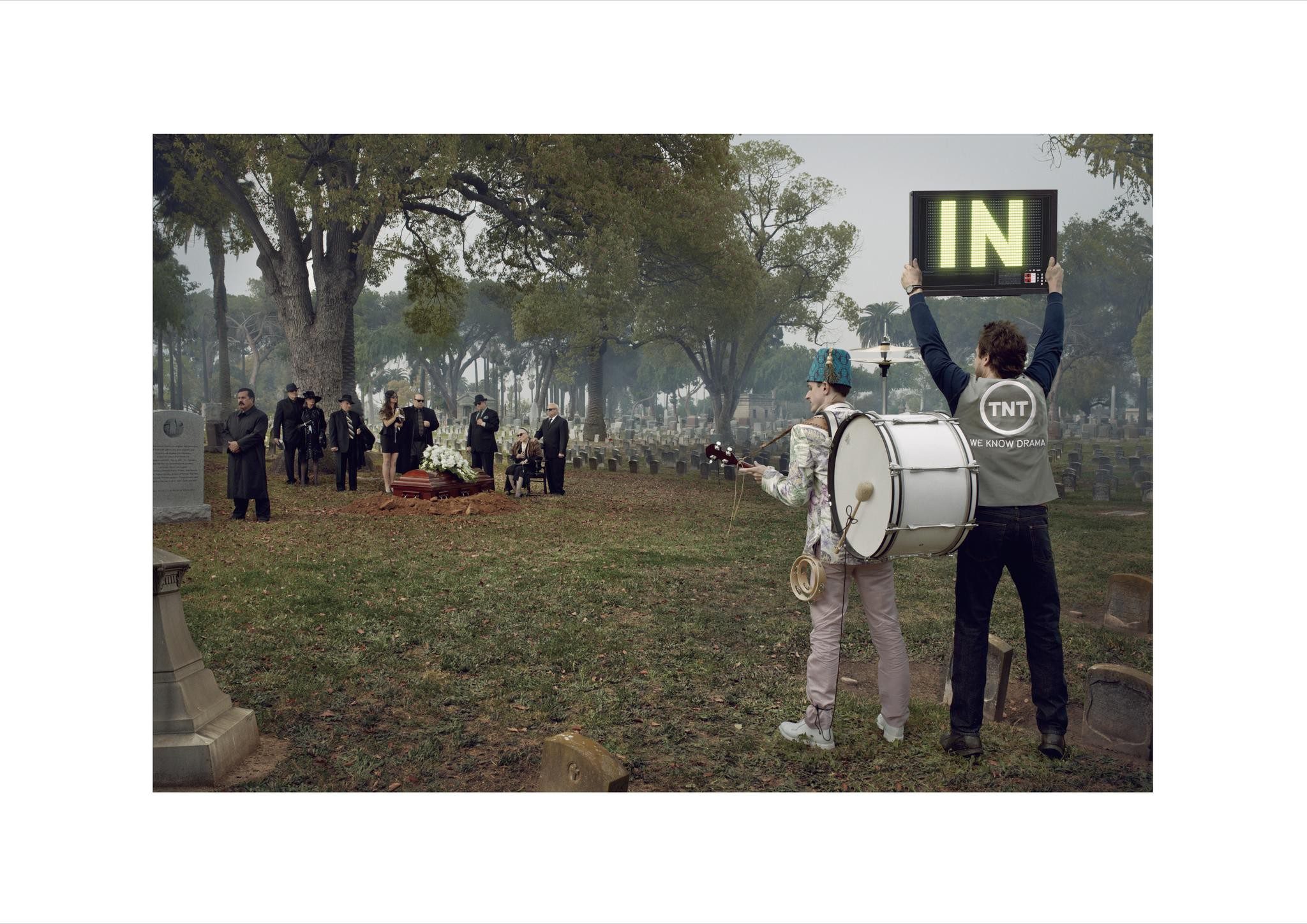
You remember the red button, right? That massive, tempting plastic dome sitting on a pedestal in the middle of a quiet Belgian square. People walked by, looked at it sideways, and eventually, some brave soul would give it a press. Suddenly, a literal ambulance would flip, a biker would start a fistfight with the cops, and a woman in a bikini would ride by on a motorcycle. It was chaotic. It was loud. And at the end, a giant banner unfurled: "TNT: We Know Drama."
Honestly, that 2012 viral stunt was the peak of an era. It wasn't just a commercial; it was the manifesto of the we know drama network—the version of TNT that basically owned your living room in the early 2000s.
But here is the thing: branding like that doesn't just happen because a marketing exec liked the font. It was a calculated, high-stakes pivot that changed how we watch television. Before the "We Know Drama" slogan took over our brains in 2001, TNT was kind of a cinematic junk drawer. You'd find old Westerns, some classic films Ted Turner had lying around, and maybe some wrestling. Then, everything shifted.
Why "We Know Drama" Was More Than Just a Slogan
In June 2001, TNT underwent a massive rebrand. They weren't just playing movies anymore; they were staking a claim. They wanted to be the place where "drama" lived—not just the stuff that makes you cry, but the stuff that makes your heart race. Bradley Siegel, who was the president of Turner Entertainment Networks at the time, basically said the brand emerged from a ton of focus group research. People didn't just want "TV." They wanted an emotional payoff.
The network leaned into this hard. They started snagging the rights to massive procedural hits like Law & Order, Castle, and Bones. For a decade, you couldn't flip to TNT without seeing a detective solving a crime in a sharp suit. It became the "comfort food" of cable.
But it wasn't just about reruns. The we know drama network started making its own hits. Think about The Closer with Kyra Sedgwick. That show was huge. It proved that a basic cable network could produce "prestige" TV that felt as big as anything on the major broadcast networks. They followed it up with Rizzoli & Isles, Falling Skies, and The Last Ship.
The Identity Crisis: From Drama to "Boom"
By 2014, things started getting a bit... weird. The media landscape was shifting. Netflix was no longer just the "DVD-by-mail" company; it was a juggernaut. TNT realized that "We Know Drama" felt a little bit like your dad’s favorite channel. They needed to get younger. They needed to get faster.
So, they killed the slogan.
In May 2014, they replaced it with "TNT Drama. Boom." Yeah, seriously. "Boom."
The idea, according to Kevin Reilly (who took over the reins around that time), was to represent the "aha" moment in a story—the climax, the explosion, the twist. They wanted to attract more male viewers and a younger demographic. It was a pivot toward "thrilling" drama. But to a lot of fans, it felt like the network was trying too hard to be cool.
The Reality of Cable in 2026
If you look at the we know drama network today, it’s a shadow of that "red button" era. In 2022, news broke that Warner Bros. Discovery (the current parent company) was largely moving away from developing new scripted original series for TNT and TBS. It felt like the end of an era.
Now, TNT is a sports powerhouse. If you’re a basketball fan, TNT is the NBA. It’s Inside the NBA with Shaq and Charles Barkley. It’s NHL games and AEW wrestling. The "drama" has shifted from scripted hospital rooms to the literal drama of live sports. It makes sense from a business perspective—live sports is one of the few things people still watch in real-time—but for those of us who grew up on TNT original movies, it’s a bit bittersweet.
What Most People Get Wrong About the Brand
People think TNT failed because they stopped making original shows. That’s not quite it. The reality is that the "middle-of-the-road" adult drama—the $3 million-per-episode procedural—died because of the streaming wars.
When you have a billion options on Max or Netflix, you don't wait until Wednesday at 9:00 PM to see a detective solve a murder. You binge it all at once on a Saturday morning. The we know drama network didn't lose its way; the audience just changed the way they consumed the product.
Actionable Insights for the Modern Viewer
If you’re feeling nostalgic for that classic TNT era, or if you're trying to find where that "vibe" went, here is how you navigate the current landscape:
- Check the Vaults on Max: Most of the classic TNT originals like The Closer or Animal Kingdom are tucked away on Max (formerly HBO Max). If you want that specific brand of drama, that is where it lives now.
- Follow the Creators: Many of the showrunners who built the TNT brand moved to streamers. Look for "procedural" style shows on Amazon Prime or Peacock; they’ve essentially inherited the TNT mantle.
- Watch the Live Transitions: TNT still uses some of that high-intensity branding during NBA playoffs. If you want to see how the "Boom" energy evolved, watch their sports promos. They are still masters of the "dramatic" edit.
The era of the we know drama network as a scripted powerhouse might be over, but its DNA is everywhere. Every time you see a "prestige procedural" on a streaming app, you're seeing the house that Ted Turner and a big red button built.
The world of cable is messy, and honestly, it’s a little bit sad to see the old slogans go. But in the end, TNT proved one thing: they really did know drama. They just had to find a new way to sell it.
To keep up with how these networks are shifting their content in 2026, keep an eye on the sports rights deals—that is where the real drama is happening now.