Sony didn't mean to give everyone X-ray vision.
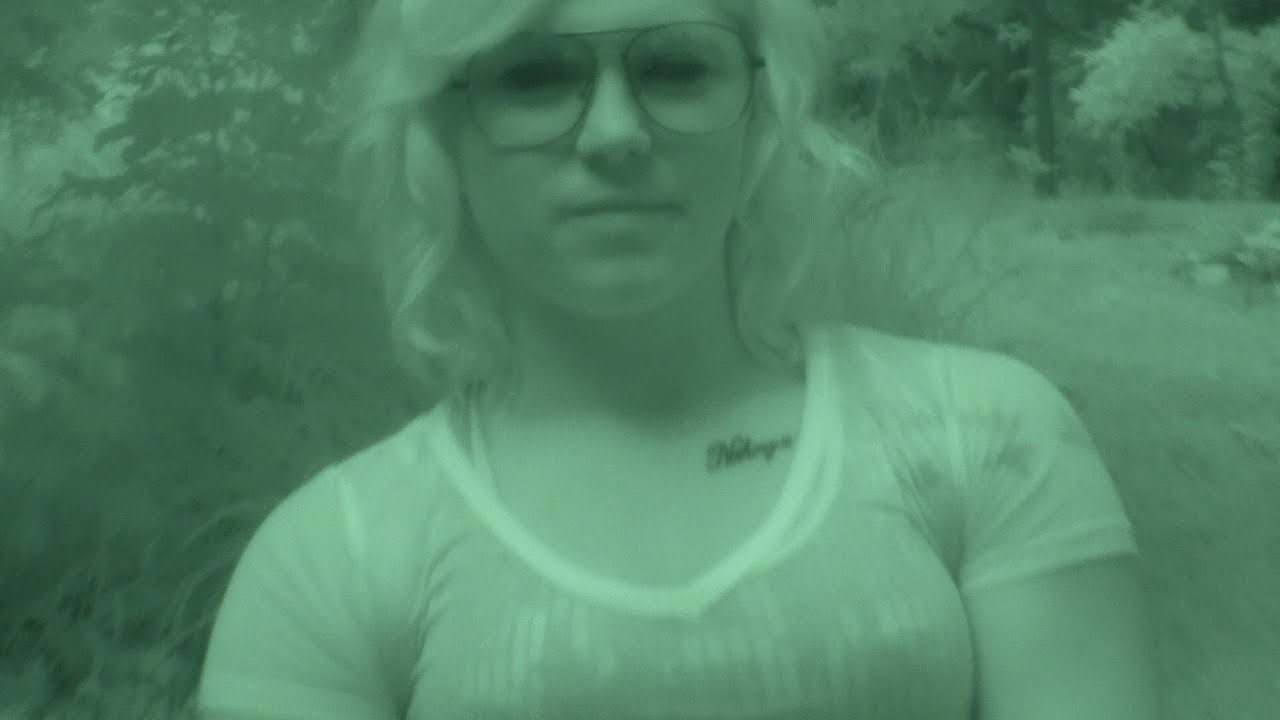
In 1998, the tech giant released a line of Handycam camcorders featuring a brand-new "NightShot" mode. It was a marvel. By flicking a switch, users could film in total darkness using infrared light. But Sony's engineers missed something. They missed the fact that certain fabrics, particularly thin swimwear and synthetic underwear, are transparent to infrared light.
The Sony night vision camcorder 1998 became a legend for all the wrong reasons. Within months of its release, the Japanese magazine Takara-jima published photos proving that the camera could see right through clothes in broad daylight if you used an infrared filter. It was a PR disaster. Sony had to pull 700,000 units off the shelves. It’s arguably the most famous "oops" in consumer electronics history.
How the NightShot Technology Actually Worked
Most people think "night vision" is one thing. It's not. There’s thermal imaging, which detects heat, and then there’s infrared illumination. The 1998 Sony Handycams—models like the CCD-TRV85—used the latter.
Basically, the camera had a small built-in lamp that emitted infrared (IR) light. Human eyes can't see this light, but the camera's CCD sensor could. When you flipped the NightShot switch, a physical filter (the IR-cut filter) moved away from the sensor. This allowed the sensor to "see" the IR light bouncing off objects.
In total darkness? Great. You get that grainy, green-tinted footage of your cat in the living room.
The problem happened when people used NightShot in the sun. Sunlight is absolutely packed with infrared radiation. When you combine the IR-heavy sun with a camera sensor that has its protective "sunglasses" (the IR-cut filter) removed, things get weird. Infrared light doesn't interact with materials the same way visible light does. It passes right through the fibers of certain dark-colored polyester or nylon fabrics, reflects off the skin underneath, and bounces back to the camera.
Suddenly, that black swimsuit looks like glass.
Sony tried to fix this quickly. The "recalled" or updated versions of these cameras had a hardware tweak. If you tried to turn on NightShot while the iris was open (meaning there was plenty of light), the screen would just go white or the exposure would blow out so badly you couldn't see anything. But for a few months in 1998, the "naked" camera was a reality.
The Cultural Panic and the Secondary Market
It’s hard to overstate how much of a frenzy this caused. 1998 was the early days of the consumer internet. Forums were buzzing. Tabloids were screaming.
The 1998 Sony night vision camcorder wasn't just a gadget anymore; it was a privacy threat. Sony was terrified of lawsuits. They didn't just stop production; they actively tried to change the way the feature functioned in all future models. They introduced a mechanical interlock that prevented the NightShot feature from being used unless the lens was wide open, which usually only happens in low light.
Interestingly, this created a massive "gray market." People started hunting for the original, unmodified TRV85 and TRV93 models. Even today, you’ll see collectors on eBay specifically looking for "pre-recall" Sony camcorders. They want the ones where the IR filter stays out of the way regardless of the lighting conditions.
Honestly, the "X-ray" effect was often exaggerated by the press. It wasn't like a medical X-ray. You couldn't see through a heavy winter coat or a cotton t-shirt. It worked best on very specific, tight, synthetic materials. But for a society just starting to grapple with digital privacy, the idea was enough to spark a massive controversy.
Technical Specifications of the 1998 Models
If you were a tech geek in '98, these were actually incredible machines regardless of the NightShot drama. We're talking about the transition from analog to digital, though many of these were still Hi8 or Digital8.
The CCD-TRV85 was a flagship. It had:
- A 3.5-inch color LCD (massive for the time).
- 20x optical zoom.
- LaserLink wireless transmitter (remember those?).
- The "NightShot" 0-lux system.
The "0-lux" claim was the big selling point. Most cameras needed at least some light to produce an image. Sony claimed these could film in total darkness. And they could. If you've ever seen those ghost-hunting shows from the early 2000s, they were almost all using this specific Sony technology. It defined the "look" of the paranormal for a generation.
But the 1998 models were the only ones that gave you "unfiltered" access. After the recall, Sony added a "Slow Shutter" requirement to NightShot. If you turned on NightShot in later models, the camera would automatically force a long exposure time. This meant that if you tried to use it in daylight, the image would be a pure white blur because too much light hit the sensor. It was a clever, if annoying, engineering fix to a social problem.
Why Collectors Still Chase These Today
Believe it or not, there's a huge community of infrared photographers who swear by the Sony night vision camcorder 1998.
They aren't trying to see through people's clothes. Infrared photography is a legitimate and beautiful art form. IR light makes leaves look bright white and skies look deep black. It creates a dreamlike, surreal landscape.
For a professional photographer to do this with a DSLR, they usually have to pay hundreds of dollars to have the internal IR-cut filter professionally removed from their sensor. But with a 1998 Sony Handycam? You just flip a switch. It’s the cheapest way to experiment with full-spectrum imaging.
There is a catch, though. Because these cameras are now over 25 years old, they are dying. The "capacitor plague" of the late 90s hit Sony hard. If you buy one today, there’s a 50/50 chance the internal components have leaked, leading to a distorted image or a camera that won't power on.
How to Identify a "Vulnerable" 1998 Model
If you're hunting at a garage sale, look for these specific traits:
- The model number usually starts with CCD-TRV.
- The "NightShot" switch is a physical green slider on the side or top.
- If you turn it on in a bright room and the image stays clear (though green), it’s an original, unmodified version.
If the screen immediately turns white and "washes out," you’re looking at a post-recall or later generation model where Sony "fixed" the loophole.
The Legacy of the "X-Ray" Camera
The 1998 Sony night vision camcorder debacle changed how tech companies approach "dual-use" features. It was a lesson in unintended consequences. Engineers thought about the benefit (filming your kids sleeping) but ignored the misuse (voyeurism).
Today, we take for granted that our phone cameras have sophisticated software to prevent "misuse," but in 1998, it was all hardware. Once that filter moved, the camera did exactly what physics dictated it should do.
The recall didn't just cost Sony money; it cost them a bit of their reputation for "perfect" engineering. It also paved the way for more restrictive firmware in consumer electronics. It was one of the first times a major company had to "nerf" a product because humans were being, well, humans.
If you're looking to get into vintage videography or IR photography, these 1998 models are the "Holy Grail." Just be prepared to deal with old tapes and failing batteries.
Actionable Steps for Enthusiasts
If you actually want to use one of these for its infrared capabilities today, don't just buy the first one you see on a marketplace.
- Verify the model: Stick to the CCD-TRV series from 1998 specifically (TRV85, TRV93).
- Check the Capacitors: Ask the seller if the viewfinder and LCD show "static" or "wavy lines." This is a sign of failing hardware.
- Buy an IR Filter: To get the best "daylight IR" look, you actually need a 720nm or 850nm lens filter. This blocks the visible light and only lets the infrared through, which is what creates those stark, white-tree landscapes.
- Digital Conversion: Since these use Hi8 or Digital8 tapes, you'll need a FireWire (IEEE 1394) setup or an analog-to-USB converter to get the footage onto a modern computer.
The 1998 Sony NightShot era was a weird, brief window where consumer tech was almost too powerful for its own good. It remains a fascinating case study in engineering, privacy, and the law of unintended consequences.