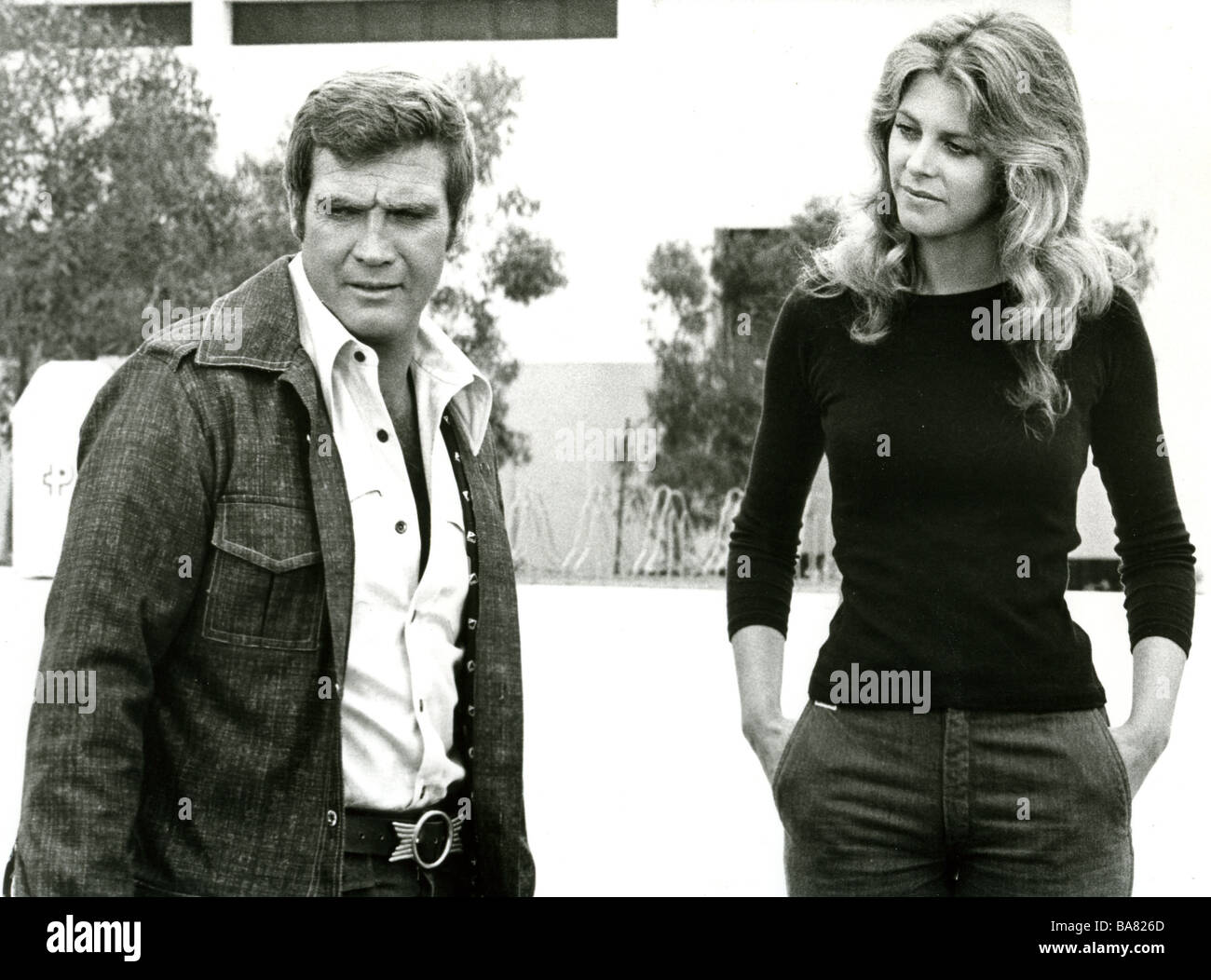
You probably remember the sound first. That distinct, grinding "ch-ch-ch-ch" electronic noise that played every time Steve Austin did something superhuman. It wasn't just a sound effect; for an entire generation, it was the sound of the future.
Lee Majors wasn't the first choice to play the world's most famous cyborg, but honestly, it’s impossible to imagine anyone else in that red tracksuit.
Before he became The Six Million Dollar Man, Lee Majors was already a bit of a TV titan. He’d cut his teeth on The Big Valley and The Virginian, playing the rugged, blue-eyed cowboy type. But when he stepped into the shoes of Colonel Steve Austin in 1973, everything changed. He went from a western star to a global phenomenon, practically overnight.
The Accident That Changed Everything
The premise was simple but heavy. A test pilot crashes a "lifting body" aircraft—footage that was actually real, by the way. The pilot was Bruce Peterson, and he survived a horrific 1967 crash in the M2-F2. In the show, Steve Austin isn't so lucky. He loses both legs, his right arm, and his left eye.
The government’s solution? Spend six million bucks—which, let’s be real, wouldn't even buy you a nice condo in LA these days—to rebuild him.
"We can rebuild him. We have the technology."
Those words became a mantra. But what people often forget is how dark the initial 1973 TV movie actually was. It wasn't all slow-motion running and punching Bigfoot. The original pilot, based on Martin Caidin’s novel Cyborg, was more of a gritty spy thriller. Steve Austin was suicidal. He didn't want to be a machine. He felt like a freak of nature, a government property rather than a man.
Why the Slow Motion Worked
If you watch it now, the slow-motion running seems kinda cheesy. It was actually a stroke of genius from the producers. They realized that filming Lee Majors running at "super speed" just looked like a guy running fast, which wasn't very "super." By slowing it down and adding that iconic sound, they created a sense of power and weight. It made the audience feel the bionic exertion.
Majors played it perfectly. He didn't overact the "machine" part. He kept Austin human, relatable, and just a little bit tired of the Bureau of Scientific Intelligence (OSI) constantly sending him on suicide missions.
The Bionic Impact on Real Science
Believe it or not, the show actually pushed the conversation on prosthetics forward. Back in the '70s, the idea of a "bionic" limb that could interface with nerves was pure sci-fi. Today, we have targeted muscle reinnervation (TMR) and osseointegration. We are literally doing what the show predicted, though nobody’s jumping over 30-foot fences just yet.
Dr. Michael Stevens and other experts often point out that while the show ignored the laws of physics—Steve’s organic spine would have snapped the first time he tried to lift a car—it inspired a generation of engineers.
What Most People Get Wrong About Lee Majors
There’s a common myth that Majors was just an "action figure" actor. That’s total nonsense. He had a real sense of timing and a quiet intensity that he learned from the legendary Barbara Stanwyck. She took him under her wing during The Big Valley, and you can see that "old school Hollywood" discipline in every scene of The Six Million Dollar Man.
He also did a lot of his own stunts, which is probably why he moved into The Fall Guy so seamlessly after the bionic era ended.
The Cultural Footprint
By the mid-70s, you couldn't escape the bionic craze.
- The Toys: The Kenner action figure with the "bionic eye" you could actually look through was the must-have toy of 1975.
- The Spinoffs: The Bionic Woman (Lindsay Wagner) became a hit in her own right, creating one of the first shared TV universes.
- The Marriage: For a while, Lee Majors and Farrah Fawcett were the ultimate Hollywood power couple. He was the Bionic Man, she was a Charlie's Angel. It was peak 1970s celebrity culture.
Is the Show Still Relevant?
Honestly, yeah. We’re currently living in an era of Neuralink and AI-enhanced everything. The questions Steve Austin grappled with—where does the machine end and the human begin?—are more relevant now than they were in 1974.
Majors returned to the role for a few reunion movies in the late 80s and early 90s, eventually seeing Steve and Jaime Sommers get married. It was a nice "full circle" moment for fans who had been following the saga for twenty years.
Actionable Takeaways for Bionic Fans
If you're looking to dive back into the world of Lee Majors The Six Million Dollar Man, here is how to do it right:
- Watch the Pilots First: Don't just jump into the episodic series. The three original TV movies (The Six Million Dollar Man, Wine, Women and War, and The Solid Gold Kidnapping) have a much different, more mature tone.
- Check Out the Literature: Read Martin Caidin's original novel Cyborg. It’s much darker and explores the technical side of the bionics in a way the show never could.
- Look for the Cameos: Lee Majors is still active. Seeing him show up in things like Ash vs Evil Dead or the recent Fall Guy movie (2024) is a great nod to his status as an action icon.
The legacy of Steve Austin isn't just about the strength; it’s about the fact that he was a man who lost everything and decided to keep moving forward. That’s the real "bionic" spirit.
Next Steps for Your Bionic Deep Dive
- Locate the original 1973 pilot film: Many streaming services only carry the 100-episode series, but the pilot "Cyborg" is essential for understanding the character's trauma.
- Compare the "Bionic Bigfoot" episodes: Watch the two-part "The Secret of Bigfoot" to see a young Andre the Giant take on Lee Majors in what remains the most famous guest spot in the show's history.
- Research modern bionics: Look into companies like Open Bionics to see how the "Hero Arm" is turning the science fiction of the 1970s into a reality for kids today.