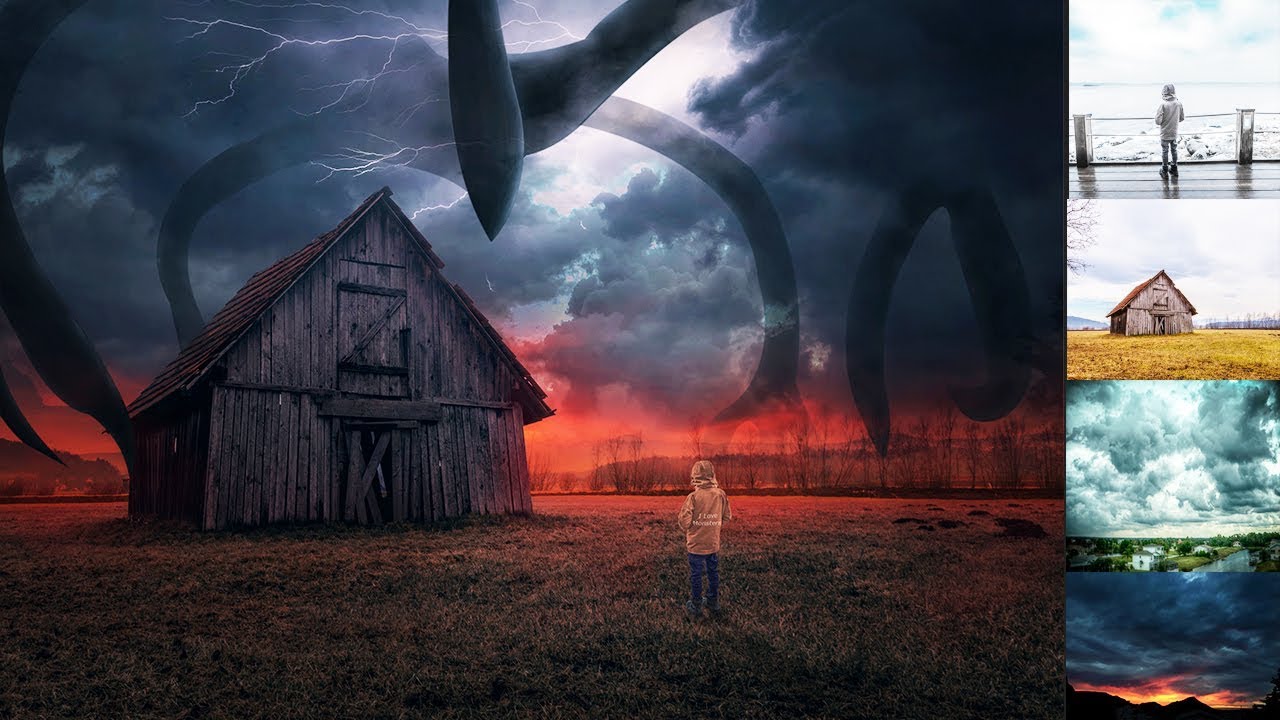
It started as a sketch on a piece of paper. Will Byers, shivering in that wood-paneled hallway, drew a massive, sprawling shape that looked like a spider made of smoke. We called it the Shadow Monster in Stranger Things back in Season 2 because we didn't have a better name yet. It was just this looming, existential dread hanging over Hawkins. Honestly, looking back at the later seasons where everything becomes more "human" and explained, there was something genuinely terrifying about that phase of the show. It wasn't just a monster you could punch. It was an atmosphere. It was a hive mind.
The Mind Flayer—the name the kids eventually settled on from the Dungeons & Dragons manual—represents the peak of the show's cosmic horror. While Vecna (Henry Creel) gave us a face to hate in Season 4, the shadow monster era of the show tapped into a different kind of fear. It was the fear of being hollowed out. It was the fear of something so big you couldn't even see the edges of it.
What the Shadow Monster Actually Is (And Isn't)
Most people get the timeline of the Mind Flayer a bit mixed up. In Season 2, it appears as a giant, towering silhouette in the sky of the Upside Down. It’s composed of "vines" and "dust," but it functions more like a brain. It’s not a biological creature in the way a Demogorgon is; it’s more like a sentient storm.
The Duffers have been pretty open about their inspirations here. They wanted something Lovecraftian. Think The Mist or It. In those stories, the monster isn't just a guy in a suit; it’s an ancient, unknowable force. When the Shadow Monster in Stranger Things possessed Will Byers, it wasn't just "living" inside him. It was rewriting him.
He felt what it felt. He saw what it saw. "He likes it cold," Will famously said. That line still gives me chills because it implies the monster has preferences, a personality, and a goal that has nothing to do with human morality.
The Possession of Will Byers
The way the show handled the possession was brilliant. It didn't go full Exorcist immediately. It was subtle. Will would have "episodes" where he’d flash between our world and the Upside Down. This is where the term "True Sight" comes from in the fandom. Will wasn't just hallucinating; he was literally seeing the overlapping dimensions.
The shadow monster used Will as a spy. It’s a classic military tactic. By infecting Will with its "essence," the Mind Flayer could see through his eyes and map out the lab in Hawkins. It baited the soldiers into the tunnels. It played them. This showed us that the Shadow Monster in Stranger Things wasn't just a mindless beast. It was a strategist.
The Evolution into the Meat Flayer
By Season 3, the shadow shifted tactics. Since Eleven closed the gate at the end of Season 2, a piece of the monster was trapped in our world. It couldn't just be a cloud of smoke anymore. It needed a physical body.
This is where things got gross. Really gross.
It started with rats. Then it moved to Billy Hargrove and the "Flayed." The monster literally dissolved people into goop to build a physical avatar for itself. This "Meat Flayer" was a departure from the ethereal shadow monster we saw previously, but the core consciousness was the same. It was still the hive mind.
The goal? Kill Eleven. The Mind Flayer realized she was the only one capable of stopping it.
- The Hive Mind: Every Demogorgon, every vine, and every "Flayed" human is part of one single consciousness.
- The Weakness: Heat. Because it belongs to the Upside Down, it thrives in the cold and the dark. Extreme heat literally burns the connection between the host and the hive mind.
- The Goal: Total expansion. Like a virus, it wants to consume every dimension it touches.
The Vecna Connection: A Retcon or a Revelation?
Now, we have to talk about the Season 4 twist. When we see Henry Creel (001) wandering through the Upside Down after being sent there by Eleven, he finds a swirling mass of black cloud. He uses his own telekinetic powers to shape that cloud into the spider-like form we know as the Shadow Monster in Stranger Things.
This changed everything.
A lot of fans were actually a bit disappointed by this. Before this reveal, we thought the Mind Flayer was this ancient, primordial god that existed for eons. The reveal that Henry "created" its form makes the monster feel a bit more like a tool.
However, there’s a nuanced way to look at it. Henry might have given the shadow its shape, but did he give it its power? Or did the shadow monster already have a "will" of its own that Henry simply tapped into? The show leaves enough room for interpretation. Some believe the Mind Flayer is the true "Big Bad" and that Henry is just the architect who gave the darkness a blueprint.
Why the Shadow Monster Still Matters for Season 5
As we head into the final season, the shadow monster is the key. We saw the red particles—the "dust"—falling on Hawkins at the very end of Season 4. That is the physical manifestation of the Mind Flayer. It’s not just in the Upside Down anymore. It’s here.
If the shadow monster is a hive mind, then as long as a single part of it exists, the whole thing exists. You can’t just kill Henry and expect the Upside Down to disappear. The "Shadow" is the medium through which all the monsters operate.
Real-World Origins of the Design
The Duffer Brothers didn't just pull this out of thin air. They’ve cited several specific influences:
- H.P. Lovecraft: The idea of an "Elder God" that is so massive and alien that looking at it might drive you insane.
- John Carpenter’s The Thing: The way the monster infects and replaces people (the Flayed).
- Anime: Specifically Akira and the works of Hayao Miyazaki. There’s a certain fluidity to the shadow monster’s movement that feels very "Nightwalker" from Princess Mononoke.
Misconceptions You Should Probably Forget
There are a few things people get wrong about the shadow monster that tend to muddy the waters during rewatches.
First, it’s not "the smoke" from Lost. I see that comparison a lot, but the shadow monster is much more grounded in the biology of the Upside Down. It’s connected to the vines. If you hurt the vines, you hurt the monster. We saw this in Season 2 when the soldiers torched the tunnels and Will felt like he was being burned alive.
Second, it’s not invincible. Eleven closed the gate on it. Twice. It’s powerful, but it’s bound by the laws of the dimensions. It needs a bridge. Without a gate or a powerful psychic like Henry or El, it’s stuck.
Finally, don't assume the shadow monster and Vecna are exactly the same thing. Vecna is the ego. The shadow monster is the id. Vecna has human grudges; the shadow monster has an insatiable hunger.
How to Deep Dive into the Lore
If you’re trying to piece together the full history of the Shadow Monster in Stranger Things before the final season drops, there are a few places to look beyond the main show.
The Dark Horse comics, particularly Stranger Things: The Other Side, give a bit more perspective on what the Upside Down looked like before the events of Season 1. While the "canonicity" of some comics is debated, they offer great visual context for how the shadow permeates that world.
Also, keep an eye on the "red dust." In the Stranger Things universe, that dust is the biological material of the Mind Flayer. When you see it swirling, the monster is present.
Actionable Steps for Fans
- Rewatch Season 2, Episode 8 ("The Mind Flayer"): This is the definitive episode for understanding how the kids use D&D logic to explain the creature's hive-mind mechanics.
- Pay attention to the "The First Shadow" stage play: Reports from the London play suggest it dives deep into Henry’s first encounter with the shadow, clarifying if he’s the master or just a puppet.
- Look for the particles: In Season 5 teasers or posters, look for the black/red dust. If it's there, the shadow monster is active, regardless of whether Vecna is on screen.
- Analyze the "Flayed" symptoms: Re-watching Season 3 with the knowledge of Season 4's reveal makes Billy's struggle much more tragic. You can see the struggle between Henry’s influence and the monster’s raw power.
The shadow monster remains the most visually striking and conceptually terrifying element of the series. It turned a small Indiana town into a cosmic battlefield. Whether it's a tool of Henry Creel or an ancient entity that corrupted him, its presence is what makes the Upside Down feel truly alien. As the barriers between worlds continue to break, the shadow is only going to get bigger.