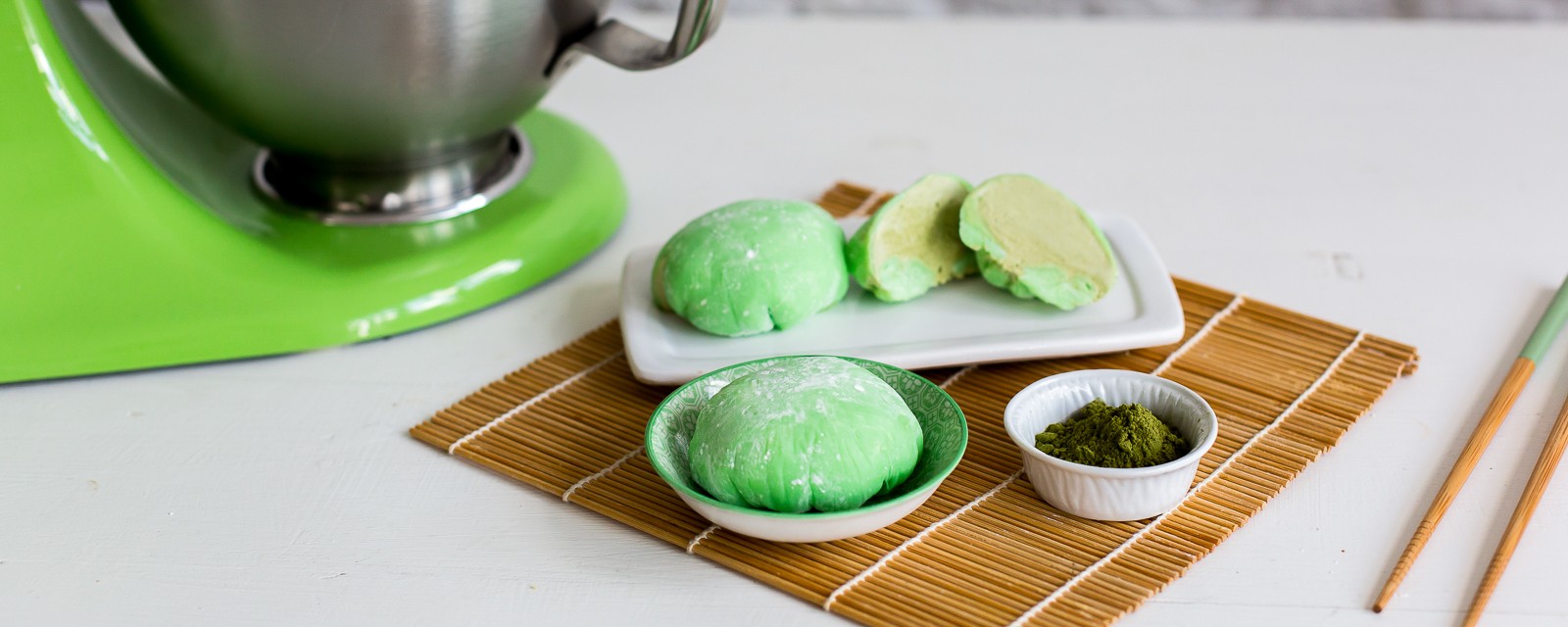
Walk into any Trader Joe's and you’ll see people hovering. They’re near the frozen section. They aren't looking for peas. They are hunting for that specific green box. Matcha mochi ice cream Trader Joes fans are a dedicated bunch, and honestly, for good reason. It’s a texture game. You have that soft, pillowy, slightly chewy rice dough on the outside and then—boom—cold, earthy, bittersweet green tea ice cream hits your tongue.
It’s a vibe.
But why are we still talking about this specific snack years after the mochi craze hit its peak? Well, the "Trader Joe's effect" is real. They take something that used to be a specialty item found only in Asian grocery stores like H-Mart or Mitsuwa and they bring it to the suburbs. Suddenly, everyone is an amateur tea sommelier. Except, there’s a lot of debate about whether the quality holds up compared to the "authentic" stuff or even the newer brands popping up in the freezer aisle.
What Actually Goes Into the Green Box?
Let’s get technical for a second. Mochi isn’t just "dough." It’s made from mochigome, a sticky, short-grain japonica rice. To get that signature stretch, the rice has to be pounded into a paste. Traditionally, this was a high-energy group activity called mochitsuki. In a factory setting, like where Trader Joe’s sources their private-label goods, it’s a more refined, steamed process.
The ingredient list on the matcha mochi ice cream Trader Joes sells is surprisingly straightforward, which is kinda rare for frozen treats. You’ve got milk, cream, sugar, and then the heavy hitters: sweet rice flour and green tea. If you look closely at the label, they use "matcha green tea." Not just "green tea flavoring." That distinction is huge. Matcha is stone-ground tea leaves. You’re eating the whole leaf, not just an infusion. That’s why it has that slight bitterness, or umami, that cuts through the sugar.
It’s worth noting that these are usually around 100 calories per piece. That’s the trap. You think, "Oh, just one." Then the box is gone.
The Texture Debate: Chewy vs. Icy
Here is where people get heated. If you eat the mochi straight out of the freezer, you’re doing it wrong. I’m serious.
If you bite into it immediately, the rice flour skin is brittle. It’s hard. It shatters. You lose that entire "pillowy" experience that makes mochi, well, mochi. Expert move? Let it sit on the counter for exactly three to five minutes. You want the ice cream to stay solid, but the outer shell needs to sweat just a tiny bit. That’s when the starch molecules relax and you get that legendary pull.
Some critics argue that the Trader Joe’s version is a bit "floury" compared to brands like Mikawaya or Maeda-en. Mikawaya is actually the company credited with inventing mochi ice cream in Los Angeles’ Little Tokyo back in the 90s. When you compare them side-by-side, the TJ’s version feels a bit more accessible—the matcha flavor isn't quite as aggressive. It’s "Matcha Lite." For some, that’s a win. For tea purists who want that deep, grassy, almost-bitter punch, it might feel a little safe.
Why This Specific Flavor Dominates the Freezer
Matcha is polarizing. People either love it or think it tastes like grass.
But in the context of a mochi ball, it works because it provides balance. Think about the other flavors TJ’s carries. Strawberry is sweet. Vanilla is sweet. Chocolate is... also sweet. Matcha is the only one that offers a savory counterpoint.
The tea used in these treats isn't ceremonial grade—nobody is using $40 tins of hand-whisked powder for frozen snacks—but it’s a solid culinary grade. It provides a vibrant green color without needing a ton of artificial dyes. That’s the beauty of it. It feels "healthy-ish" even though it’s definitely a dessert.
The "Private Label" Mystery
Trader Joe’s doesn’t own a mochi factory. They are famous for their private-label strategy. Basically, they find a high-quality manufacturer, ask for a specific recipe tweak, and put their own quirky branding on it.
For years, rumors have swirled about who actually makes the matcha mochi ice cream Trader Joes puts on the shelves. While they keep their suppliers a closely guarded secret (seriously, it’s like Fort Knox), many industry insiders point toward regional producers in California that specialize in Japanese confections. By cutting out the middleman and the big-brand marketing budgets, they keep the price point lower than what you’d pay for a 6-pack of My/Mochi at a standard supermarket.
This price-to-quality ratio is why it stays a bestseller. You’re getting a premium, somewhat "exotic" dessert for the price of a generic tub of vanilla elsewhere.
Is It Actually Healthy?
Let's be real. It’s ice cream.
However, compared to a pint of Ben & Jerry’s, it’s a much more controlled experience. The portioning is built-in. One of the biggest problems with American snacking is the "bottomless bowl" effect. Mochi solves that.
The matcha itself does carry some antioxidants—specifically catechins like EGCG—but let’s not pretend a mochi ball is a wellness shot. The processing and the sugar content largely offset the benefits of the tea. It’s a treat. Enjoy it as one. If you’re looking for a low-glycemic snack, this isn’t it. The rice flour is high in refined carbs, which can lead to a quick blood sugar spike. But as a gluten-free option? It’s a total lifesaver for people who can’t have traditional cookies or cake.
How to Tell if Your Box is "Off"
Ever opened a box and the mochi looks... cracked? Or there’s a weird layer of ice crystals?
That’s freezer burn, and it’s the enemy of the matcha mochi ice cream Trader Joes experience. This usually happens during transport or if the grocery store’s freezer fluctuates in temperature. If the mochi skin is cracked, the moisture has escaped. When you thaw it, instead of being soft, it will be gummy and wet.
Pro tip: Reach for the box at the very back of the freezer shelf. It’s the one that has been subjected to the least amount of "door-opening" temperature swings.
The Evolution of the Mochi Aisle
Trader Joe’s has experimented. We’ve seen Thai Tea mochi. We’ve seen Ube. We’ve seen Mango. Some come and go as seasonal rotations, but the matcha remains the anchor. It’s the "OG."
Interestingly, we are seeing a shift toward dairy-free options. TJ’s has released vegan versions using coconut milk or cashew milk bases. While the texture of the non-dairy ice cream is getting better, it still struggles to match the creamy mouthfeel of the traditional matcha version. The fat in the dairy helps carry the tea flavor; coconut milk can sometimes overshadow the subtle grassy notes of the matcha.
Survival Guide for the Matcha Mochi Enthusiast
If you’re planning to stock up, here is the actionable reality of keeping these things fresh and delicious.
First, don't store them in the door of your freezer. That’s the warmest part. Keep them deep in the back. Second, if you’re serving them for guests, don't just put the box on the table. Take them out, arrange them on a chilled plate, and maybe dust them with a tiny bit of extra matcha powder if you want to look fancy. It hides the cornstarch coating that keeps them from sticking together.
Finally, check the "Best By" date, but more importantly, look at the shape of the box. If the box is crushed, the mochi inside are likely squashed and the ice cream has probably leaked into the skin, ruining that distinct layer separation.
The matcha mochi ice cream Trader Joes sells isn't just a trend anymore; it’s a staple. It’s the perfect middle ground between a heavy dessert and a light palate cleanser.
Your Next Steps for the Perfect Mochi Experience
- Check the Frost: When buying, ensure the box feels solid and isn't covered in external frost—a sign of a defrost-refreeze cycle.
- The 4-Minute Rule: Set a timer when you take a piece out. At the 4-minute mark, the mochi skin reaches its peak elasticity.
- Pairing: Try eating these alongside a hot cup of Genmaicha (popcorn tea). The roasted rice in the tea complements the rice flour in the mochi perfectly.
- Storage: If you don't finish the box, put it inside a Ziploc bag before returning it to the freezer to prevent the skin from drying out and cracking.
The beauty of this snack is its simplicity. It’s a small, green, frozen moment of peace in a chaotic day. Just don't wait too long to eat it, or you'll end up with a sticky (but still delicious) mess.