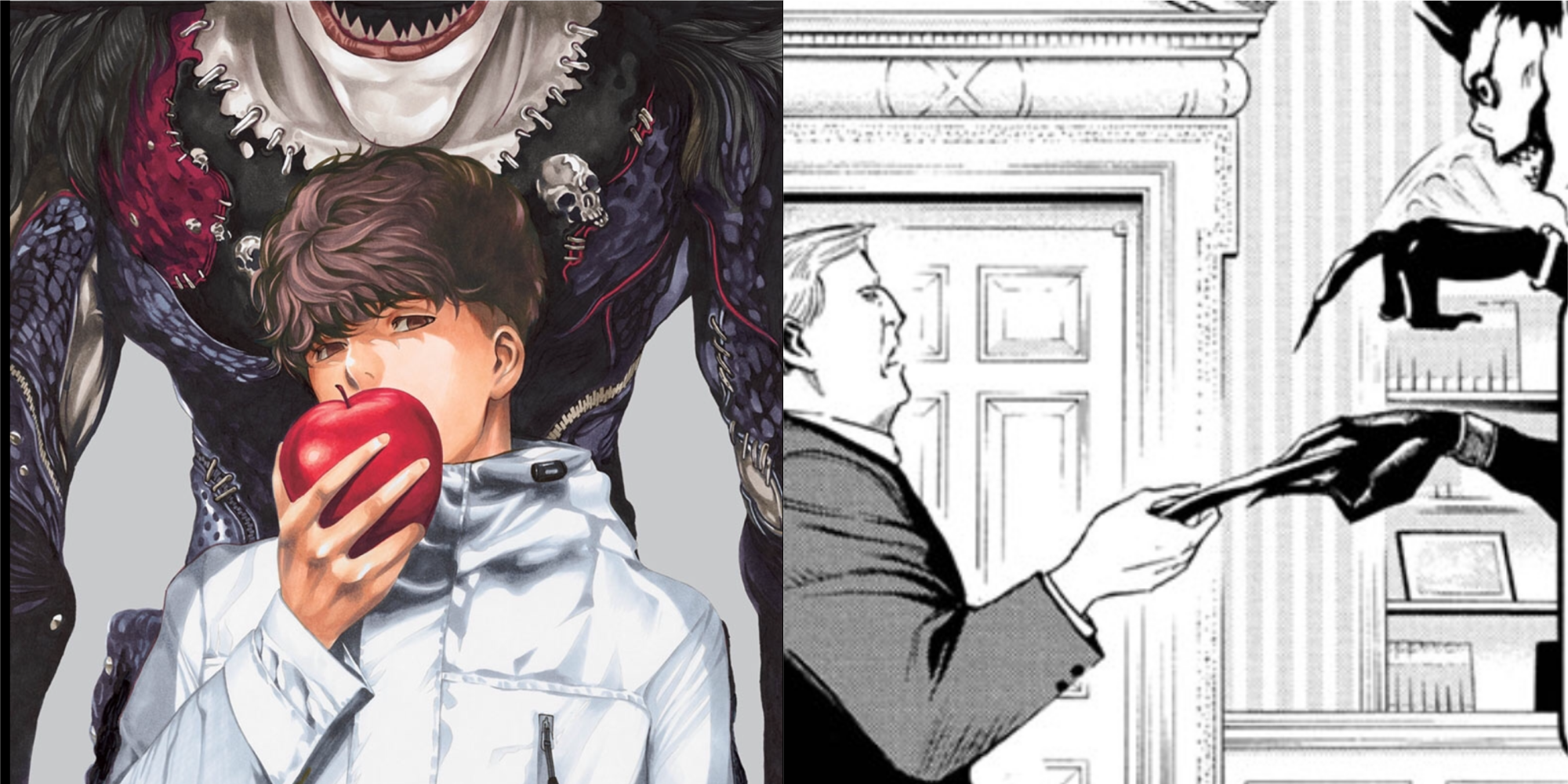
Tsugumi Ohba and Takeshi Obata didn't just bring Light Yagami back from the dead. Honestly, they did something much weirder and, frankly, more cynical. When the Death Note One Shot (often referred to as the "A-Kira Story" or "Never Complete") dropped in 2020, it didn't try to replicate the cat-and-mouse tension between L and Light. Instead, it gave us Minoru Tanaka, a middle-schooler who is "smart" but has terrible grades, and a story that basically treats the most dangerous weapon in human history like a high-stakes eBay listing. It's a fascinatng pivot. It reflects how much the world changed between 2006 and the present day.
The story is set years after Kira’s reign of terror. Ryuk is bored again. He returns to the human world because he has a craving for apples, and he finds Minoru. But Minoru isn’t interested in being a god. He doesn't want to cleanse the world of "evil" people. He looks at the surveillance state of the 2020s—the cameras, the digital footprints, the instant DNA testing—and realizes that the way Light Yagami operated is now impossible. You'd get caught in a week.
The Auction That Broke the Death Note One Shot World
Minoru’s plan is simple: he’s going to sell the Death Note. He uses Ryuk to broadcast his message across the globe, literally putting the power of a shinigami up for bid on the national news. This is where the Death Note One Shot gets really interesting from a geopolitical perspective. It isn't just some random cult members bidding. It’s world leaders. We see the President of the United States (who looks suspiciously like Donald Trump) and the leader of China getting into a bidding war that reaches quadrillions of yen.
It’s a hilarious and terrifying commentary on power.
Minoru isn't a killer. He’s a strategist who understands that in a capitalist society, the threat of a weapon is often more valuable than the weapon itself. If one country owns the Note, they have the ultimate deterrent. It’s nuclear proliferation, but with magic paper. The tension doesn't come from "who will die next" but from "how is he going to get the money without getting caught?"
Ryuk and the Problem with Human Greed
Ryuk is more of a spectator here than he ever was with Light. With Light, he was a witness to a tragedy. With Minoru, he's basically a delivery boy for a black-market transaction. He seems genuinely impressed by Minoru’s lack of bloodlust. Minoru’s "victory" is purely financial. He manages to distribute the auction money to every person in a specific bank's district, making it impossible for the police to track the "guilty" party because everyone suddenly became a millionaire.
But the Shinigami King isn't a fan of people treating his world's tools like a commodity.
This leads to the most controversial part of the Death Note One Shot. The King adds a new rule to the notebook on the fly: "A human who buys or sells the Death Note in the human world will die. The seller will die when they receive the money, and the buyer will die when they receive the notebook."
Why the New Rule in Death Note One Shot Matters
Some fans hated this. They felt like it was a deus ex machina designed to punish Minoru for being too smart. And yeah, it kinda is. But it also reinforces the cosmic horror elements of the series. The shinigami aren't fair. They aren't your friends. They are bored deities who can change the rules of the game whenever it stops being entertaining or starts feeling too "human."
- Minoru Tanaka vs. Light Yagami: Light wanted to be a God. Minoru just wanted to be comfortable. Light's downfall was his ego; Minoru's downfall was a retroactive rule change he couldn't have possibly predicted.
- The Surveillance State: The manga explicitly mentions that Light’s methods would fail today. This is a meta-commentary by Ohba on why a direct sequel to the original series wouldn't work in the age of 5G and facial recognition.
- The US President’s Choice: In a moment of rare cowardice/wisdom, the US President refuses to actually "take" the notebook after winning it. He realizes that if he touches it, he dies. So, he announces to the world that the US "has" the power but chooses not to use it. He pays for the prestige of ownership without the risk of death. It's a masterclass in political optics.
Looking Back at the 2008 One Shot (C-Kira)
People often forget there was another one-shot before the 2020 version. The 2008 story featured "C-Kira," a person who used the notebook to kill elderly people who wanted to die. Near (now the new L) basically ignored the case because he found it pathetic. He called the killer a "cheap" version of Kira. This provides a bridge to the Death Note One Shot of 2020 by showing the evolution of how the world perceives the Kira legacy. It went from a global threat to a pathetic copycat, then finally to a multi-trillion dollar asset.
The art by Takeshi Obata is, as expected, flawless. His ability to draw a more "modern" L (Near) and the decaying, spindly forms of the shinigami hasn't aged a day. The detail in the sequence where the world leaders are arguing is dense and grounded, making the supernatural element feel even more intrusive.
The Legacy of Minoru Tanaka
Minoru is a tragic figure because he actually "won" by the rules he was given. He didn't kill a single person. He actually helped his entire neighborhood get out of debt. In any other manga, he’d be a Robin Hood figure. But this is Death Note. The house always wins, and the house is a skeletal king sitting in a wasteland of skulls.
If you're looking for a deep dive into the ethics of the series, this one-shot is actually more complex than the original run. The original was a battle of "My Justice vs. Your Justice." This one is "Your Greed vs. The Reality of the Void." It's cynical, fast-paced, and deeply satisfying in a dark way.
If you want to experience the Death Note One Shot properly, here is what you should do next.
- Read the digital version on Viz Media or Shonen Jump: It’s officially titled "Death Note Special One-Shot" and is usually included in the Death Note Short Stories collection.
- Compare the endings: Look closely at Ryuk’s face in the final panels. He isn't sad about Minoru. He’s just ready for the next person to pick up the pen.
- Audit the "Rules": Go back and read the rules of the Death Note listed in the original 12 volumes. You'll see that the Shinigami King has always had the power to add rules, which makes the ending of the A-Kira story less of a "cheat" and more of a terrifying reminder of who's in charge.
- Analyze the Geopolitics: Notice which countries are bidding. It reflects the real-world power shift from the mid-2000s to the 2020s, specifically the rise of China’s economic influence.
The Death Note One Shot isn't just a nostalgic cash grab. It’s a necessary epilogue that proves the concept of the series is timeless, even if the methods of the original protagonist are now obsolete.