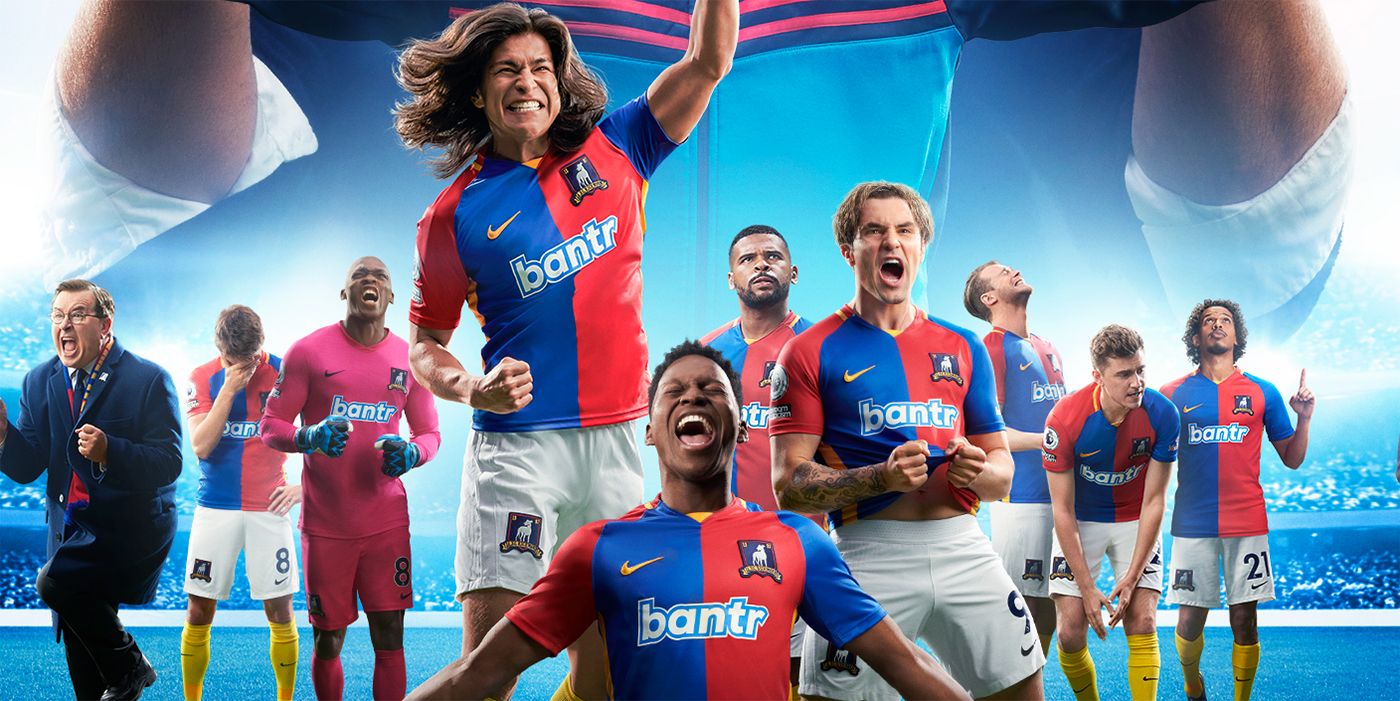
You’ve seen the jersey. Maybe you’ve even bought the scarf. If you walk through South West London on a Saturday, you’ll see people wearing that bright blue and red kit with the greyhound crest, looking for a stadium that technically isn't there.
It’s a bit of a mind-trip, honestly.
The Ted Lasso soccer team, officially known as AFC Richmond, is the most famous football club that doesn't actually exist. But if you talk to any die-hard fan of the show, they’ll describe the 4-4-2 formation or Jamie Tartt’s redemption arc like they were watching a real-time documentary on Sky Sports. There’s a reason for that. The show didn’t just invent a team; it built a believable ecosystem that felt more authentic than some actual clubs in the lower leagues.
The Richmond Myth vs. The South London Reality
First off, let's clear the air. There is no AFC Richmond in the English Premier League. If you check the current 2026 standings, you won’t find them.
The real-life inspiration is mostly Crystal Palace F.C. The show actually filmed at Selhurst Park, which is Palace's home turf. That’s why the colors—red and blue—look so familiar to anyone who follows the Prem. Even the "Nelson Road" stadium in the show is just Selhurst Park with a bit of CGI magic and some clever camera angles.
But here’s where it gets quirky. There is a real team called Hampton & Richmond Borough F.C. nearby. They play in the National League South, which is way down the pyramid. They wear red and blue, too, and their nickname is "The Beavers." Not exactly the "Greyhounds," but you can see where the writers pulled the threads from.
Why the "Greyhounds" Felt So Real
A lot of sports shows fail because the actors can't actually play. You see a "star striker" kick the ball and it looks like a toddler at a birthday party. Ted Lasso avoided this by hiring guys who could actually move on a pitch.
Take Cristo Fernández, who plays Dani Rojas. Before he was telling us that "Football is life," he was a professional player in Mexico’s Segunda División. That’s why his touch looks so clean. He’s not faking it.
The Roster of Broken Toys
The team worked because the locker room felt lived-in. It wasn't just about winning games. It was about:
- Sam Obisanya: The Nigerian right-back who grew from a nervous kid into the moral compass of the club.
- Isaac McAdoo: The terrifyingly quiet center-back who became a leader after Roy Kent retired.
- Colin Hughes: The Welsh winger whose internal struggle provided some of the most grounded moments in the final season.
- Thierry Zoreaux (or Van Damme): The Canadian goalkeeper who eventually found his confidence under the most intense pressure.
The Lasso Way: Does it Actually Work in Football?
If an American football coach tried to manage a Premier League team in 2026, he’d be sacked before his first "Howdy." Let’s be real. The tactical side of the Ted Lasso soccer team was always a bit... light.
In the show, they use things like "The Lasso Way" and the "Total Football" philosophy borrowed from the 1970s Dutch national team. In the real world, tactical setups are insanely complex. You have data scientists, heat maps, and Expected Goals (xG) metrics. Ted didn’t care about xG. He cared about whether his players believed in themselves.
Does that work? Sorta.
Psychology is huge in sports. Look at managers like Jürgen Klopp or Carlo Ancelotti. They aren't just tacticians; they are "man-managers." They make players feel ten feet tall. When Richmond finally beat Manchester City in the show—spoiler alert for the late bloomers—it wasn't because they had a better "low block." It was because the culture of the club had shifted from toxic ego to genuine connection.
Where is the Team Now?
By the end of the series, the Ted Lasso soccer team undergoes a massive shift. Ted goes back to Kansas. He’s coaching his son's team now, finding peace in the simplicity of it.
But Richmond stays.
Roy Kent takes over as manager. It’s the perfect ending, really. Roy, the man who used to communicate exclusively in grunts and swears, finally embracing the emotional intelligence Ted tried to teach him. Alongside him, Beard and Nate "The Wonder Kid" Shelley return to the sidelines.
Rebecca Welton, the owner who originally wanted to burn the club to the ground to spite her ex-husband, ends up selling 49% of the team to the fans. This is a huge nod to the "German model" of club ownership, where fans have a real say in how their team is run. It’s probably the most "real" thing the show ever did.
Actionable Insights for Fans and Creators
If you're looking to capture some of that Richmond magic in your own life or business, here's what actually translates:
- Vulnerability is a Strength: The moment Ted admitted he had panic attacks was the moment the team truly bonded. In any high-pressure environment, pretending to be perfect is a liability.
- The Goldfish Mentality: "Be a goldfish." They have a ten-second memory. In sports, and in life, ruminating on a mistake for three days just guarantees you’ll make another one.
- Curiosity over Judgment: This is the "darts scene" philosophy. Instead of assuming you know someone's story (or their talent), ask questions.
The Legacy of the Greyhounds
People still visit Richmond Green today. They go to The Prince's Head (the real-life "Crown & Anchor") and hope to see Coach Beard in the corner.
The Ted Lasso soccer team proved that you don't need a real trophy cabinet to inspire people. They finished second in the league in the finale, losing the title to Man City. It was a realistic touch. They didn't win everything, but they changed everything.
If you're traveling to London, skip the massive stadium tours for once. Go to Richmond. Walk down Paved Court. Buy a pint. Sit on the green and look at the space where the fictional players used to "train."
Football is life, but the stories we tell about it are what make it stay with us long after the whistle blows.
To truly understand the tactical shift Richmond made in their final season, you should look into the history of "Total Football" and how it influenced modern managers like Pep Guardiola.