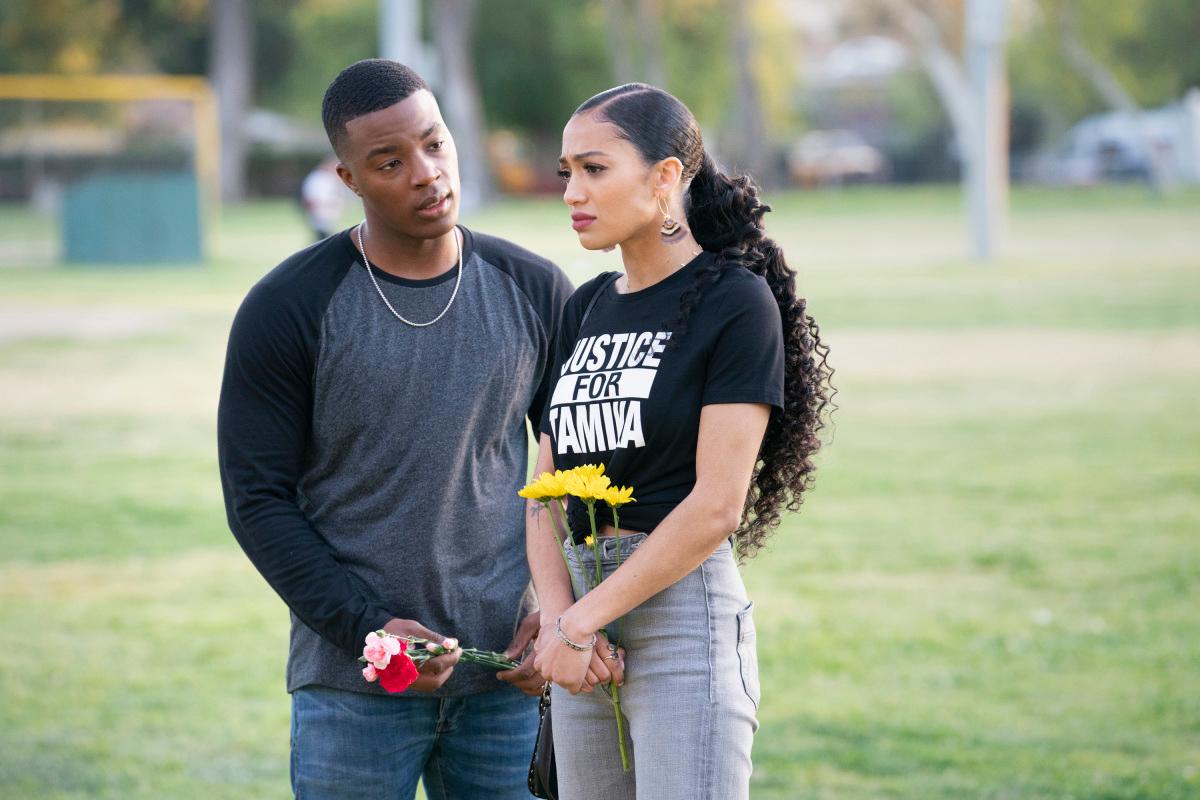
If you were watching All American back in Season 3, you probably remember that gut-punch feeling when the name Tamika Pratt first came up. It wasn't just another TV plot. Honestly, it felt heavy. It felt real. For a show that usually balances high-stakes football with teenage romance, this arc shifted the entire energy of the series.
Tamika Pratt wasn't a main character we saw every week. We didn't get to see her walk the halls of South Crenshaw or hang out at the Slauson Cafe. But her presence—or rather, the void left by her death—became the defining catalyst for one of the most intense social justice storylines in modern network television.
What Actually Happened to Tamika Pratt in All American?
Let’s get the facts straight. In the show’s universe, Tamika Pratt was a young Black woman who was found sleeping in her car by police. She had been drinking, but she did exactly what people are told to do: she pulled over to sleep it off instead of driving and risking lives.
She never made it home.
During the encounter, she was shot and killed by law enforcement. The incident, which mirrored far too many real-world headlines, sent shockwaves through the community of Crenshaw and Beverly Hills alike. But the real friction started when the bodycam footage remained hidden.
The Contrast of Privilege
The reason this story worked so well—and why it was so painful to watch—was the direct parallel to Olivia Baker. Just episodes prior, Olivia had been driving under the influence and got into a fender bender with Spencer in the car.
Think about that for a second.
Olivia was actually driving. She was moving. She was putting people in danger. But because she is the daughter of Laura Fine-Baker—a white District Attorney—and Billy Baker, she got a ride home. No handcuffs. No tragedy. Tamika did the "responsible" thing by stopping, and she died for it.
That survivor's guilt is what pushed Olivia to the edge. She couldn't sit with the fact that her privilege bought her life while Tamika's reality took hers. It wasn't just about a "case." It was about the fundamental unfairness of two girls, one car, and two completely different endings based on who their parents were.
The Bodycam Footage Scandal
Olivia eventually does something pretty drastic. She steals the bodycam footage of Tamika’s death from her mother’s laptop.
She leaks it.
The fallout was massive. On one hand, it gave the public the "proof" they needed to demand justice. On the other, it blew up her mother's career and created a legal nightmare for the prosecution. This wasn't some clean, heroic moment where everyone cheered. It was messy. It was complicated. It strained the Baker family to their breaking point because, as Laura pointed out, leaking the footage actually compromised the legal integrity of the case she was building.
Why the Timing of the Episode Was So Surreal
Showrunner Nkechi Okoro Carroll actually pitched the Tamika Pratt storyline way back in February 2020. This was before the murder of George Floyd. Before the summer of 2020 changed the global conversation on policing.
By the time the episode "The Big Fight" (Season 3, Episode 12) actually aired in April 2021, the world had changed. The trial of Derek Chauvin was literally happening as these scenes played out on screen. The writers didn't "rip this from the headlines" in a cynical way—they anticipated a reality that Black families have lived with for decades.
The episode where the Crenshaw Chargers and their opponents forfeit their game in protest wasn't just "good TV." It was a reflection of the NBA and WNBA walkouts that had happened in the real world.
Real-World Parallels and Influences
While Tamika Pratt is a fictional character, her story is a composite of several real-life tragedies. The writers specifically mentioned wanting to highlight the names of Black women, who often don't receive the same level of sustained national outcry as Black men in similar situations.
- Breonna Taylor: The lack of immediate bodycam transparency and the "Say Her Name" movement.
- Sandra Bland: The context of a routine stop or wellness check turning fatal for a Black woman in a vehicle.
- Rayshard Brooks: Though different in specifics, the "sleeping in a car" element sparked immediate comparisons.
The Impact on the Cast and Story
This wasn't just a "very special episode" that the show moved on from. It fundamentally changed the characters.
- Olivia Baker: It solidified her path as an activist and a journalist. She stopped being just a "rich girl with problems" and found a purpose that outweighed her own comfort.
- Spencer James: It forced him to reconcile his status as a "prospect" with his identity as a Black man from Crenshaw. He realized that no amount of touchdowns could protect him or his community from systemic issues.
- Laura Fine-Baker: She had to face the reality that her position in the system didn't always mean she could "fix" it from the inside.
Honestly, the most haunting part was the vigil. Seeing the characters we love stand there with flowers, realizing they were mourning someone who could have easily been any of them. It stripped away the "teen drama" label and made All American feel like a vital piece of social commentary.
Lessons We Can Take Away
If you're looking for how to engage with these themes or understand why this plot mattered, it comes down to three things:
Acknowledge the Nuance of Privilege
The show didn't make Olivia a villain for surviving, but it did make her responsible for what she did with that survival. Understanding that privilege isn't something you "asked for," but something you "have," is the first step toward using it for someone else's benefit.
The Power of Local Activism
Justice for Tamika didn't start in a courtroom; it started with a podcast and a community vigil. Change usually starts at the grassroots level before it ever hits the halls of power.
Consistency Over Trends
All American didn't just do one episode and quit. The ripple effects lasted through the entire season and into the next. Real-world change requires that same kind of "long-game" mentality.
The story of Tamika Pratt remains a high-water mark for the series. It proved that a show about football can be about so much more than just the game. It reminded us that for some people, the game never even gets to start.
To dive deeper into these themes, you can research the "Say Her Name" campaign or look into the real-world legal precedents regarding bodycam footage transparency in your own state. Understanding the local laws around police accountability is a practical way to turn the "feeling" of the show into actual knowledge.