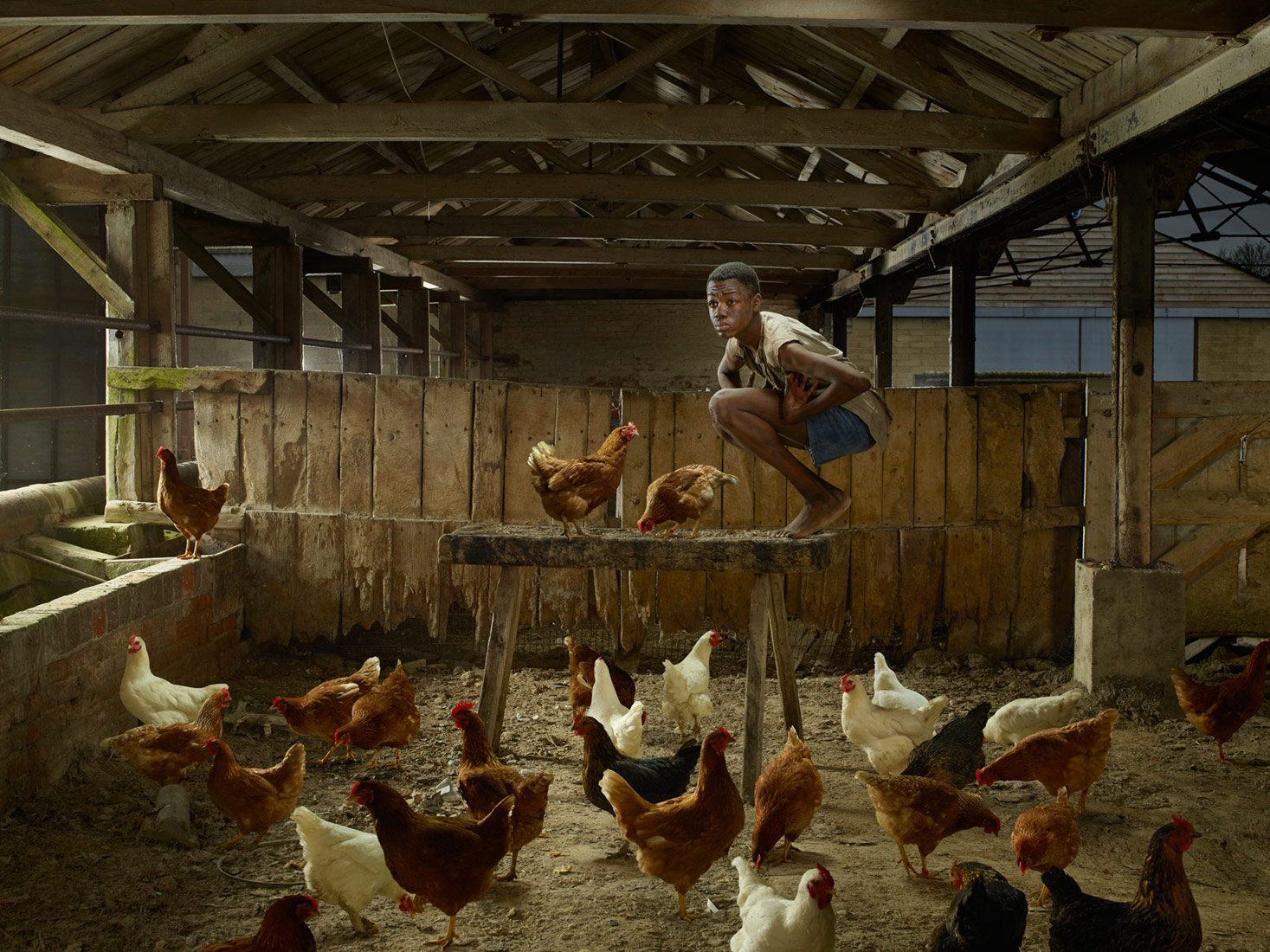
You’ve probably heard the rumors. Maybe you saw a grainy YouTube thumbnail or a late-night social media thread about a boy who grew up in a chicken coop. It sounds like an urban legend, right? Something out of a Grimm’s fairy tale or a low-budget horror flick. But for Sujit Kumar, the reality was far more haunting than any campfire story.
He wasn't a myth. He was a child living in rural Fiji who, through a series of almost unbelievable tragedies, ended up "imprinting" on poultry because humans had failed him so completely.
The Nightmare in Nausori
Honestly, the details of Sujit’s early life are hard to stomach. Born in the 1970s near Suva, Fiji, his life went off the rails almost immediately. His mother took her own life. Shortly after, his father was murdered. By the age of two, Sujit was an orphan in the care of his grandfather.
Instead of a home, he got a cage.
For reasons that still baffle psychologists today, his grandfather locked him in a chicken coop beneath the family home. He didn’t just visit; he lived there. For years. While other kids were learning to walk and talk, Sujit was learning to survive among the birds.
When you spend your "critical window" of development—basically the time your brain is a sponge for language and social cues—with chickens, you don't become a "wild man." You become what you see.
Learning to Be a Bird
By the time authorities found him in 1978, Sujit was eight years old. He didn't stand upright. He didn't speak. He didn't even cry like a human child.
Reports from the time are chilling. He moved with a hopping gait. He pecked at his food. He made rapid, rhythmic clicking noises with his tongue. Perhaps most heartbreaking was the physical toll: his fingers had actually turned inward from years of scratching and clawing at the dirt.
But the rescue wasn't the happy ending you’d expect.
Because Sujit was aggressive and "unmanageable," the system didn't know what to do with him. He was dumped into the Samabula Old People's Home in Suva. Think about that for a second. An eight-year-old boy with the mind and behaviors of a bird, locked in a facility for the elderly. For the next 20 years, he was often tied to his bed with bedsheets to keep him from attacking staff or wandering off.
He went from one cage to another.
The Turning Point: Elizabeth Clayton
The story finally shifted in 2002. Elizabeth Clayton, an Australian businesswoman living in Fiji, visited the home for a charity project. She saw a man—now 30 years old—tied to a bed, making bird noises and covered in sores.
She couldn't walk away.
Clayton eventually became his legal guardian, but the road to "humanity" was incredibly steep. Specialists like Dr. Bruce Perry, a renowned neuroscientist, have studied cases like Sujit’s to understand how trauma reshapes the brain. They found that while Sujit’s brain was physically "normal" in many ways, the neural pathways for language and social connection had never been built.
What Modern Science Tells Us
Research into feral children often references the Critical Period Hypothesis. This theory suggests there is a fixed window for language acquisition. If a child doesn't learn to speak by puberty, the brain essentially "reassigns" those areas.
- Language: Sujit never fully mastered complex speech.
- Motor Skills: He had to be taught how to walk and stand like a human.
- Social Interaction: He struggled with anger and "toddler-like" tantrums well into his 40s.
Where is Sujit Kumar Now?
As of 2026, Sujit remains a symbol of both the depth of human cruelty and the power of dedicated care. He has spent over two decades under the wing of the Elizabeth Clayton Foundation (often associated with the "Happy Home" in Suva).
He isn't "cured"—you don't just erase 20 years of being tied to a bed—but he is humanized. He enjoys music. He has a sense of humor. He can communicate his needs, even if it's not through traditional sentences.
Why This Case Still Matters
We often think of "nature vs. nurture" as an academic debate. Sujit is the living proof that "human" is something we learn, not just something we are born as. Without a mirror of human behavior, we reflect whatever is in front of us. In his case, it was a flock of chickens.
Actionable Takeaways for Advocates and Parents
If Sujit’s story moves you, it shouldn't just be as a "weird news" item. It serves as a massive red flag for the importance of early intervention in child welfare.
- Recognize the Signs of "Hidden" Abuse: Feral cases are rare, but severe neglect happens in every zip code. If a child is consistently non-verbal or displays repetitive, animalistic behaviors, it’s not always a medical condition; it can be environmental.
- Support Local Welfare Foundations: In Fiji, the Elizabeth Clayton Foundation continues to work with at-risk youth. Supporting localized organizations ensures that "the next Sujit" is found before the damage is permanent.
- Understand the Critical Window: If you are a caregiver, prioritize social and linguistic engagement in those first five years. It is the most vital "infrastructure project" a human brain will ever undergo.
Sujit’s life was stolen by a chicken coop and a bedsheet, but his survival is a testament to the fact that it is never too late to show someone they are more than the cage they were kept in.