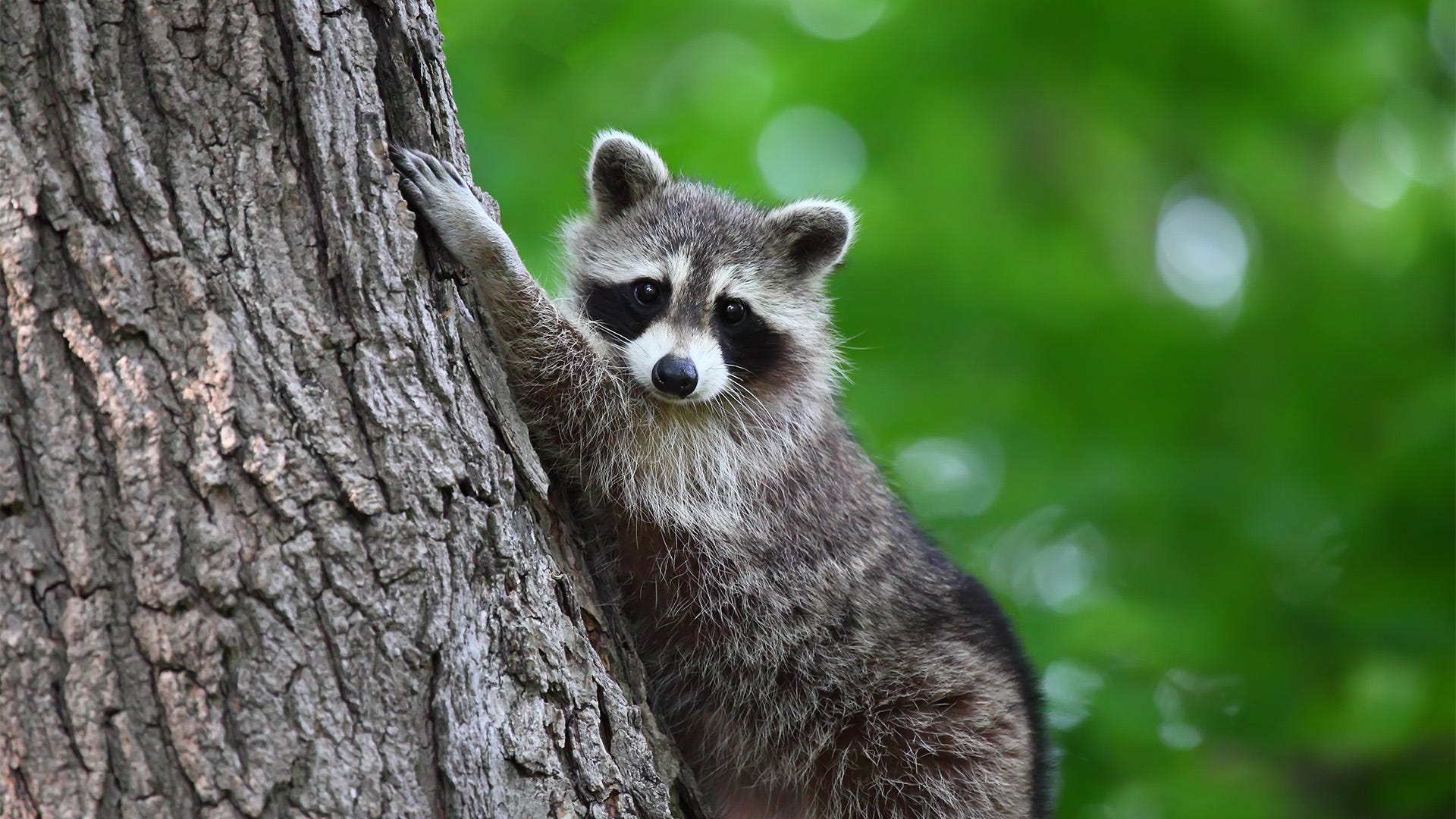
It starts with a single pair of glowing eyes reflecting in your flashlight beam. Then four. Then twenty. Suddenly, you realize your lawn is moving. Honestly, seeing 100 raccoons in yard spaces isn't just a scene from a low-budget horror flick; it is a genuine phenomenon that happens more often than you’d think, especially in suburban pockets where human boundaries blur with the treeline.
Raccoons are solitary? Not always.
When you see a massive aggregation like this, your first instinct is probably panic. Or maybe you're reaching for your phone to go viral on TikTok. But there is a very specific biological and environmental "perfect storm" that leads to a hundred Procyon lotor showing up for a garden party at 2:00 AM.
The psychology of the "trash panda" mask
Raccoons are ridiculously smart. We're talking "solving complex locks and remembering the solution for three years" smart. This cognitive ability, documented in studies as far back as the early 1900s by researchers like H.B. Davis, means they aren't just wandering into your yard by accident. They are there because your yard has become a high-value resource.
Usually, raccoons are territorial. A single male might claim a decent chunk of acreage. However, when there is an unnatural abundance of food—think an open dumpster behind a local restaurant or a neighbor who leaves out literal buckets of kibble—those territorial lines vanish. Biologists call this "resource dispersion." Basically, if the buffet is big enough, everyone stops fighting and starts eating.
Is it a gaze or a nursery?
Technically, a group of raccoons is called a "gaze" or a "nursery." But a nursery is usually just a mother and her kits. Seeing 100 raccoons in yard areas implies multiple nurseries and bachelor groups converging. This isn't a family reunion; it’s a localized population explosion.
In places like Olympia, Washington, or parts of Florida, residents have reported dozens of raccoons appearing overnight. It’s rarely a "migration." It’s almost always a result of human intervention. Someone, somewhere, is feeding them. And because raccoons communicate through scent marking and vocalizations, the word spreads fast. "Hey, the guy at number 42 leaves out the good cat food."
The massive risks of a triple-digit raccoon crowd
Having a few raccoons is a nuisance. Having a hundred is a public health crisis waiting to happen.
Let’s talk about the "latrine" problem. Raccoons are habitual. They pick a spot and they keep using it. If you have 100 raccoons in yard corners or under your deck, you are dealing with a staggering amount of waste. Raccoon feces often carry Baylisascaris procyonis, a roundworm that can be fatal to humans if the eggs are inhaled or ingested. The eggs are incredibly hardy. They can live in the soil for years.
Then there’s the physical damage. A hundred raccoons can strip a vegetable garden in twenty minutes. They can tear through shingles, rip apart soffits, and decimate local songbird populations. They are opportunistic omnivores. They’ll eat your corn, your kittens’ food, and the eggs out of a robin’s nest without blinking.
Rabies and the "zombie" raccoon myth
People see a lot of raccoons and think "rabies outbreak." While raccoons are a major vector for rabies in the Eastern United States, a mass gathering doesn't necessarily mean they are all sick. In fact, sick raccoons tend to become disoriented and solitary.
However, distemper is a huge issue in large groups. Canine distemper can make raccoons look "zombified"—lethargic, crusty eyes, wandering in circles during the day. In a crowd of a hundred, a virus like that moves through the population like wildfire. If you see them acting weird, keep your pets inside. Period.
Why your yard is the "it" spot
If you're staring at a sea of fur, you need to audit your property immediately.
- The Buffet Factor: Are your trash cans secured with bungee cords? No? Then they’re plates.
- The Water Source: Koi ponds are basically sushi bars for raccoons.
- The Soft Entry: Do you have overgrown trees touching your roof? You’ve just built them a highway.
- The "Kind" Neighbor: This is the most common cause. One person in the neighborhood thinks they are "helping" the wildlife by putting out huge bowls of dog food. This disrupts the natural foraging cycle and creates "food conditioning."
When raccoons lose their fear of humans because of food, they become aggressive. A raccoon that expects a handout and doesn't get it might not just walk away. It might huff, lung, or scratch. Multiply that by a hundred, and you have a legitimate safety hazard for children and pets.
The legal and ethical maze of removal
You cannot just "get rid" of 100 raccoons.
Most states have very strict laws about trapping and relocating wildlife. In many jurisdictions, it is actually illegal to trap a raccoon and release it elsewhere because you are simply moving a problem (and potentially a disease) to a new area. Professional wildlife habituation experts, like those at companies such as Trutech or Critter Control, usually focus on "exclusion" rather than mass trapping.
Why trapping 100 raccoons fails
If you trap ten raccoons and move them, but the food source remains, ten more will move in tomorrow. It’s called the "vacuum effect." You have to change the environment.
Immediate steps to reclaim your property
If you are currently looking out your window at a massive crowd of raccoons, do not go outside to shoo them away. You'll likely just get hissed at, or worse, bitten.
- Kill the lights, then blast them. Raccoons hate strobe lights and sudden loud noises. A motion-activated sprinkler system (like the "ScareCrow" models) is often more effective than a fence.
- Ammonia and Vinegar. Raccoons have incredibly sensitive noses. Soaking tennis balls in ammonia and tossing them (carefully) into areas where they congregate can make the area unbearable for them.
- Talk to your neighbors. This is the most important step. If you clean up your yard but the person next door is still throwing bread crusts off their balcony, the raccoons aren't going anywhere. This has to be a community effort.
- Secure the perimeter. Use heavy-gauge hardware cloth to block off the spaces under your porch or deck. Do this during the day, but only after making sure no one is sleeping under there. You don't want to trap a dozen raccoons under your house to die; the smell will haunt you for months.
Long-term environmental shifts
Stop the "easy" calories. If you have fruit trees, pick up the fallen fruit every single evening. If you feed your pets outside, stop. Move the bowls inside immediately. Raccoons are creatures of habit; if the rewards disappear, the "gaze" will eventually fracture and move on to find more reliable calories elsewhere.
Dealing with 100 raccoons in yard settings is a marathon, not a sprint. It took time for them to realize your neighborhood was a goldmine, and it will take time to convince them it’s closed for business.
Next Steps for Homeowners:
- Inspect your attic and crawlspaces for any signs of entry, as large groups often seek shelter nearby.
- Install motion-activated deterrents such as ultrasonic sound emitters or high-intensity LED strobes to disrupt their nocturnal patterns.
- Contact a local wildlife biologist or animal control officer to report the gathering, as populations of this size can indicate a localized outbreak of distemper or a significant breach in local waste management.
- Audit your trash storage and switch to wildlife-proof bins with locking lids that require human dexterity to open.