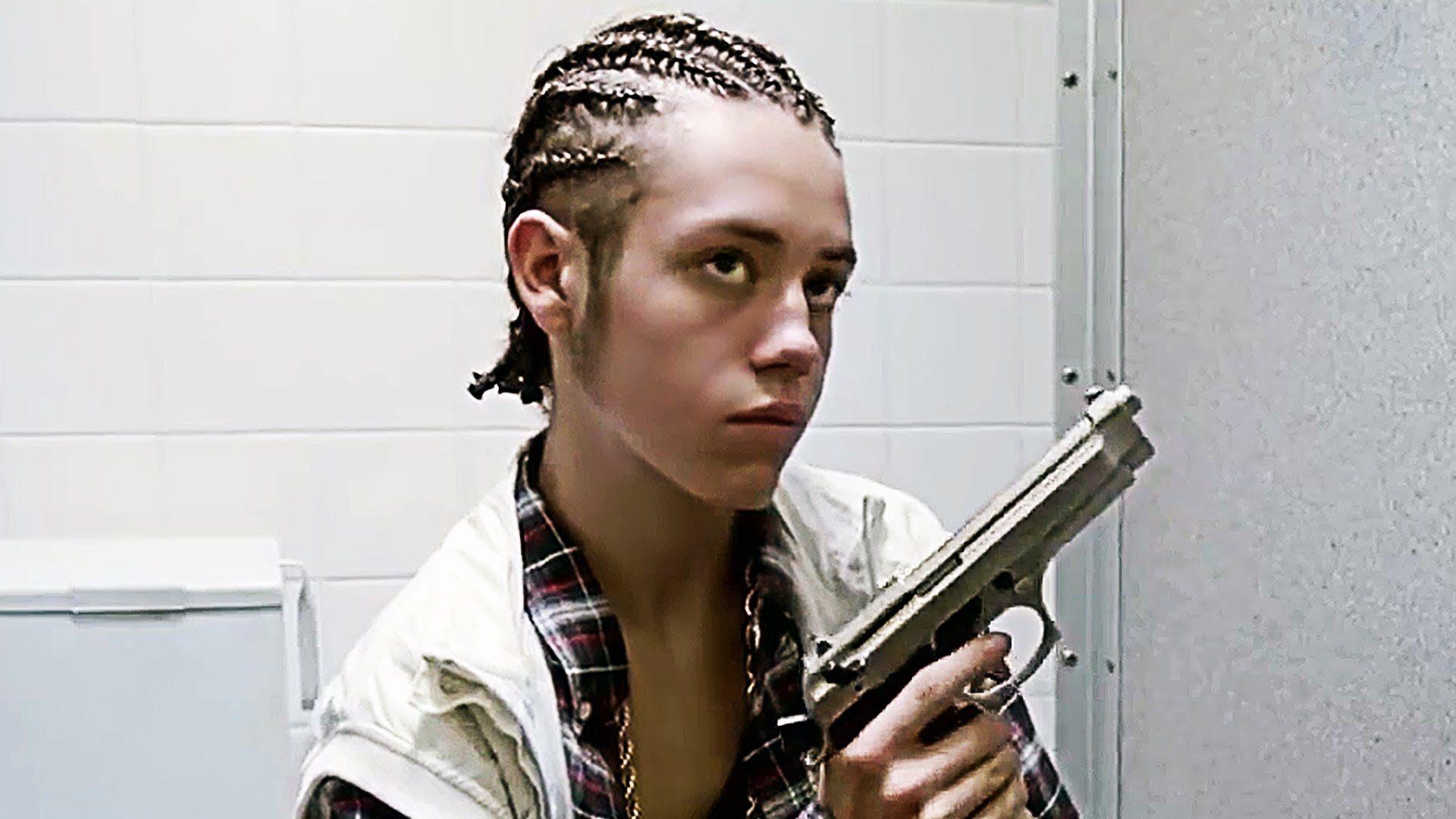
Honestly, if you ask any Shameless fan about the exact moment the show shifted, they’ll probably point to the cornrows. Season 6 Carl Gallagher wasn't just a character arc; it was a fever dream that somehow turned into one of the most poignant coming-of-age stories on television. We started the season with "White Boy Carl" and ended with a kid desperately trying to wash the blood off his hands. It’s a lot to process.
The season kicks off with Carl stepping out of juvie like he’s the king of the South Side. He’s got the braids, the grill, and a swagger that feels 100% unearned but 100% committed. Ethan Cutkosky played this with such a straight face that you almost forgot Carl was barely fourteen. He wasn’t just a delinquent anymore; he was a brand.
The Rise of the Gallagher Arms Dealer
When people talk about season 6 Carl Gallagher, they usually remember the guns first. He didn't just go back to school; he turned the hallway into a showroom. Selling handguns to students and even faculty? It was Peak Shameless absurdity.
His logic was weirdly consistent, though. He’d sell a gun to someone who actually wanted to use it for "business," but he looked down on people just trying to look tough. It’s that warped Gallagher moral compass. He was making bank—six figures, supposedly—and he didn't blow it on clothes or cars. He bought the family house back at auction. That’s the thing about Carl; even at his most "gangster," he was the most loyal person in that house.
But the swagger was a mask. We see it start to slip when he meets Dominique. She didn't care about the "White Boy Carl" persona. In fact, she hated it. Her dad, a cop who basically wanted to peel Carl’s skin off, was the first real authority figure who didn't just give up on him or try to exploit him.
That Turning Point with Nick
You can't discuss season 6 Carl Gallagher without talking about Nick. Nick was the giant, silent protector Carl brought home from juvie. They were a duo—the muscle and the mouth. But while Carl was playing "thug" like it was a costume, Nick was dealing with real, deep-seated trauma.
The shift in the season happens in a single, gut-wrenching moment. A kid steals Nick’s bike—the one thing he truly cherished. Nick doesn't just get it back; he kills the kid with a hammer.
The scene where Carl finds Nick sitting on the porch, covered in blood, staring into nothing, is arguably the most important moment in Carl's entire series-long journey. The "game" wasn't fun anymore. It wasn't about "stackin' cheese" or looking cool in the Alibi. It was about a dead kid in a house and a friend who was gone forever. Carl’s reaction—sprinting away and literally throwing up—was the first time we saw the "old" Carl in years. The vulnerable one.
Breaking the Persona
After the incident with Nick, the cornrows had to go. Watching Fiona finally unbraid his hair was symbolic as hell. It was like she was pulling him back into the family.
- He stopped the drug runs.
- He stood up to G-Dog, even after getting pistol-whipped.
- He let Sean (Fiona’s fiancé at the time) help him negotiate an exit from the gang.
The "exit interview" involved Carl and Sean walking home in their boxers in the Chicago winter, stripped of their clothes and their pride, but alive. It was humiliating, but it was a clean slate.
Why Season 6 Matters for the Rest of the Show
Most characters in Shameless follow a "one step forward, two steps back" trajectory. Lip gets into college, then blows it. Fiona gets a stable job, then spirals. Season 6 Carl Gallagher is the rare exception where the trajectory actually stayed upward, even if the starting point was the literal gutter.
By the end of the season, Carl isn't just "not a criminal"—illegally, anyway—he’s looking for a purpose. His bond with Dominique’s dad leads him toward the idea of law enforcement and military school. It sounds crazy if you only watched Season 1, where he was microwaving action figures, but by the end of Season 6, it’s the only thing that makes sense. He needed a box to fit into. He needed rules.
Common Misconceptions About This Season
A lot of people think Carl became a "good kid" overnight. He didn't. He was still a Gallagher. He still used questionable methods to get what he wanted, and he was still incredibly blunt. The difference was his intent.
Another thing fans get wrong is the "White Boy Carl" voice. People thought Ethan Cutkosky was just a bad actor or trying too hard. In reality, he was playing a kid who was trying too hard. The cringe was the point. Carl was a suburban-adjacent white kid trying to adopt a culture that wasn't his to survive in juvie. When he finally drops the accent in the later episodes, the relief is palpable.
What to Watch Next
If you’re revisiting this arc, pay close attention to the background details in the Gallagher kitchen. You can see the shift in how the other siblings treat him. At the start of the season, they’re annoyed or scared of him. By the end, they’re actually leaning on him.
To really get the full picture of Carl's evolution after this, you should track his relationship with Dominique's father into Season 7. It’s one of the few "father-son" dynamics in the show that isn't toxic.
Your next move: Go back and re-watch Episode 6 ("NSFW") and Episode 8 ("Be a Good Boy. Come for Grandma"). These two episodes are the "before and after" of Carl’s soul. Notice the difference in his eyes—Cutkosky really nails the "thousand-yard stare" of a kid who realized he isn't as tough as he thought he was. It’s some of the best character development the show ever produced.