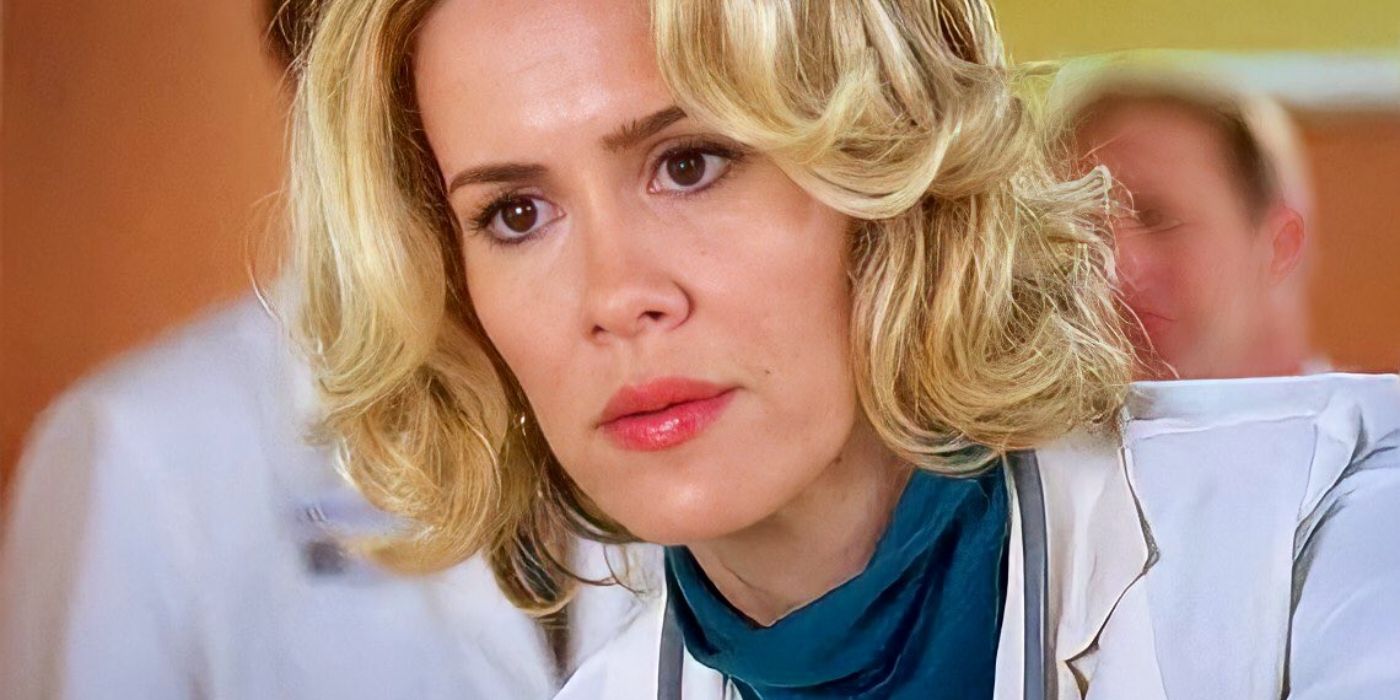
You probably know her as the high-strung, fast-talking Elliot Reid from Scrubs. Or maybe as Beth Smith, the weary horse surgeon from Rick and Morty. But when Sarah Chalke appeared on Grey’s Anatomy, she wasn't there to crack jokes or provide lighthearted relief. She was there to survive a nightmare.
It was Season 9, Episode 19, titled "Can’t Fight This Feeling."
Chalke played Casey Hedges, a frantic mother who keeps showing up at Grey Sloan Memorial with her young son. Every time she arrives, the doctors tell her the same thing: it’s just a virus. Go home. Rest. Fluids.
But Casey knows they’re wrong. She feels it in her gut. She’s that "difficult" parent who won't take "no" for an answer, even when the lab results say everything is fine.
The heartbreaking reality behind the script
Most guest spots on medical dramas are just another day at the office for an actor. This was different. This wasn't just a gig for Sarah Chalke.
Basically, the entire storyline was a mirror of her own life.
Back in late 2011, Chalke’s real-life son, Charlie, started getting sick. It wasn't just a sniffle. He had a raging fever, a full-body rash, red eyes, and swollen hands. For over a week, Chalke and her partner, Jamie Afifi, were bounced from one doctor to another.
The diagnoses they got? Everything from scarlet fever to a basic allergic reaction.
She felt like she was losing her mind. She knew something was fundamentally wrong, but the experts weren't seeing it. Eventually, she found a website—the Kawasaki Disease Foundation—and realized her son had every single symptom listed.
What is Kawasaki Disease?
It’s rare. It’s scary. And if you don't catch it fast, it can be fatal.
Kawasaki Disease (KD) causes inflammation in the blood vessels throughout the body. The real danger is what it does to the heart. If left untreated, about 25% of kids develop coronary artery aneurysms. We're talking permanent heart damage or even a heart attack in a toddler.
There is a narrow ten-day window to get the treatment (IVIG).
Charlie was diagnosed on day ten and a half. Just at the wire.
Bridging the gap between real life and Grey Sloan
When Chalke decided she wanted to raise awareness, she didn't just want to do a PSA. She wanted people to see what the disease looked like. She pitched the idea to the Grey’s Anatomy creators.
They said yes.
In the episode, Casey Hedges deals with the exact same visual cues Chalke saw in her son:
- "Strawberry tongue" (a bright red, bumpy tongue).
- Red, bloodshot eyes with no discharge.
- Swollen, red palms and soles of the feet.
- Skin peeling around the fingernails (this usually happens later).
Why the Meredith Grey connection mattered
In the episode, Casey is being dismissed by the interns. They think she’s a "frequent flyer"—a parent who is overreacting to a common cold. They even consider calling a psych consult on her.
Then enters Meredith Grey.
Meredith, who had just become a mother herself in the show’s timeline, listens. She doesn't just look at the labs; she looks at the mother. There’s a powerful moment where Meredith tells Casey that she owns the hospital and can do whatever tests she wants.
It’s a wish-fulfillment moment for any parent who has ever felt ignored by the medical establishment.
Honestly, watching Chalke play this role is gut-wrenching because you aren't watching her act. You’re watching her relive the worst ten days of her life. She later admitted in interviews that it was the most challenging thing she had ever done. She was terrified to hold a baby on set that had been "made up" to look like her son did when he was at his sickest.
The legacy of "Can't Fight This Feeling"
This wasn't just a "celebrity guest star" moment. It actually saved lives.
After the episode aired in 2013, reports started coming in of parents recognizing the symptoms in their own children because of what they saw on TV. That’s the power of a show like Grey’s when it handles a topic with this much personal weight.
Sarah Chalke has since become a major advocate for the Kawasaki Disease Foundation. She frequently speaks about the "parental gut instinct."
If you're a parent, the takeaway from Casey Hedges (and Sarah Chalke) is pretty clear. If you feel like something is wrong, don't stop fighting until you get an answer.
Advocacy Steps for Parents:
- Document everything: Take photos and videos of rashes or physical symptoms. Chalke’s doctor actually diagnosed Charlie based on photos because the symptoms had started to fade by the time they saw the specialist.
- Ask for a specialist: If a general pediatrician is stumped, push for an infectious disease expert or a cardiologist.
- Trust your "gut": Doctors have the degrees, but you have the daily data on your child. If the "vibe" is wrong, it’s worth a second, third, or fourth opinion.
If you want to learn more about the specific symptoms Sarah Chalke worked to highlight, checking out the resources at the Kawasaki Disease Foundation (kdfoundation.org) is the best place to start. Awareness is literally the only way to beat the clock on this disease.