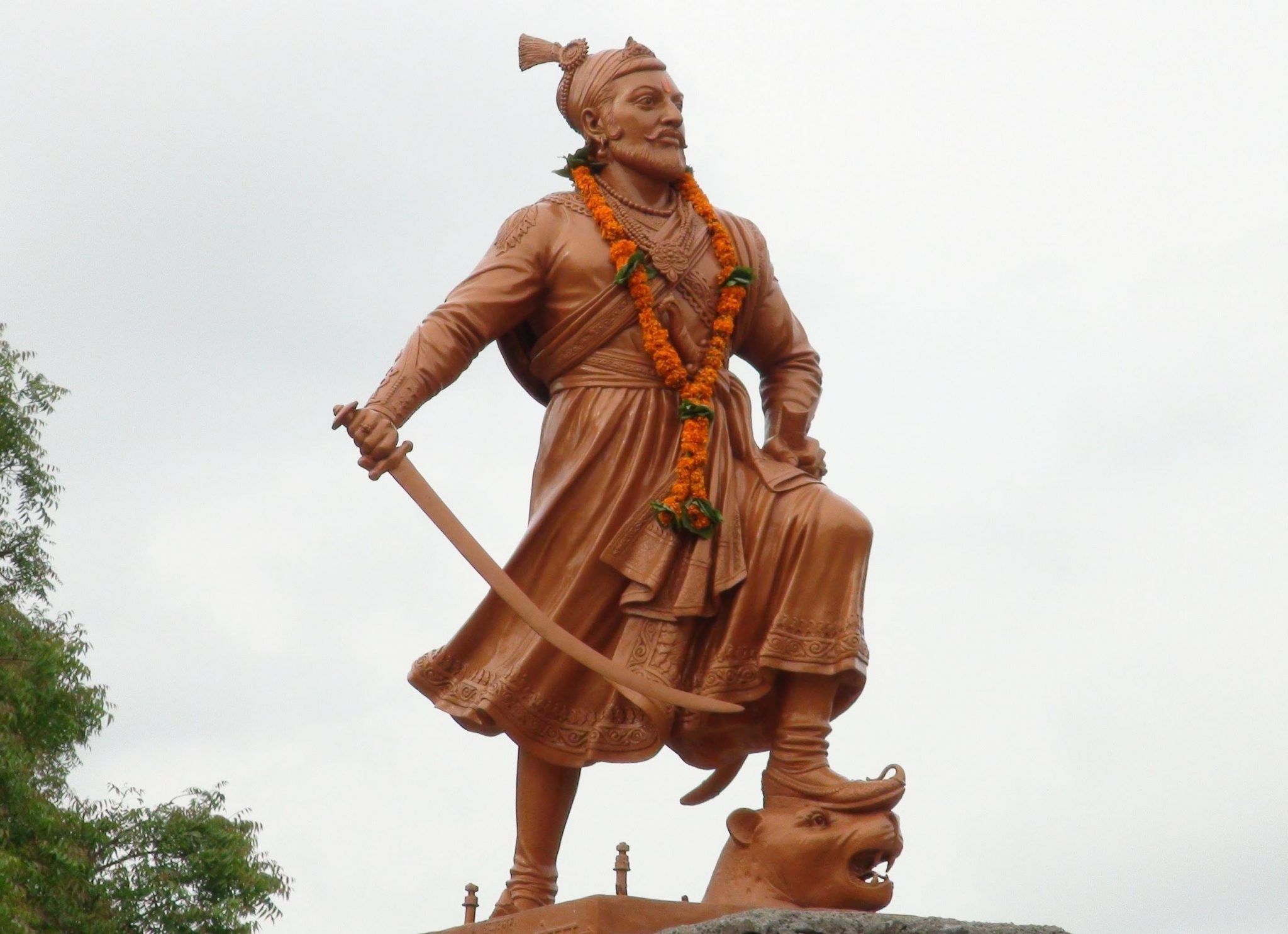
If you’ve ever walked through the streets of Pune or Satara, you’ve definitely seen the statues. A warrior with a sharp gaze, sitting atop a horse, looking like he’s ready to take on the world. That’s him. But honestly, if you ask the average person who is Sambhaji Maharaj, you might get a dozen different answers. Some call him a tragic martyr. Others say he was a reckless rebel.
History is messy like that.
Sambhaji was the eldest son of the legendary Chhatrapati Shivaji Maharaj. Living in the shadow of a giant isn't easy, and for "Shambhu Raje," it was a life defined by high-stakes drama from the day he was born in 1657 at Purandar Fort. He didn't just inherit a kingdom; he inherited a target on his back. While his father was the architect of the Maratha Empire, Sambhaji was the one who had to hold the walls together while the most powerful man in the world, the Mughal Emperor Aurangzeb, tried to kick them down.
The Prince Who Became a Political Hostage
Imagine being nine years old and being sent away to live in the camp of your father’s biggest enemy. That’s what happened to Sambhaji after the Treaty of Purandar. He wasn't there for a vacation; he was a political hostage. He even had to go to the Mughal court in Agra.
Most kids are learning to ride bikes; he was learning how to survive the deadliest court in Asia.
He saw the escape from Agra firsthand. He lived through the tension of his father’s coronation. But his path to the throne wasn't a straight line. After Shivaji Maharaj passed away in 1680, things got chaotic. There were internal plots to put his half-brother, Rajaram, on the throne instead. Sambhaji had to move fast. He secured the fort of Raigad, dealt with the conspirators, and officially became the second Chhatrapati of the Maratha Empire in 1681.
Why Sambhaji Maharaj Matters: The King of 140 Battles
You might hear people say he was "reckless." But look at the numbers. During his nine-year reign, he fought about 140 battles.
He lost zero.
Think about that for a second. He was surrounded on all sides. You had the Mughals coming from the North, the Portuguese harassing from Goa, the Siddis of Janjira on the coast, and the British trying to play everyone against each other. It was a 360-degree war zone.
The Sanskrit Scholar with a Sword
One thing that really surprises people is that he wasn't just a "tough guy." He was actually a massive nerd—in the best way possible. He was a scholar of Sanskrit and wrote a famous political treatise called Budhbhushanam when he was barely twenty. He also wrote three other books: Nayika-bheda, Satshatak, and Nakhshikha.
He was essentially a "Philosopher King" who could also out-maneuver Mughal generals in the middle of a monsoon.
Holding the Deccan Against Aurangzeb
In 1681, Aurangzeb himself came down to the Deccan with an army so big it supposedly stretched for miles. He thought he’d wrap up the Marathas in a few months.
He stayed for 27 years.
Sambhaji kept the Mughal Emperor pinned down in the South. This is huge because while Aurangzeb was stuck chasing Maratha shadows in the Sahyadri mountains, he couldn't focus on North India. This breathing room allowed other regional powers like the Sikhs, Rajputs, and Bundelas to grow. If Sambhaji had surrendered or made a quick peace deal, the history of India would look completely different today.
What Really Happened at Sangameshwar?
The end came in 1689. It wasn't a glorious battle that brought him down, but treachery. He was at Sangameshwar with a small group of followers—including his close friend and advisor, Kavi Kalash—when they were ambushed by Mughal forces.
The story of his death is what earned him the title Dharmaveer.
Aurangzeb gave him a choice: give up all the Maratha forts, reveal where the treasure was hidden, and convert to Islam. If he did, he’d live.
Sambhaji refused.
The torture that followed lasted for weeks. It’s the kind of stuff you see in horror movies—eyes gouged out, tongues cut, limbs removed. He didn't break. He was finally executed on March 11, 1689, at Tulapur.
Moving Past the Myths
For a long time, historical accounts (mostly written by his enemies or later court historians with an axe to grind) painted him as a womanizer or a drunk.
Modern research has pretty much debunked that.
Historians like Dr. Jaysingrao Pawar and others have dug into the actual records from the era. They found a ruler who was actually quite disciplined about administration. He continued his father's policies of supporting farmers during droughts, protecting religious sites, and maintaining a powerful navy. He even tried to bring back people who had been forcibly converted to other religions, which was a pretty radical move for the 17th century.
Actionable Takeaways from His Life
So, what can we actually learn from this 17th-century king?
- Resilience is a Choice: Most people would have folded under the pressure of the Mughal Empire. He chose to lean into the conflict.
- Diversify Your Skills: Being a warrior didn't stop him from being a writer. Don't let one label define what you're capable of doing.
- Internal Unity is Everything: The Maratha Empire's biggest weakness wasn't the Mughal army; it was the internal bickering among the nobles. If you're building something, fix the foundation first.
- The Long Game Wins: He didn't live to see the Marathas take Delhi, but his refusal to surrender ensured the empire didn't die with him.
If you want to understand the modern identity of Maharashtra, you have to understand Sambhaji. He’s more than just a historical figure; he’s the symbol of a culture that refuses to quit, even when the odds are impossible.
To get a better sense of the geography he defended, you should look into the history of Raigad Fort or visit the memorial at Tulapur. Walking those grounds gives you a perspective that no history book can quite capture.