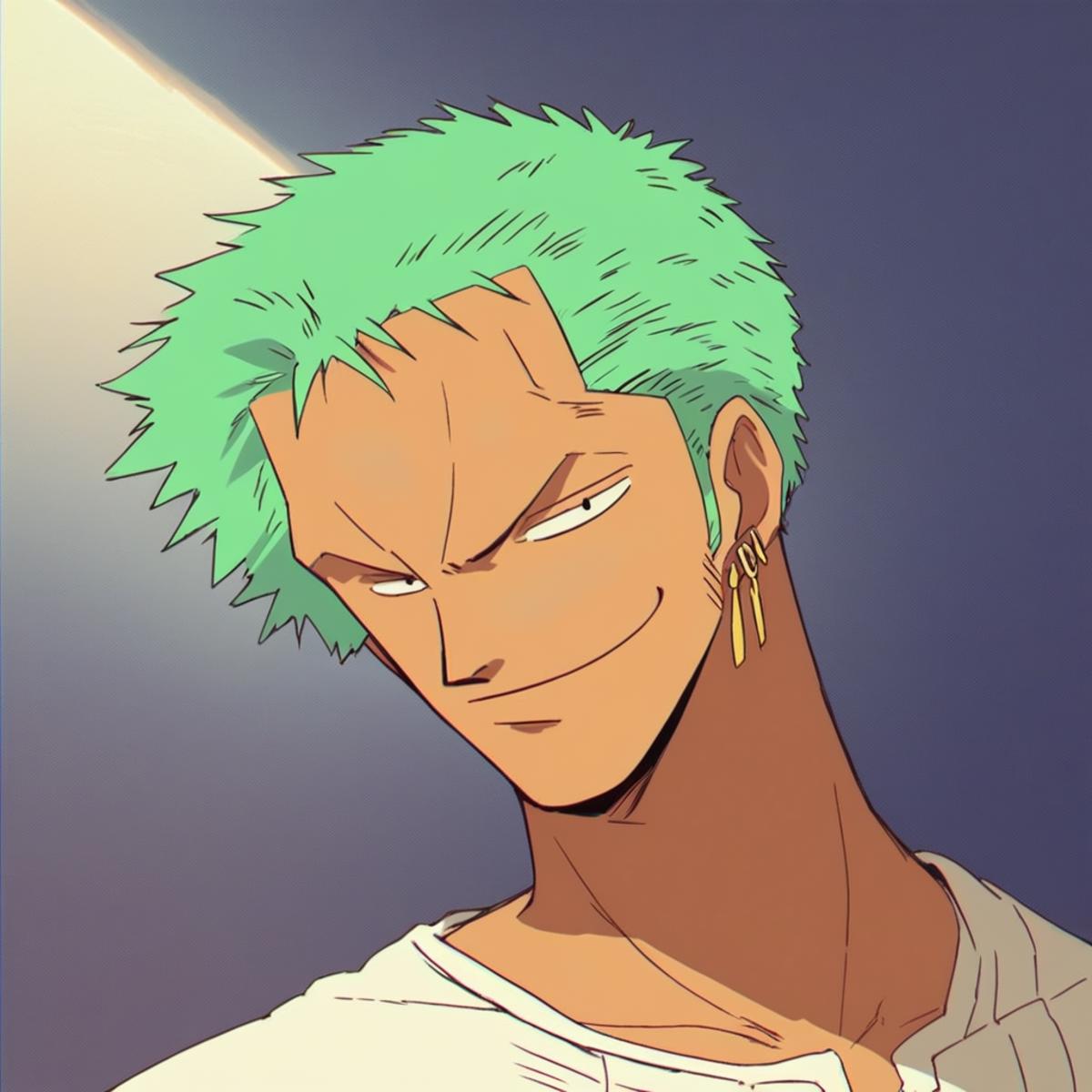
Honestly, looking back at the early days of the Grand Line, it’s easy to forget how much of a wild card Roronoa Zoro actually was. Before he became the stoic, haki-clad powerhouse we see today, Zoro was a man driven by a singular, almost desperate obsession. It wasn't just about being strong. It was about a promise to a dead girl and the terrifying realization that he was nowhere near ready for the world he’d entered.
He was the "Pirate Hunter." A demon in human form.
But if you really dig into the Roronoa Zoro pre-timeskip era, you see a character who was far more expressive—and frankly, far more vulnerable—than the modern version. People often remember the "Nothing Happened" moment and stop there. That’s a mistake. To understand who Zoro is, you have to look at the guy who was willing to cut his own feet off in Little Garden just because he was bored of being a statue.
The Reality of the East Blue Demon
Zoro started as a legend in a small pond. In the East Blue, he was the apex predator. Then he met Mihawk at the Baratie. That fight changed everything. It wasn't just a loss; it was a total dismantling of his reality.
He didn't just lose a duel. He lost his identity as the "strongest" he knew.
His reaction? He didn't mope. He bowed. He swore to Luffy—his captain, but also his friend—that he would never lose again. This is where the core of his pre-timeskip arc lives. It’s a cycle of getting absolutely wrecked, realizing his current "Three Sword Style" isn't enough, and then pushing his body to a breaking point to bridge the gap.
Think about the fight with Daz Bones (Mr. 1) in Alabasta.
Zoro was literally being turned into mincemeat. He couldn't cut steel. He was a swordsman who couldn't cut his opponent. Most people would’ve died there. Instead, Zoro had a near-death epiphany about "the breath of all things." He didn't just win; he evolved. That version of Zoro was constantly evolving in the heat of the moment, which felt a lot more "seat-of-the-pants" than his current, more calculated style.
Why His Swords Mattered More Then
Back then, his blades weren't just power-ups. They were anchors to his past and tests of his soul.
- Wado Ichimonji: The one constant. The heavy burden of Kuina’s dream.
- Sandai Kitetsu: The cursed blade he tested with his own arm. That scene in Loguetown? Pure bravado. It showed he relied on luck and "spirit" as much as skill.
- Yubashiri: The lightweight blade he lost at Enies Lobby. Its destruction felt like a genuine blow to his arsenal.
- Shusui: The heavy, black blade he won from Ryuma’s zombie. He actually struggled to control this thing at first. It was too heavy, too powerful.
He had to earn the right to swing Shusui. It wasn't just handed to him as a reward; it was a beast he had to tame. This struggle with his tools made Roronoa Zoro pre-timeskip feel human. He wasn't a god of the blade yet. He was a guy trying to figure out why his swords were dragging him across the floor.
The "Nothing Happened" Weight
We have to talk about Thriller Bark. Specifically, the encounter with Kuma.
By this point, Zoro had already taken a beating from Oars and Ryuma. He was exhausted. Then Kuma shows up and offers a deal: take all of Luffy’s pain and fatigue, or everyone dies.
Zoro didn't hesitate.
When Sanji finds him standing in a literal lake of his own blood, and Zoro just says, "Nothing happened," it’s the peak of his pre-timeskip character. But look closer. He wasn't being a "badass" for the sake of it. He was fulfilling his role as the backbone of the crew. He was willing to throw away his dream—the promise to Kuina—to ensure Luffy’s dream survived. That’s growth. The Zoro who joined in Shells Town would have never put someone else’s goal above his own.
The Loss of the "Funny" Zoro
One thing fans often miss is how much funnier he used to be.
He’d get lost (obviously), but he’d also bicker with Sanji in a way that felt like brothers fighting over a toy. He’d participate in the crew’s shenanigans. He had a personality that wasn't just "training and brooding." He was a 19-year-old kid who loved booze and sleep, but happened to be able to slice a building in half.
As the stakes got higher—Sabaody, the Kizaru encounter, the separation—that lightheartedness died. When he realized he couldn't protect his friends from a Pacifista, let alone an Admiral, something snapped.
The Actionable Insight: How to Revisit Zoro
If you're going back to watch or read the early arcs, don't just look at the big finishes. Watch his eyes during the defeats.
- Analyze the Baratie Loss: Look at the respect Mihawk shows him. It’s the first time we see Zoro’s "world" expand.
- Study the Alabasta Epiphany: The "Breath of All Things" is the precursor to Haki. It’s Oda laying the groundwork years in advance.
- Notice the Water 7 Conflict: Zoro is the one who insists Usopp must apologize. He isn't just a fighter; he's the crew’s moral logic. He understands the weight of being a pirate better than anyone.
The Roronoa Zoro pre-timeskip journey isn't a straight line of wins. It’s a messy, bloody, often hilarious climb from a local bounty hunter to a man worthy of being trained by the greatest swordsman in the world.
To truly appreciate the "King of Hell" we see now, you have to remember the guy who once tried to fight a god (Enel) with nothing but pure spite and three pieces of steel. He wasn't ready then, but he never, ever backed down. That's the real Zoro. That's why he still matters.
Next Steps for Fans:
Go back and watch the Zoro vs. Ryuma fight in Thriller Bark. It’s the perfect bridge between his early "scrappy" style and the legendary swordsman he was destined to become. Pay attention to how he adapts to Shusui's weight mid-battle—it’s a masterclass in visual storytelling.