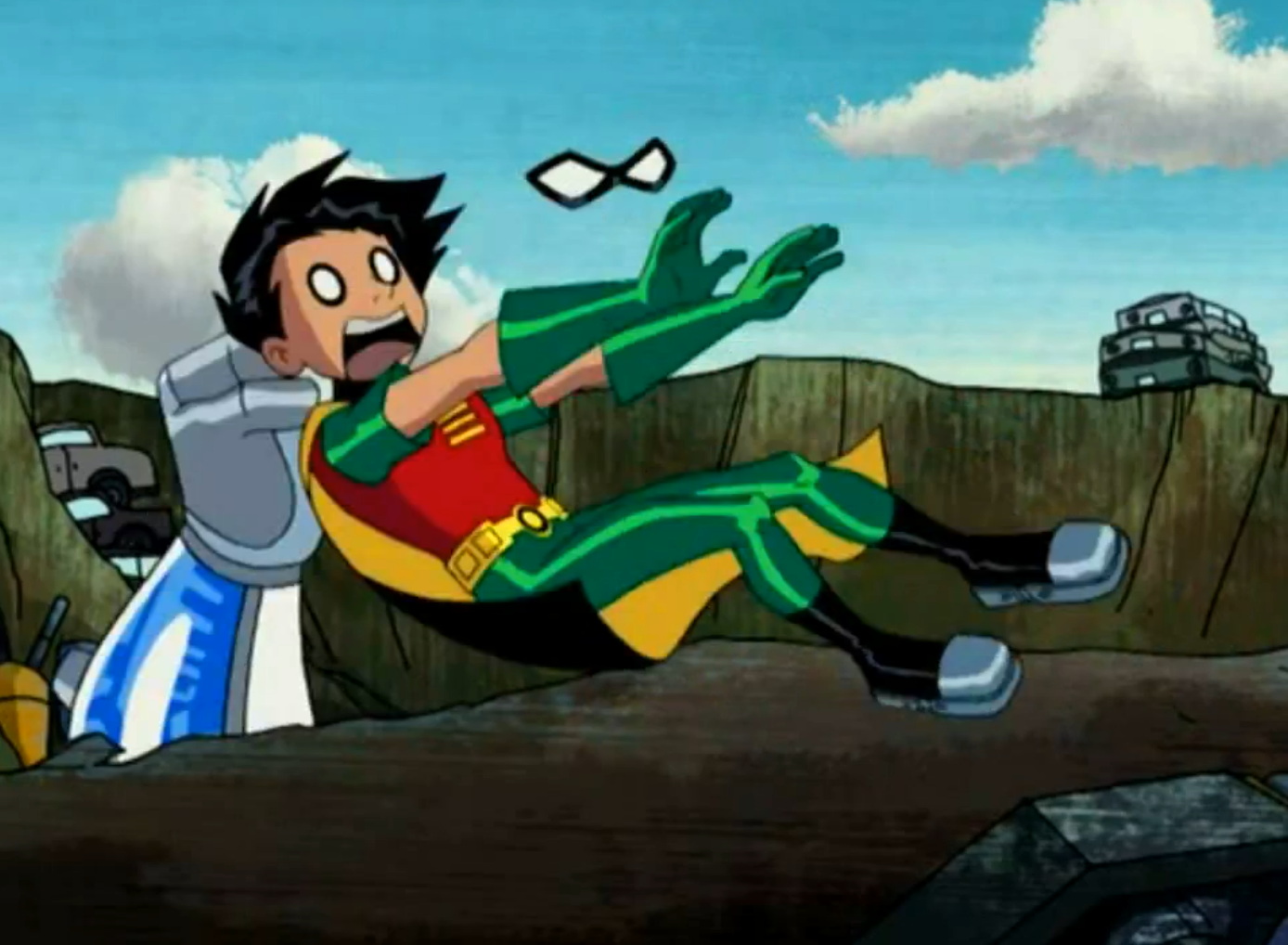
Everyone knows the look. The red tunic, the yellow cape, and that tiny, green or black strip of fabric covering the eyes. It’s iconic. But honestly, seeing Robin without a mask feels weirdly taboo in the comic book world. It’s like seeing a teacher at the grocery store or catching a magician mid-palm. You aren't supposed to see it, yet when you do, it changes everything you thought you knew about the character.
The mask isn't just a fashion choice. It’s a legal barrier, a psychological shield, and a heavy burden for a bunch of teenagers who really should just be at prom. When Dick Grayson, Jason Todd, or Tim Drake finally peel back that domino mask, we aren't just seeing a face. We’re seeing the trauma, the exhaustion, and the messy reality of being a child soldier in Batman’s private war on crime.
The Secret Identity Crisis
Why does the mask matter so much? Because the stakes are incredibly high. If a villain sees Robin without a mask, the trail leads straight back to Wayne Manor. That’s the practical answer. But the narrative reason is deeper. The mask allows these boys—and girls, like Stephanie Brown and Carrie Kelley—to become something more than themselves. Without it, Dick Grayson is just a grieving circus orphan. With it, he’s a symbol of hope that even Batman can't provide.
Think about the first time we saw a high-definition unmasking in modern media. In the Titans live-action series, Brenton Thwaites’ Dick Grayson spends a significant amount of time out of costume. It’s jarring. We see the dark circles under his eyes. We see the way he looks at himself in the mirror with a mix of disgust and confusion. When the mask comes off, the "Boy Wonder" persona dies, and you're left with a young man who doesn't know who he is without a mission.
It’s a stark contrast to the Silver Age comics of the 1950s and 60s. Back then, Robin losing his mask was usually a "shock" cover gimmick. "Will Batman recognize his own ward?!" the text would scream. It was lighthearted. Today, an unmasked Robin is a sign of vulnerability or a total mental breakdown.
Moments Robin Without a Mask Changed the Story
There are a few specific instances in DC history where the removal of the mask redefined the character. These aren't just "oops, it fell off" moments. These are pivots.
Dick Grayson’s Transition to Nightwing
When Dick Grayson finally outgrew the Robin mantle, the mask changed. But before he became Nightwing, there was a period of wandering. Seeing Dick Grayson as a civilian, trying to live a life in Blüdhaven or traveling with the New Teen Titans, showed us a version of the character that was finally breathing. He wasn't just "Batman's Shadow." He had blue eyes that saw the world differently than Bruce Wayne did. He smiled more. The mask, it turns out, was holding back his personality.
The Tragedy of Jason Todd
Jason Todd is the poster child for the dangers of the mask. In the Under the Red Hood arc, we see flashbacks of a young, scrappy Jason. When he’s Robin without a mask in those panels, he looks like a kid who just needs a hug and a warm meal. He’s impulsive. He’s angry. When the Joker finally catches him in A Death in the Family, the mask is gone. He’s just a bloody, broken teenager. That image—the unmasked, dying Robin—is arguably the most influential frame in DC history because it broke Batman. It proved that the mask isn't armor. It’s just cloth.
Tim Drake: The Detective
Tim Drake is different. He’s the one who chose the life. He figured out who Batman was through detective work. For Tim, being Robin without a mask is his natural state. He’s a tech geek, a student, and a son. There’s a great run in the early 90s by Chuck Dixon where Tim is constantly juggling his civilian life with his heroics. You see him at his computer, mask pushed up on his forehead, looking like any other stressed-out high schooler studying for finals. It made him relatable. It made us realize that Robin could be anyone.
The Physicality of the Mask
Let’s talk about the "domino mask" itself. In the real world, it’s useless. If you wear a tiny strip of leather over your eyes, your mom is still going to recognize you. Your mailman will know it’s you. But in the "comic book logic" universe, that mask is a magical veil.
Artists like Dan Mora or Jorge Jiménez use the mask to convey emotion that eyes alone can’t. They make the white lenses of the mask change shape—narrowing when Robin is angry, widening when he’s surprised. When you see Robin without a mask, you lose that "superhuman" expressiveness and get stuck with human limitations. You see the squinting, the blinking, and the tears.
- Spirit Gum and Scars: Fans often wonder how the mask stays on. In the comics, it’s usually explained by "spirit gum," a medical-grade adhesive. Taking the mask off isn't like taking off a hat; it’s a process. It hurts. It leaves the skin red and irritated.
- The "Tan Line" Problem: Think about the logistics. If you spend eight hours a night fighting crime under Gotham's (admittedly dim) spotlights or daytime missions with the Justice League, you're going to have a weird tan line.
The Psychological Weight of Anonymity
There’s a concept in psychology called "deindividuation." It’s basically the idea that when people are in a group or wearing a disguise, they feel less like an individual and more like part of a collective. They take risks they wouldn't normally take.
For the various Robins, the mask is a license to be violent. It’s a license to jump off buildings. When they are Robin without a mask, they have to face the consequences of their actions as Dick, Jason, or Tim. This is why the "unmasking" scene is such a staple of superhero tropes. It’s the moment of accountability.
In the Young Justice animated series, there’s a fantastic exploration of this. The team is forced to deal with their identities, and Dick Grayson (as Robin) is the most guarded. He’s been trained by the best to never let the mask slip. When he finally does, it’s a sign of immense trust in his teammates. He isn't just showing them his face; he’s showing them his soul.
Why We Rarely See Damian Wayne Unmasked
Damian Wayne, the son of Bruce Wayne and Talia al Ghul, is the most "masked" of them all. Even when he isn't wearing his Robin suit, he’s wearing a "mask" of arrogance and lethal training. Seeing Damian Robin without a mask is rare because he views his civilian identity as a weakness. To him, "Damian Wayne" is the disguise. "Robin" is who he actually is.
When we do see him unmasked—usually during moments of rare bonding with his father or Alfred—it’s a reminder that he’s just a child. A child who was raised by assassins, sure, but a child nonetheless. The contrast between his small, youthful face and his cold, calculating eyes is one of the most jarring visuals in the current Batman and Robin runs.
Fact vs. Fiction: The Evolution of the Reveal
Initially, the identity of Robin was a closely guarded secret from the readers too. In Detective Comics #38 (1940), we got the origin, but for a while, the "secret identity" was played for maximum drama.
- The 1940s: Robin’s mask was larger, more like a sleep mask. It covered more of the cheek.
- The 1966 TV Show: Burt Ward’s Robin had a mask that was clearly glued on. It became a pop-culture touchstone for how "silly" the concept could be.
- The Modern Era: The mask is often depicted as high-tech, containing thermal vision, HUD displays, and communication arrays. Removing it now means losing a tactical advantage, not just a secret.
Practical Insights for Fans and Cosplayers
If you’re looking into the lore or even trying to recreate the look of Robin without a mask, there are a few things you should keep in mind about the character’s "real" appearance.
- Eye Color Matters: Across the various Robins, eye color is a point of contention for fans. Dick Grayson is traditionally blue-eyed. Jason Todd has been depicted with both blue and green (post-Lazarus Pit). Tim Drake is usually brown or blue depending on the artist. Damian has his mother’s green eyes.
- The "Mask Face": High-quality fan art and official covers often show "raccoon eyes"—dark smudge marks left by the adhesive or the makeup used to blend the mask into the skin. This adds a layer of "gritty realism" that many modern fans love.
- Identity Leakage: In the age of smartphones, the idea of a Robin without a mask surviving for more than five minutes in Gotham is a bit of a stretch. Modern writers have had to introduce "face-blurring" technology or EMPs to explain why Robin isn't constantly being doxxed on Twitter.
The Cultural Impact of the Unmasking
Why does this specific search term—Robin without a mask—even exist? Because we are obsessed with the "human" side of our heroes. We want to see the person behind the legend. We want to know if they look like us, if they hurt like us, and if they’re still "super" when the costume is in the wash.
Seeing Robin’s face reminds us that the "Boy Wonder" is a title that can be passed down. The mask is the legacy; the face is the individual. When Dick Grayson gave up the mask, the world didn't end. When Jason Todd died without his, a new one was eventually found. The mask is the immortal part of the character, while the face underneath is the part that ages, bleeds, and eventually moves on.
Moving Forward with the Robin Lore
If you're diving deeper into the world of Batman's proteges, don't just look at the fight scenes. Look at the "civilian" issues. Look at the panels where they’re eating pizza in the Batcave or sitting on a rooftop at sunrise with their masks pulled down. Those are the moments where the best writing happens.
To really understand the weight of the mask, you have to look at these specific storylines:
- Read Nightwing: Year One: It perfectly captures the moment Dick Grayson leaves the Robin identity behind.
- Check out Robin: Son of Batman: This shows Damian Wayne trying to find a life outside of his grandfather's shadow.
- Watch the Under the Red Hood animated movie: The final confrontation is the gold standard for an "unmasking" scene that actually carries emotional weight.
Understanding the duality of the character is the only way to truly appreciate why the mask exists in the first place. It’s not about hiding from enemies; it’s about protecting the boy who just wants to be a hero.
To explore the specific design differences between the Robins, you can look up the official DC Character Encyclopedias which detail the suit iterations. You might also want to track the work of colorists like Jordie Bellaire, who use specific palettes to differentiate the "mask on" versus "mask off" moods in Gotham. For a deeper look at the psychological impact, research "The Mask of Sanity" in superhero literature—a common theme in academic takes on the Batman mythos.