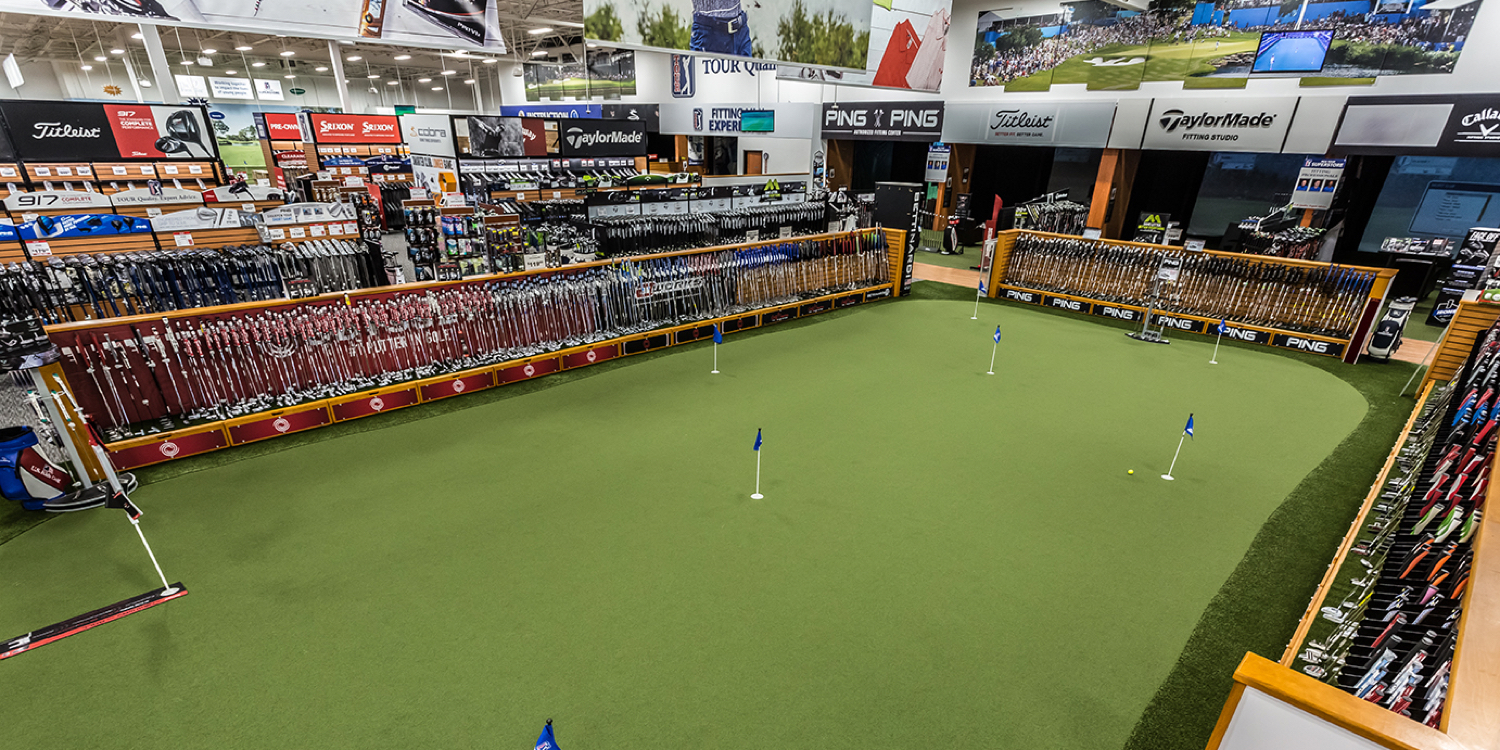
Let's be real. That driver you bought three years ago isn't hitting the fairway like it used to. Or maybe it never did, and you're just looking for an excuse to swap it for the newest TaylorMade or Ping model. We've all been there. But before you let that expensive piece of carbon fiber and titanium gather dust in the garage, you should probably look into the PGA Tour Superstore trade in program. It’s arguably the most straightforward way to subsidize a gear addiction without dealing with the absolute headache of lowballers on Facebook Marketplace or the steep seller fees on eBay.
It’s not just about getting rid of junk. It's about math.
If you walk into a store with a semi-recent Titleist driver, you aren't just dumping a club; you’re basically carrying a gift card. PGA Tour Superstore uses a standardized system to determine value, which keeps things predictable. You bring it in. They scan it. They check the condition. You get credit. Simple, right? Mostly. There are some quirks to the process that most golfers miss, which can cost you twenty or fifty bucks if you aren't careful about how you present your gear.
The Reality of Trade-In Values (It’s a Business, Not a Charity)
Look, you’re never going to get "private sale" prices at a retail counter. That’s just the way the world works. PGA Tour Superstore relies on the PGA Value Guide, which is essentially the Kelley Blue Book of golf. This guide aggregates thousands of transactions to set a "Fair Market Value."
The store has to make a profit. They have to inspect the club, maybe regrip it, floor it, and eventually sell it in their "Pre-Owned" section. Because of that, you’ll typically see a trade-in offer that is about 30% to 50% lower than what you might see the club selling for used on the rack. It sounds like a lot. Honestly, it kind of is. But you have to weigh that against the convenience of walking in with an old club and walking out with a brand-new one ten minutes later. No shipping boxes. No "is this still available?" messages from strangers.
If your club is ancient—think 2005-era Nike SasQuatch—don't expect much. In fact, many clubs over 10-12 years old have a trade-in value of exactly zero dollars. The technology has moved on so much that the resale market for them has basically evaporated.
How the PGA Tour Superstore Trade In Process Actually Works
You don't need an appointment. Just grab your clubs and head to the tech desk or the back of the store where the pre-owned section usually lives.
First, the associate is going to look at the condition. This is where most people get tripped up. They categorize clubs into "New," "Excellent," and "Good."
- Excellent means it looks like it’s been hit maybe five times. No sky marks on the crown, no significant face wear, and the shaft is pristine.
- Good is where most clubs fall. Normal bag chatter, some light scratches on the sole, and a grip that might be a little slick but isn't falling apart.
- Poor or Damaged? Forget it. If the shaft is dented, the graphite is peeling (delamination), or there’s a rattle in the head, they won't take it. They can't. Nobody wants to buy a broken club.
The Hidden Value in the Headcover
Believe it or not, having the original headcover matters. While the PGA Value Guide provides a base price, some retailers will dock you a few bucks if you don't have the matching cover. It makes the club harder for them to resell. If you have the adjustment wrench that came with your driver, bring that too. It’s a small detail, but it makes your trade-in look "complete" and professional.
Timing Your Trade for Maximum Value
Golf equipment depreciates faster than a luxury German sedan. The moment the "new" version of your driver is announced—usually every January around the PGA Show—your current club’s value drops.
If you want to maximize your PGA Tour Superstore trade in, do it in the late fall or very early spring before the new cycles hit the shelves. Once the 2026 models are out, your 2024 gear becomes "two generations old" in the eyes of the software. That’s a massive hit to your wallet.
Another trick? Watch for "Trade-In Bonus" events. A few times a year, often during major championships or at the start of the season, PGA Tour Superstore will offer a 25% or 50% bonus on top of your trade-in value if you apply it toward a specific brand. If your old Callaway driver is worth $150 and there’s a 50% bonus running, you’re suddenly looking at $225. That covers a huge chunk of a new $600 driver.
What They Will (and Won't) Accept
It isn't just drivers and irons. You can trade in:
- Individual wedges (as long as the grooves aren't completely smoothed out).
- Putters (high-end brands like Scotty Cameron or PING hold value incredibly well).
- Complete iron sets (usually 5-9 or 4-PW).
- Hybrids and Fairway Woods.
What they won't touch:
- Individual irons that aren't part of a set (unless it's a specific driving iron).
- Clone or "knock-off" clubs.
- Golf bags, shoes, or electronics (usually). Rangefinders are a "maybe" depending on the specific store's current policy and the brand, but generally, the trade-in program is strictly for the sticks.
Comparing the Options: Superstore vs. The Competition
Is the PGA Tour Superstore trade in better than 2nd Swing or Global Golf?
It’s competitive. Because they all use similar databases, the quotes are usually within $10 of each other. The real advantage of the Superstore is the instant gratification. If you trade in online with a site like 2nd Swing, you have to box up the clubs, ship them, wait for them to be inspected, and then wait for a digital credit. At the Superstore, you’re standing in a building filled with thousands of shiny new things you can buy immediately.
Also, you can physically argue your case. If the associate thinks a club is in "Fair" condition but you think it's "Good," you can point out that the "scratches" are actually just tee marks that can be rubbed off. You can't do that with an online form.
Why Some Golfers Feel "Ripped Off"
I see it all the time. A guy walks in with a set of irons he paid $1,200 for four years ago. The store offers him $280. He gets angry.
But here’s the reality: Iron sets lose value the second the shrink wrap comes off. Then, the manufacturer releases a "Max," a "Pro," and a "Standard" version every 12 to 24 months. By year four, your irons are "obsolete" in the marketing world.
If you want the highest ROI, you have to trade in frequently. The "sweet spot" is trading in every 2 years. At that point, your gear still has enough relevance to command a decent price, and the "cost to upgrade" is much lower than waiting 10 years and trying to trade in a set worth $20.
Actionable Steps to Prep Your Clubs
Don't just throw your dirty clubs in the trunk and drive over. A little "curb appeal" goes a long way with the person behind the counter.
- Clean them properly. Take a bucket of warm soapy water and a plastic brush to those grooves. Get the dirt out. Wipe down the shafts. If the clubs look like they’ve been cared for, the associate is much more likely to click the "Excellent" or "Good" button rather than "Fair."
- Check the PGA Value Guide online first. Knowledge is power. Know what your club is worth before you walk in so you aren't shocked by the number.
- Bring the accessories. Headcovers, wrenches, and even the extra weights if your driver came with a kit.
- Check for the "Bonus" promos. Call the store or check the website before you go. If you’re a week away from a "50% Bonus Trade-In" event, it’s worth the wait.
The PGA Tour Superstore trade in program is a tool. It's not a way to get rich, and it's certainly not the way to get every last penny of value out of your gear. It is, however, the most efficient way to keep your bag updated with the latest tech without having to turn your garage into a shipping warehouse.
Gather your old gear. Spend twenty minutes cleaning the clubfaces. Look up the values on the guide. If the number looks fair to you, head to the store. You might find that your "old junk" is the down payment on the best season of golf you've ever played.