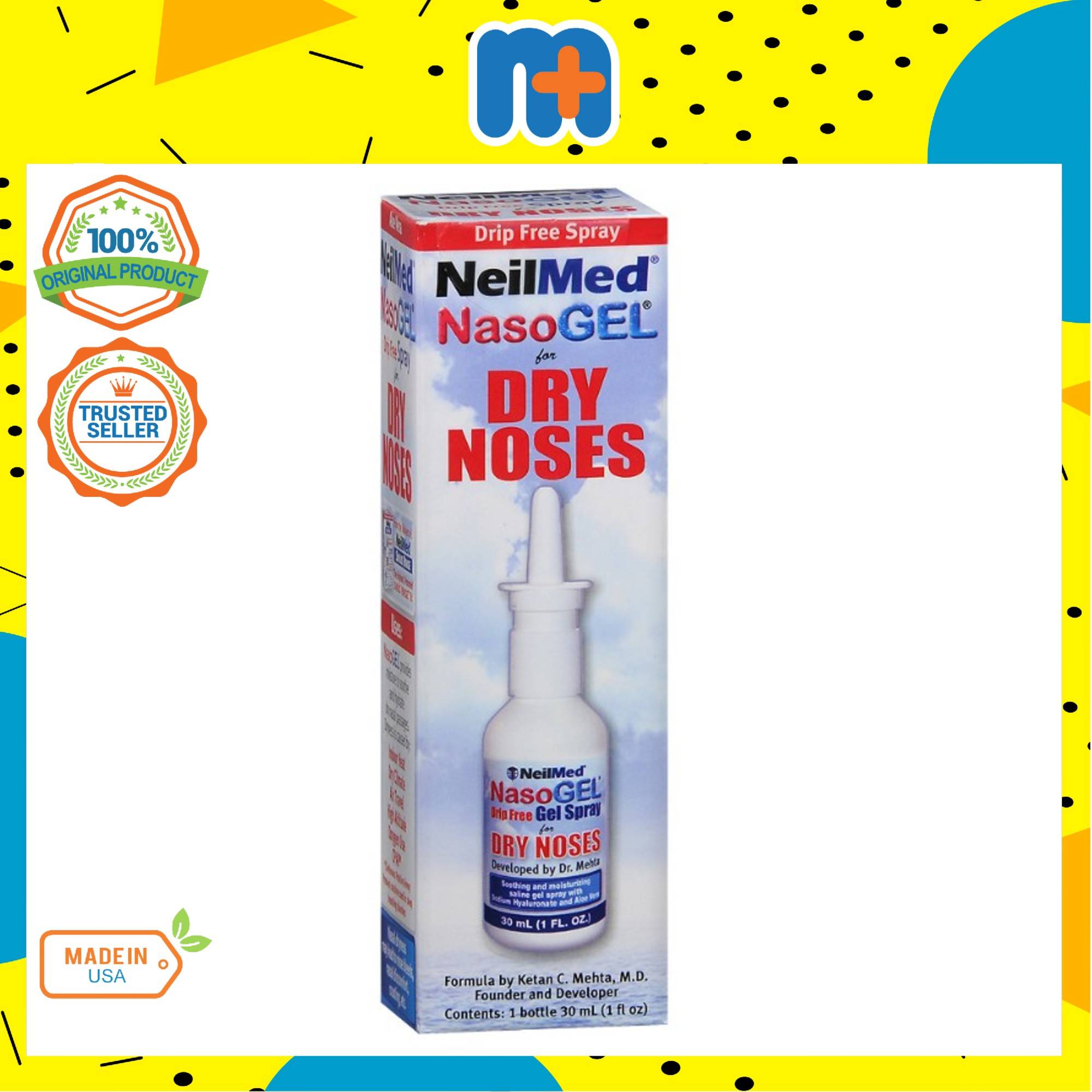
Ever wake up with a nose so dry it actually hurts to breathe? You know that raw, sandpaper feeling inside your nostrils, maybe even with a little crusting or the dreaded morning nosebleed. Most people reach for a standard saline mist, spray it twice, and then feel that annoying liquid immediately drip down the back of their throat or run right back out their nose. It's messy. It’s temporary. And honestly, it doesn't always solve the problem for more than ten minutes.
That is exactly where the NeilMed NasoGel Drip Free Spray enters the conversation.
This isn't just another saltwater mist. It’s a gel. That distinction might sound small, but if you’re dealing with chronic dryness from a CPAP machine, desert air, or post-surgery recovery, it’s a total game-changer. We’re talking about a product designed to actually stay where you put it, coating the sensitive mucosa in a protective layer that doesn't just evaporate into thin air.
The Science of Why Your Nose Is Actually Dying for Moisture
Our nasal passages are lined with a delicate "carpet" of cilia—tiny hairs that move mucus along. When this environment dries out, the cilia stop moving. You get crusty. You get irritated.
Standard saline sprays are great for flushing out pollen, but they are "in and out" solutions. NeilMed NasoGel Drip Free Spray uses a water-soluble saline base but levels it up with sodium hyaluronate and aloe vera. Sodium hyaluronate is basically the "holy grail" of hydration; it’s a humectant that can hold many times its weight in water.
Think of it like this: a regular spray is a glass of water poured on a dry sponge—most of it just runs off. This gel is like a wet cloth laid over the sponge. It keeps the moisture in contact with the tissue for a much longer duration.
Who is this actually for?
It’s a specific crowd, usually.
- CPAP and Oxygen Users: If you use a machine for sleep apnea, that constant airflow is like a windstorm in your sinuses. It dries everything out. Applying this before bed can be the difference between waking up refreshed or waking up with a sore, bloody nose.
- The "Desert Dwellers" and Frequent Flyers: Airplanes have notoriously low humidity, often under 20%. Your nose wasn't built for that.
- Post-Surgery Patients: If you’ve had a septoplasty or sinus surgery, your surgeon probably told you to keep things "moist." Gels are often preferred over thin sprays because they provide a mechanical barrier while the tissue heals.
- Atrophic Rhinitis Sufferers: For those with chronic thinning of the nasal lining, a simple saline spray often isn't enough to prevent crusting.
What’s Actually Inside the Bottle?
If you're like me, you read the back of the box before you buy anything. You won't find any harsh decongestants like oxymetazoline here. That’s a good thing. Decongestant sprays (the "redness relief" ones) can cause rebound congestion where your nose gets more stuffed up if you stop using them.
NeilMed NasoGel Drip Free Spray is drug-free. The ingredient list is pretty straightforward:
- Sodium Hyaluronate: For deep hydration.
- Aloe Vera: To soothe the "raw" feeling.
- Allantoin: Often used in skincare to help with tissue repair.
- Sodium Chloride & Sodium Bicarbonate: The "saline" part that keeps the pH balanced.
- Glycerin & Propylene Glycol: These act as lubricants to keep the gel "slick" and prevent it from drying into a sticky mess.
It does contain preservatives like benzalkonium chloride and parabens to keep the bottle sterile. If you have a specific allergy to those, you might want to look at their preservative-free single-use ampules, but for most people, the convenience of the spray pump is worth it.
The "Drip Free" Promise: Does It Actually Work?
Kinda.
Look, gravity is still a thing. If you pump five sprays into your nostril and immediately stand up, some of it is going to move. But compared to a standard mist? It’s night and day.
The pump is designed to deliver a metered dose of gel. Because the consistency is thicker—think of a very thin hair gel or a thick serum—it clings to the nasal walls. You don't get that "waterboarding" sensation where the saline hits the back of your throat (the post-nasal drip) nearly as much.
Pro tip: When you spray it, don't sniff hard. That’s the mistake everyone makes. If you sniff hard, you're just pulling the medicine into your throat. Just spray it, and let it sit there.
The Learning Curve: Priming the Pump
This is where people get frustrated and write one-star reviews.
Because it’s a gel, the pump is a bit more heavy-duty than a cheap drugstore spray. You have to prime it. You take off the cap, remove the little blue safety clasp (don't lose that!), and then press the pump down and hold it for about 4 seconds. Then release. Repeat this 4 or 5 times.
If you just rapidly click it like a pen, it might not prime properly. Be patient with it. Once the air is out and the gel is in the tube, it works like a charm every time.
NeilMed NasoGel Drip Free Spray vs. The Tube Version
NeilMed actually makes two versions of NasoGel. There is the Drip Free Spray and then there is the Gel Tube.
The tube is a much thicker ointment. You usually apply it with a cotton swab or a clean finger. It’s great for the very front of the nose (the vestibule) where most nosebleeds start.
However, the spray is better if you need the moisture to reach higher up or deeper into the nasal passage. It "atomizes" the gel just enough to cover a wider surface area without you having to poke around in your nose. If you're on the go—like at an office or on a plane—the spray is significantly more hygienic than sticking your finger in your nose.
Real Talk: Are There Side Effects?
Since it’s drug-free, the side effects are minimal, but they exist.
Some people report a slight stinging for the first few seconds. This usually happens if your nose is already extremely irritated or "raw." It’s sort of like putting lotion on chapped skin—it might sting before it starts to soothe.
Also, it's a "wet" sensation. If you're not used to nasal gels, it can feel a little weird for the first minute. You might feel the urge to blow your nose. Resist it. Give the gel at least 10 minutes to "set" and hydrate the tissue.
A quick warning: don't use this for "mouth dryness." I know it says "gel," but it’s formulated for the pH of your nose. Keep it in your nostrils. Also, the manufacturer recommends it for ages 6 and up.
How to Get the Most Out of Your Bottle
If you want this to actually work and not just be a $12 bottle of "fine, whatever," you need a routine.
First, if you have a lot of mucus or "crusties," use a saline rinse (like the NeilMed Sinus Rinse bottle) before using the gel. Think of it like skincare: you wash your face before you put on moisturizer. The rinse clears the debris, and the NasoGel locks in the moisture on the clean skin.
Second, use it consistently. If you only use it when your nose is already bleeding, you're playing catch-up. If you live in a dry climate or use a CPAP, make it a habit. One or two sprays in each nostril every 4 to 6 hours is the standard recommendation.
Actionable Steps for Chronic Dryness
If you're ready to give the NeilMed NasoGel Drip Free Spray a shot, here is your game plan:
- Check the seal: Make sure the shrink-wrap is intact. These bottles are meant to be sterile.
- Prime it right: Hold the pump down for the full 4 seconds during the first few pumps. Don't rush it.
- Positioning: Tilt your head slightly forward, not back. Aim the nozzle slightly outward (toward the ear) rather than straight up the septum. This helps prevent irritation to the middle wall of your nose.
- Cleaning: Wipe the tip of the nozzle after every use. You don't want bacteria hanging out on the tip and getting sucked back into the bottle.
- Storage: Keep it at room temperature. If it freezes, the gel structure might break down and turn watery.
Nasal health is one of those things we ignore until it's a disaster. But if you're tired of the "spray and drip" cycle, switching to a gel-based formula like this is probably the smartest move you can make for your sinuses. It stays put, it actually hydrates, and it doesn't leave you reaching for a tissue five seconds later.
Next Steps:
Check your bedroom's humidity levels with a cheap hygrometer. If it's below 30%, no amount of spray will fully fix the issue without a humidifier running at night. Pair the NeilMed NasoGel Drip Free Spray with a cool-mist humidifier for the best results during the winter months.