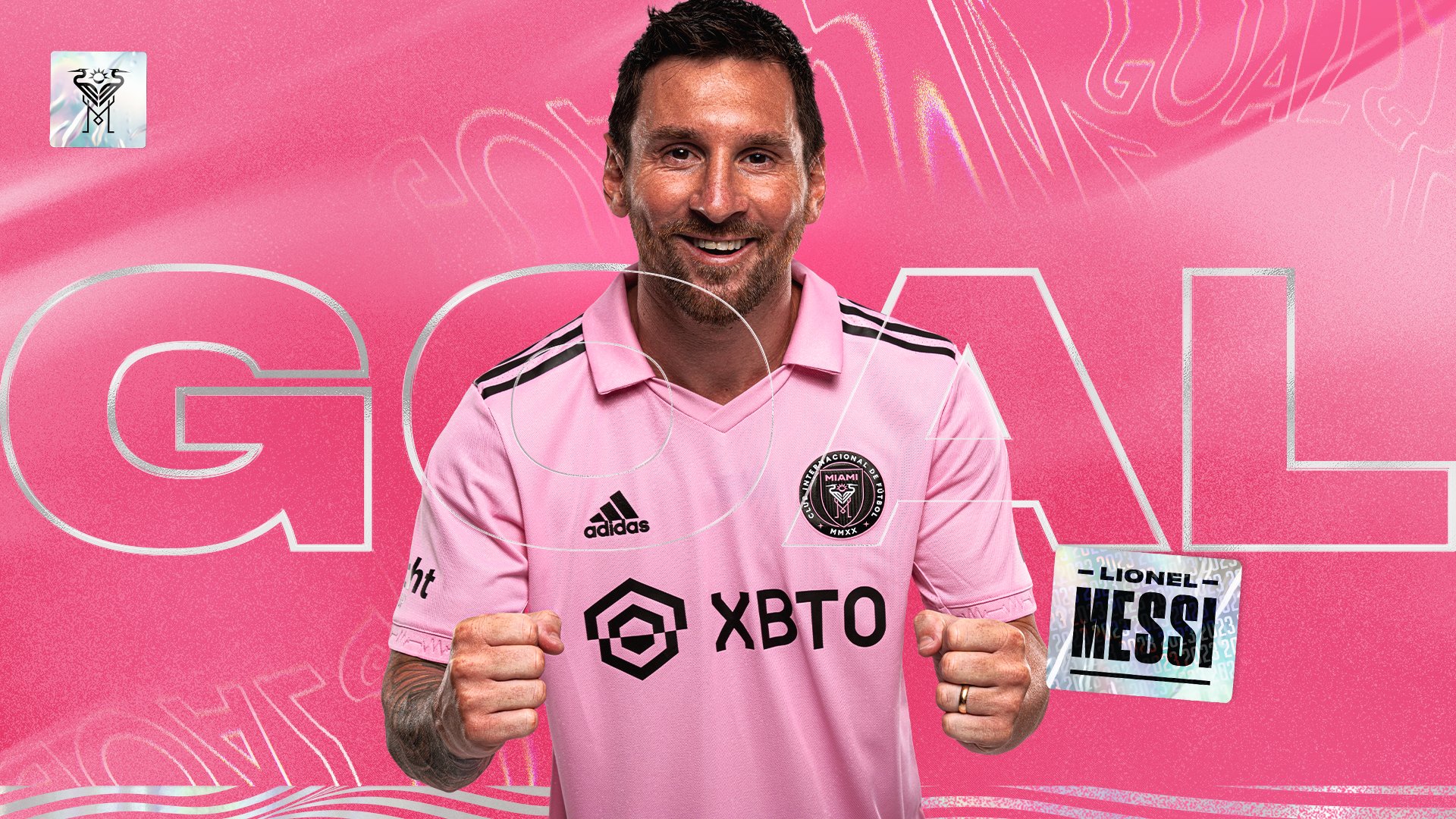
It is 2026 and everyone thinks they know how this ends. The script feels written: Lionel Messi rides off into the sunset after a final, glittery campaign in South Florida, maybe hoisting one more trophy before the World Cup kicks off on North American soil. People talk about Inter Miami like it's a retirement home with better weather. Honestly? They’re missing the point.
The reality on the ground in Fort Lauderdale is a lot more chaotic—and a lot more interesting—than the highlight reels suggest. We aren't just watching a victory lap. We're watching a massive, billion-dollar experiment in how much a single human being can carry an entire sporting culture.
The Reality of the 2025 MVP Campaign
Last year was supposed to be the beginning of the decline. Instead, Messi went out and bagged the 2025 MLS Golden Boot, scoring 29 goals in just 28 matches. Think about that for a second. He’s 38. He’s playing against kids half his age who grew up with his poster on their bedroom walls, and he’s still averaging over a goal per game.
But stats don't tell you how it feels to be at Chase Stadium when he’s not playing. When Messi was sidelined with that adductor injury last March, the energy in the building didn't just dip—it evaporated. You could feel the collective anxiety of a fan base that knows the clock is ticking. The club is currently valued at roughly $1.19 billion, a 17% jump from the previous year, but that valuation is precariously tied to a left foot that has logged thousands of miles.
Why the "Retirement League" Narrative is Dead
You’ve heard the jokes. MLS is where legends go to play golf and collect a paycheck. But look at the 2026 roster. Inter Miami just signed Rodrigo De Paul in a multimillion-dollar transfer from Atletico Madrid. They’ve got Sergio Reguilon flying down the left flank to replace Jordi Alba. This isn't a team of aging stars anymore; it's a team built to win the CONCACAF Champions Cup.
Javier Mascherano, now steering the ship as head coach, has implemented a system that is basically "protect Leo at all costs." It’s tactical insulation. He’s surrounded by "bodyguards" like De Paul and young, hungry talent like David Ruiz and Tomás Avilés. The goal isn't just to win; it's to survive the grueling MLS travel schedule.
The Contract Situation Nobody is Talking About
There was so much noise about Messi's initial deal expiring in 2025. Well, the news is out: he signed a three-year extension through 2028. He’s staying. He’s going to be 41 by the time this contract wraps up.
- Salary: He’s still topping the charts at a guaranteed $20.45 million per year.
- The "Apple" Factor: Don't forget the revenue sharing from MLS Season Pass.
- The New Home: The move to Miami Freedom Park is slated for this season.
Going from the 21,000-seat interim stadium in Fort Lauderdale to a state-of-the-art cathedral in the heart of Miami changes everything. Ticket prices for the home opener against Austin FC are already hovering around $191 for the cheap seats. If you want to see them play on the road, like the April match against Colorado at Empower Field, you’re looking at $289 just to get in the door.
Is He Actually Fit for the 2026 World Cup?
This is the big one. Every time Messi rubs his hamstring, the entire country of Argentina holds its breath. Scaloni, the national team coach, has been playing it cool, but the adductor issues that kept Messi out of the qualifiers against Brazil and Uruguay last year are a warning sign.
He’s human. Barely, but he is.
Inter Miami’s medical staff, presented by Baptist Health, has been busy. They’ve had to manage minor muscle injuries in his right leg repeatedly over the last twelve months. The club has to balance their own ambitions with the fact that their captain wants to lead his country in a home-soil World Cup. It’s a tug-of-war. Sometimes the club wins, sometimes the country wins, and sometimes the fans who paid $500 for a ticket find out two hours before kickoff that Messi is "resting."
The Business of Being Inter Miami
The "Messi Effect" isn't just a marketing buzzword. It’s 14 million new Instagram followers in three months. It’s a 30% rise in league-wide sponsorship income. Basically, Messi is the tide that lifted every boat in the harbor.
Even teams like LAFC and Orlando City have had to change their business models. They aren't just competing for points; they’re competing for global relevance. When Inter Miami travels, it’s a circus. It’s the Beatles in 1964, but with better kits.
But there’s a downside. The gap between the "haves" and "have-nots" in MLS is widening. Miami’s payroll of nearly $50 million dwarfs half the teams in the league. It’s created a league of two speeds: those who can afford the superstars and those who are just trying to keep the lights on.
The New Blood
While everyone watches the #10, the front office has been quietly rebuilding the "non-Messi" parts of the squad. In the 2026 SuperDraft, they picked up Abdel Talabi, a powerhouse defender from Bryant University. They’re betting on youth to provide the legs that the veterans no longer have. It’s a smart move. You can’t win a 34-game season with only guys who remember the 2010 World Cup.
What's Next for Fans?
If you’re trying to catch a game this season, you need a strategy. Don’t just look at the home schedule. Miami Freedom Park is going to be a nightmare to get into for the first few months.
Look at the road games in secondary markets. Matches in places like Nashville or Charlotte often have slightly better availability, though "cheap" is a relative term now. Also, keep an eye on the Leagues Cup. Messi has a weirdly personal connection to that tournament—it’s where he won his first trophy in the States—and the club tends to prioritize it over some regular-season matches.
Actionable Next Steps:
- Monitor the Injury Report: Check the official Inter Miami communications feed 48 hours before any match. Messi’s "load management" usually becomes clear by then.
- Verify the Venue: With the transition to Miami Freedom Park, double-check your tickets. Some early-season "home" games may still have logistics shifts.
- Watch the Secondary Market: Prices often drop significantly 3-4 hours before kickoff if the weather looks "Miami-level" humid or rainy.
The 2026 season isn't the end of an era. It’s the beginning of the "New Normal" for American soccer. Whether you love the hype or hate the ticket prices, there’s no denying that Messi and Inter Miami have fundamentally broken and rebuilt the sport in this country.