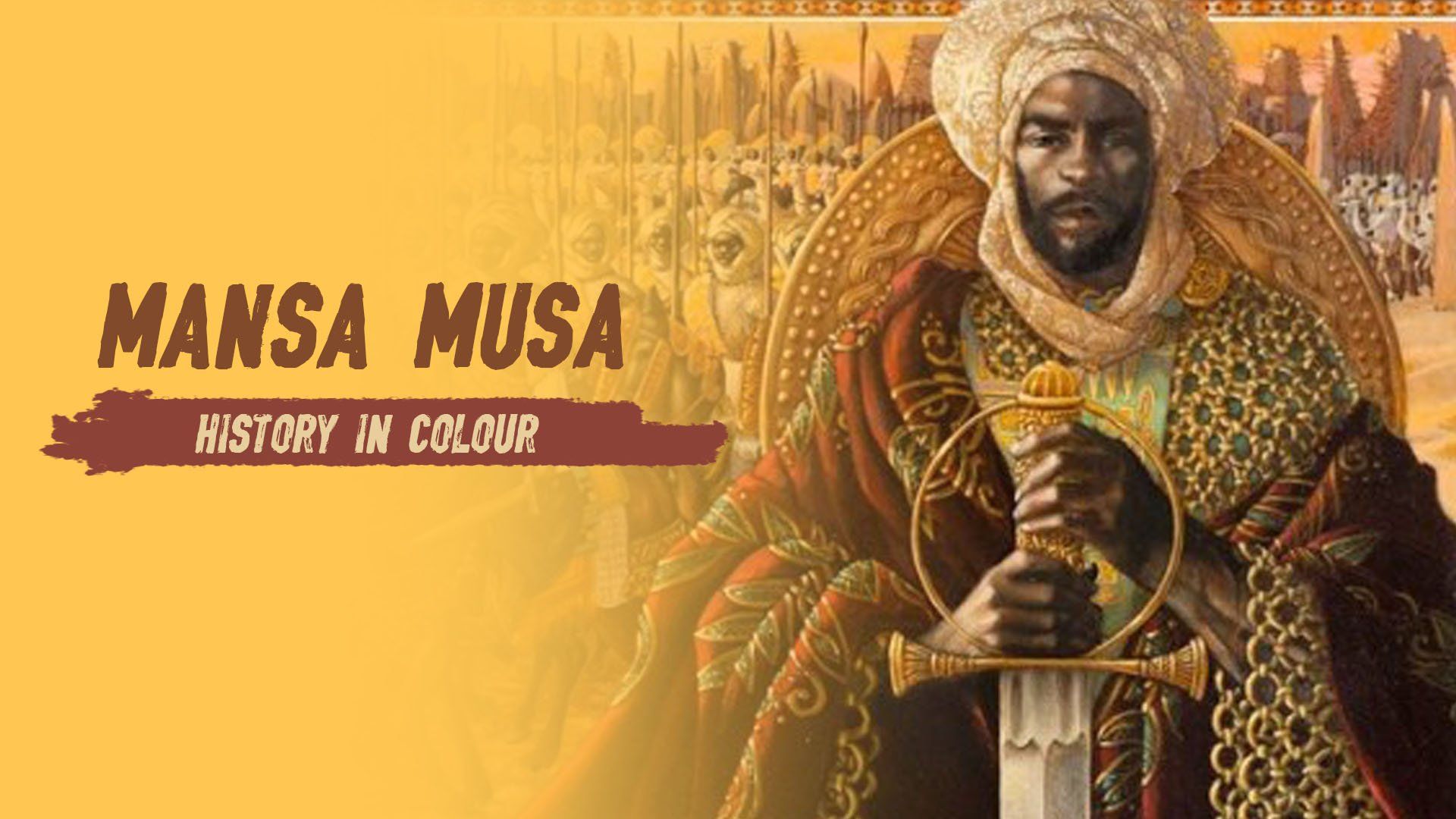
You’ve seen the image. A regal figure, draped in gold, sitting on a throne and holding a massive nugget of pure gold like it's a casual snack. This is the visual we all have when someone mentions Mansa Musa, the 14th-century ruler of the Mali Empire. He’s often called the richest human to ever walk the earth, a man who literally crashed the Egyptian economy just by being generous on his way to Mecca.
But here is the catch: there are no Mansa Musa real pictures.
I know, it sounds kinda weird to say that when his "portrait" shows up in every history textbook and YouTube documentary. But photography didn't exist in the 1300s. There were no cameras to catch him mid-stride through Cairo, and the Mali Empire didn't leave behind a tradition of lifelike portraiture or statues of their leaders. So, what exactly are we looking at when we Google him?
The 1375 Catalan Atlas: The Closest We Get
The most famous "picture" of Mansa Musa isn't a painting in the traditional sense. It’s actually a tiny detail on a map. Specifically, the Catalan Atlas of 1375. This map was created by a Jewish cartographer named Abraham Cresques on the island of Majorca.
He had never met Musa.
Cresques was working based on stories that had filtered up from the Saharan trade routes into Europe. By the time this map was drawn, Mansa Musa had been dead for about 40 years. This image is essentially the 14th-century version of a fan-art sketch based on a viral Twitter thread.
Why the Atlas depiction matters
- The Crown: He's wearing a European-style crown. Historically, Musa likely wore a traditional Malian headpiece or a turban, but the artist wanted European royalty to recognize him as a "king."
- The Gold Nugget: This is the ultimate status symbol. It tells the viewer, "This guy has more gold than you can imagine."
- The Scepter: Another European royal trope added to make him look familiar to Western eyes.
It’s a powerful image. It’s the reason we still talk about him today. But is it an accurate representation of his face? Honestly, probably not. It’s a caricature of wealth and power, not a biological record.
The Search for Archeological Evidence
If there are no Mansa Musa real pictures, maybe there’s a statue? Or a coin?
Usually, when we want to know what an ancient ruler looked like, we turn to their currency. Romans put their emperors on denarii; Greeks put their heroes on drachmas. But the Mali Empire was different. Even though they controlled the world's largest gold supply, they didn't really mint coins with faces on them. They traded in gold dust and salt.
What the ruins tell us
Archaeologists working in Timbuktu and Gao have found incredible things. They’ve uncovered the remains of the Djinguereber Mosque, which Musa commissioned after his return from the Hajj. We see his architectural legacy everywhere. We see the mud-brick wonders that defined a golden age of West African scholarship.
But we don't find busts. We don't find frescoes of his wedding. Islamic traditions in the region at the time often leaned toward aniconism—avoiding the depiction of sentient living beings in art. This means that while Musa was building the greatest libraries in the world, he wasn't exactly sitting for portraits.
Why Do People Keep Searching for Real Pictures?
Basically, we have a hard time conceptualizing that much wealth without a face to pin it to. When people search for Mansa Musa real pictures, they are usually looking for a connection to the man who spent so much gold in Cairo that the value of the metal stayed depressed for over a decade.
We want to see the "Lord of the Negroes of Guinea," as the Catalan Atlas calls him.
There are modern recreations, of course. Artists like Tim O'Brien have created stunning modern interpretations that try to blend historical accuracy with the sheer scale of his entourage. These are beautiful, but they are still guesses. They are informed by the writings of 14th-century Arab historians like Ibn Khaldun and Al-Umari, who described Musa as a man of great dignity and piety.
Al-Umari wrote that Musa was a "young man with a brown complexion and a pleasant face." That’s about as close as we get to a "picture." A few words from a guy who talked to the people who actually met the Emperor.
How to Spot "Fake" Mansa Musa Images
Because of the internet’s obsession with the "richest man ever," a lot of AI-generated images and unrelated historical art get tagged as him.
- Check the clothing: If he’s wearing 18th-century European silk or 19th-century military uniforms, it’s not him.
- Look for the "Golden Nugget": If the image looks like a map or a drawing on parchment, it’s likely a crop from the Catalan Atlas. That’s the most "real" it gets.
- Modern AI: If the face looks too perfect, or the lighting looks like a Marvel movie poster, it's a 2024 AI render.
The Reality of the Mali Empire's Visual Record
The lack of Mansa Musa real pictures shouldn't be seen as a "missing" piece of history. Instead, it’s a reflection of how that history was preserved. The Mali Empire was a culture of oral tradition and scholarship. The Griots (historians/storytellers) kept the record of his reign alive through spoken word for centuries.
To them, a picture wasn't necessary. The mosques he built, the universities he funded, and the sheer economic impact he had on the Mediterranean world were his "portrait."
Actionable Insights for History Buffs
If you’re trying to find the most authentic representation of Mansa Musa, you have to stop looking for a face and start looking at the maps and manuscripts from his era.
- Visit the Digital Archives: Look up the Bibliothèque nationale de France (BnF). They hold the original Catalan Atlas. You can zoom in on the actual "Musse Melly" figure and see the ink strokes from 1375.
- Read the Primary Sources: Check out the translations of Al-Umari’s "Masalik al-Absar." It gives you the "word picture" of his arrival in Cairo.
- Follow Archaeological Updates: Groups like the Timbuktu Renaissance work to preserve the manuscripts that Musa’s era produced. These documents contain the real intellectual "DNA" of his empire.
Stop searching for a selfie from 1324. It doesn't exist. Instead, look at the 1375 Catalan Atlas to see how the world viewed him—a king so powerful he changed the map of the world before Europeans even knew where the gold was coming from. That's the realest picture you're going to get.
Next Steps for Your Research:
To get a better sense of his world, you should look into the manuscripts of Timbuktu. These are the actual physical items from the Mali Empire's peak that survived to the present day. Many are currently being digitized by projects like Timbuktu Manuscripts Project and Google Arts & Culture. They won't show you his face, but they'll show you exactly what he was thinking about—astronomy, law, and mathematics.