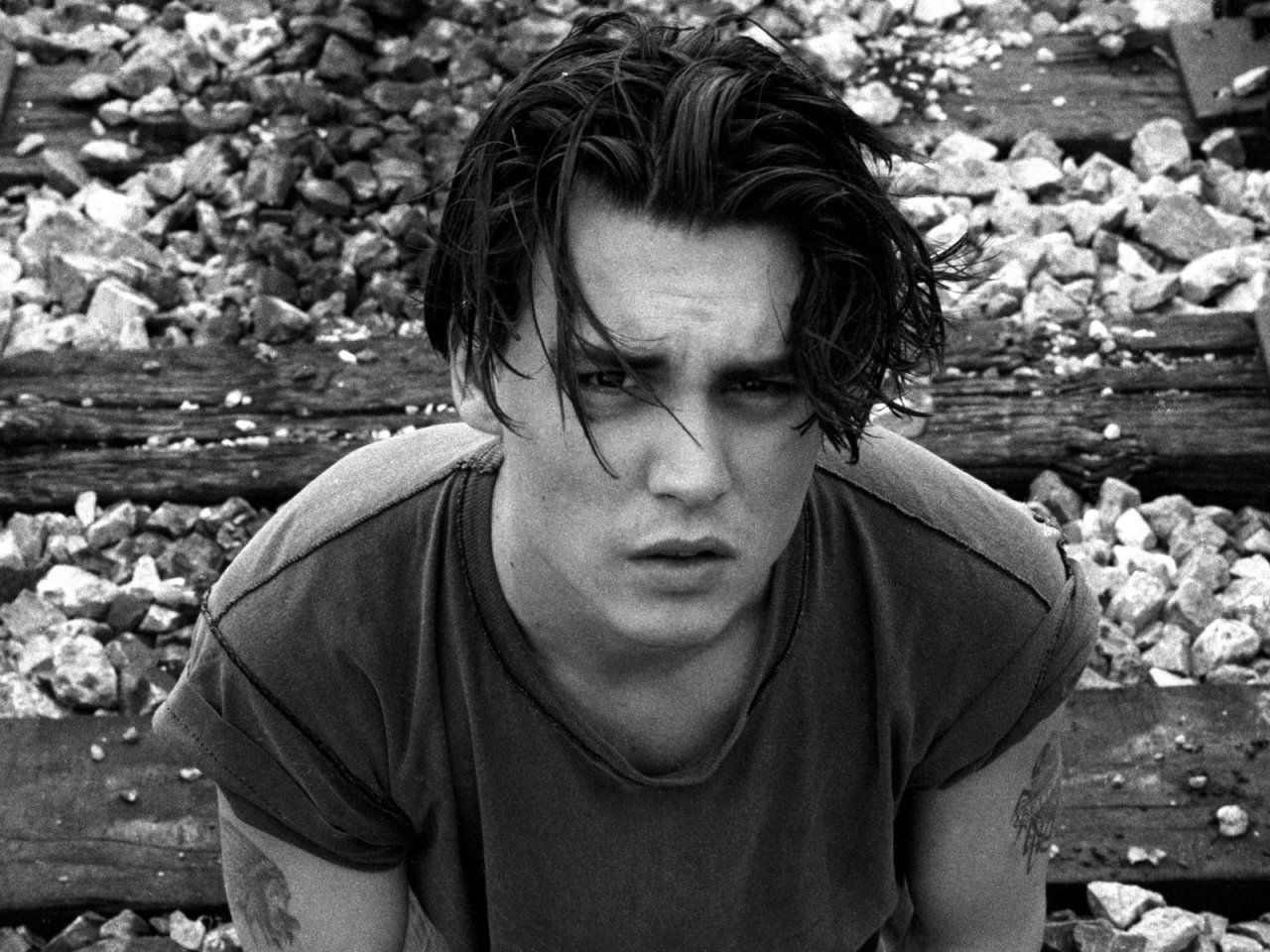
Johnny Depp in the 1990s was just... different. Most guys in Hollywood back then were trying to look like traditional leading men, all clean-cut and square-jawed. Then you had Johnny. He showed up with this chaotic, greasy, beautiful mess that shouldn’t have worked, but it defined an entire generation’s aesthetic. Johnny Depp 90s hair wasn't just a style; it was a total rejection of the "pretty boy" image he’d been saddled with during his 21 Jump Street days.
Honestly, if you look at photos from 1990 to 1999, it’s like watching a decade-long art project. You've got the slicked-back greaser vibes from Cry-Baby, the wild "I haven't seen a comb in years" look of What's Eating Gilbert Grape, and eventually, the iconic shoulder-length waves he rocked while dating Kate Moss.
It was peak grunge. It was rebellious. And yeah, we’re still trying to copy it thirty years later.
The "I Woke Up Like This" Myth
People always talk about his hair being "effortless." That’s kinda a lie. While it looked like he just rolled out of bed, achieving that specific level of 90s texture took a mix of great genetics and some very specific styling choices.
Take the mid-90s chin-length bob, for example.
It wasn't just long hair. It was layered. It had movement. When he was filming Benny & Joon in 1993, his hair had this soft, tousled volume that made him look like a "manic pixie dream boy" before that was even a phrase. It wasn't flat. It had this lived-in grit that came from using minimal product—or at least, products that didn't look like products.
Why the 90s Taper Still Wins
If you're looking for the most "wearable" version of this era, it’s the grown-out taper he sported around 1998, specifically at the Cannes Film Festival. It was short on the sides but had enough length on top to create texture.
- The Cut: Short back and sides, but not a fade. It’s more of a classic scissor cut.
- The Top: About three to four inches of length.
- The Secret: He used pomade, but not the heavy, plastic-looking stuff. It was about creating a high-shine finish that still looked moveable.
From Edward Scissorhands to Fear and Loathing
The movies were where the hair really became a character of its own. In 1990, Edward Scissorhands gave us that iconic, gravity-defying black nest. It was pure Gothic fantasy, designed by legendary stylist Yolanda Toussieng.
Then things got weird. Fast forward to 1998.
For Fear and Loathing in Las Vegas, Johnny didn't just wear a wig. He actually let the real Hunter S. Thompson shave his head to create that receding hairline look. It was commitment. It was ugly. It was brilliant. It proved that Johnny cared more about the role than looking like a heartthrob, which, ironically, made him even more of an icon.
The Gilbert Grape "Grown-Out" Look
In 1993, for What's Eating Gilbert Grape, the hair was lank, reddish-brown, and looked genuinely neglected. It perfectly captured that "stuck in a dead-end town" energy.
You’ve probably seen the Pinterest boards. That shoulder-length, center-parted look is basically the blueprint for every indie musician since 1994. It’s all about the "curtain" effect—strands falling over the eyes, framing the cheekbones.
How to Actually Get Johnny Depp 90s Hair Today
You can't just stop washing your hair and hope for the best. That leads to a scalp disaster, not a Hollywood look. If you're trying to recreate this, you need a strategy.
1. Salt Spray is Your Best Friend
Most people make the mistake of using heavy wax. Don't. Start with a sea salt spray on damp hair. Scrunch it. Let it air dry. This gives you that "beachy but grungy" texture that Johnny made famous.
2. The Oil-Based Pomade Trick
If you’re going for the Cry-Baby or late-90s slicked look, you need an oil-based pomade. Something like Reuzel or even the old-school Murray’s (though be warned, Murray’s is a nightmare to wash out). The goal is shine and "re-combability." You want to be able to run your hands through it without it crunching.
3. Layering is Non-Negotiable
If you go to a barber and ask for "long hair," you’ll end up with a mushroom. You need internal layers. This removes the weight and allows the hair to "flick" out at the ends. It’s the difference between looking like a 90s movie star and looking like you're wearing a helmet.
The Kate Moss Era: The Golden Age of Texture
We have to talk about the mid-to-late 90s when he was with Kate Moss. This was the "Power Couple of Grunge" era. His hair was usually shoulder-length, dark, and incredibly textured.
There was a specific messiness to it. It wasn't clean, but it wasn't dirty either. It was textured. This is the era where the "curtain bangs" evolved into something much more rugged. He’d tuck one side behind his ear—a move that thousands of guys copied to try and look even half as cool.
Why We're Still Obsessed
Honestly? Because it felt authentic.
In a world of TikTok filters and hyper-groomed "influencer" hair, the Johnny Depp 90s hair aesthetic represents a time when looking a little rough around the edges was the ultimate status symbol. It wasn't about perfection. It was about character.
It taught us that your hair doesn't have to be neat to look good. In fact, sometimes the messier it is, the better it looks.
To get this look right now, start by growing your hair out to at least the bottom of your ears. Tell your stylist you want a "90s flow" with plenty of texture in the ends. Skip the blow dryer whenever possible—air drying is the only way to get that genuine, non-frizzy grit that defined the decade.
Next Steps for Your 90s Hair Journey:
- Invest in a high-quality sea salt spray to build base texture without grease.
- Ask for "point cutting" at your next barber appointment to get those jagged, Depp-style ends.
- Embrace the second-day hair; don't over-shampoo, as the natural oils are what actually give this style its signature weight and "swing."