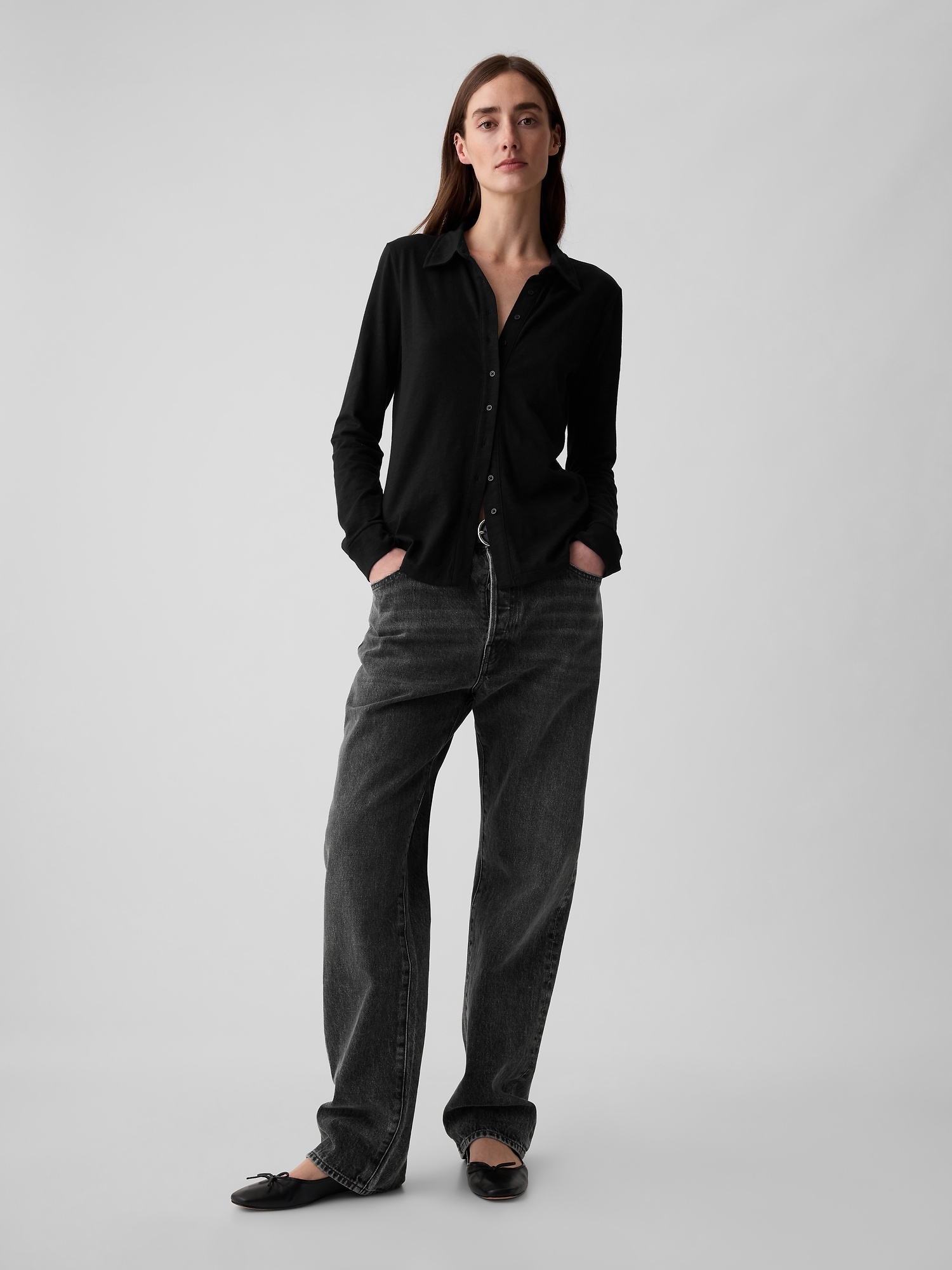
You’re standing in the mall, or maybe scrolling through a mobile app late at night, and you see a hoodie. It’s classic. It’s got that arch logo. But then you see the price tag and the nagging question hits: is Gap good quality anymore, or are we all just paying for a heavy dose of 1990s nostalgia? Honestly, the answer isn’t a simple yes or no. It depends entirely on which rack you’re looking at.
Gap occupies this weird middle ground in the American closet. It’s not "fast fashion" in the way Shein or Forever 21 are—where a shirt might literally dissolve in the wash—but it’s certainly not luxury. It’s the Honda Civic of clothing. Reliable? Mostly. Exciting? Rarely. But when you dig into the stitching, the fabric weights, and the way their denim holds up after fifty washes, a more nuanced picture emerges.
The Denim Reality Check
If there is one thing that defines the brand, it’s the jeans. People constantly ask if Gap denim is worth the investment compared to, say, Levi’s or a high-end brand like APC. Here’s the deal. Gap uses a lot of "Cone Denim" heritage vibes, but most of their standard line is a mix of cotton and elastane.
If you buy the "GapFlex" stuff, you’re getting comfort, but you’re sacrificing longevity. Synthetic fibers break down. It’s just science. Over time, those stretchy jeans will get "baggy knees" and lose their shape. However, if you hunt for their 100% organic cotton denim or their periodic "Selvedge" runs, you are getting genuine quality that rivals brands twice the price. The hardware—the zippers and rivets—is surprisingly robust. I’ve seen Gap 1969 denim from ten years ago that still looks incredible because it was built with heavy-gauge cotton.
Contrast that with their "Factory" line. Never confuse the two. Gap Factory is a different beast entirely. It’s produced specifically for outlets using thinner fabrics and lower thread counts. If you’re wondering is Gap good quality, you have to check the tag. If it has three small squares on the label, it’s factory-grade. Avoid it if you want clothes that last more than a season.
Cotton, Pique, and the "Vintage Soft" Marketing
Gap’s marketing team loves the word "soft." They’ve built an empire on the "Vintage Soft" hoodie. But is soft actually a sign of quality? Not necessarily. Often, brands achieve that "broken-in" feel by chemically treating the fabric or over-brushing the cotton. This weakens the fibers.
A high-quality garment usually feels a bit stiff at first. Think of a heavy-duty sweatshirt from the 80s. It felt like a rug until you wore it for three years. Gap’s modern hoodies are cozy, sure, but they tend to pill. Pilling is those annoying little fuzzballs that appear under the arms. If you want the best quality from them in the tops department, look for their Heavyweight Cotton line. It’s denser. It’s tougher. It actually feels like it has some structural integrity.
The Stitching Test
Turn a Gap shirt inside out. Seriously. Look at the seams. You’ll notice they mostly use "overlock" stitching. It’s standard for mass-market retail. It’s fine. It won't fall apart tomorrow. But it’s not a "felled seam" that you’d find on a premium workwear garment. For the price point, especially during their perpetual 40% off sales, the construction is objectively better than H&M or Zara. It’s predictable.
The Zac Posen and Creative Direction Shift
We have to talk about the "new" Gap. For a long time, the brand felt lost. It was beige. It was boring. But recently, bringing in heavy hitters like Zac Posen as Creative Director has signaled a shift back toward better silhouettes and, hopefully, better materials.
When a brand focuses on "quiet luxury" or "essentials," they can't hide behind loud patterns. The fabric has to speak. We’re seeing more linen blends and recycled cashmeres in the recent collections. These aren't just PR stunts; they are attempts to compete with brands like Everlane or Madewell. In terms of is Gap good quality for professional wear, their "khakis" (chinos) remain some of the best in the business for the sub-$70 price bracket. The "Stain Defender" tech actually works, and the reinforced pockets are a nice touch that most budget brands skip to save five cents.
Why the "Good Quality" Label is Subjective
Quality means different things to different people.
- To a parent, it means: "Can I wash this 100 times without it shrinking to doll size?"
- To a fashionista, it means: "Does the drape look expensive?"
- To an environmentalist, it means: "Is this organic cotton or a plastic-heavy polyester blend?"
Gap actually scores decently on the "parent" metric. Their kids' line, GapKids, is notoriously durable. Ask any parent—hand-me-downs from Gap usually survive three different children. That’s a massive testament to their construction. They use thicker ribbing on the cuffs and necks, which prevents that "bacon collar" look where the neckline gets wavy and stretched out.
On the environmental side, Gap Inc. has made big promises about Waterless tech and sustainably sourced cotton. While "greenwashing" is a valid concern in all big retail, Gap’s participation in the Better Cotton Initiative (BCI) means their raw materials are generally higher grade than the mystery fabrics used in ultra-fast fashion.
Comparing Gap to Its Siblings
It’s helpful to look at the family tree. Gap Inc. owns Old Navy and Banana Republic.
- Old Navy is the budget tier. Lots of synthetic blends. Lower price, lower lifespan.
- Gap is the baseline. Mostly natural fibers. Solid construction.
- Banana Republic is the "premium" tier. Silk, wool, cashmere.
Is Gap good quality compared to Banana Republic? Usually no, because Banana uses more expensive fibers. But is it better quality than Old Navy? Absolutely. The difference in the weight of a Gap t-shirt versus an Old Navy t-shirt is felt immediately. Gap uses a longer staple cotton, which results in a smoother surface that doesn't get "hairy" after a few trips through the dryer.
The Real Weak Points
It’s not all sunshine and perfect denim. Gap’s quality control can be… erratic. You might buy two pairs of the same "Tailored Khaki" in the same size, and one will fit perfectly while the other feels like it was made for a different species. This inconsistency is a hallmark of massive global supply chains.
Their knits—specifically the lightweight sweaters—are also a gamble. If you see "nylon" or "acrylic" high up on the ingredient list of a sweater, walk away. It will stretch out, it will smell weird if you sweat even a little, and it will look like a rag within six months. Stick to the 100% cotton or the Merino wool blends if you want to actually keep the piece in your wardrobe.
How to Buy the Best Quality at Gap
If you want to ensure you're getting the "good" Gap, you have to be a bit of a detective. Don't just grab the first navy blue sweater you see.
- Weight Matters: Pick it up. Is it heavy? Heavy usually means more fiber, which means better durability.
- The Label Check: Look for "100% Cotton." Avoid "Polyester" or "Rayon" blends in their basics.
- Avoid the "Factory" Logo: If the price seems too good to be true, you're likely looking at the outlet version, which is designed to be cheaper and lower quality.
- Check the Buttons: Are they loose? Give them a little tug. On high-quality Gap pieces, the buttons are cross-stitched and firm.
Actionable Insights for the Savvy Shopper
So, is Gap good quality? Yes, provided you buy their "core" products and avoid the synthetic-heavy trend pieces. To get the most bang for your buck, follow these steps:
- Prioritize the "Project Gap" or Heritage pieces. These are often re-issues of vintage designs and use much thicker, old-school fabrics.
- Wait for the 40% sale. Gap is almost never worth full retail price because their pricing model is built around constant promotions. At 40% off, the quality-to-price ratio is almost unbeatable.
- Invest in the Denim and Chinos. These are the brand's bread and butter. Their technical mastery in these two categories is significantly higher than their mastery of high-fashion tops.
- Wash Cold, Hang Dry. Even "good quality" cotton will die in a hot dryer. If you want your Gap hoodies to stay "good" for years, keep them away from the heat.
Ultimately, Gap isn't trying to be a luxury house. It’s trying to be the reliable background of your life. When you choose the right materials—heavy cotton, 100% wool, and non-stretch denim—Gap offers a level of quality that easily justifies its place in a long-term, sustainable wardrobe. It’s about being a discerning buyer in a world of disposable clothes. Look at the seams, feel the weight, and ignore the logos. The quality is there if you know where to look.
Next Steps for Your Wardrobe
Check the care tags on your current favorite shirts. If they are mostly cotton, look for similar thread weights in Gap’s current "Essentials" line. If you need a new pair of jeans, skip the stretch versions and try their "Dry Denim" or "100% Cotton" straight fits for a piece that will actually age with you rather than wearing out.