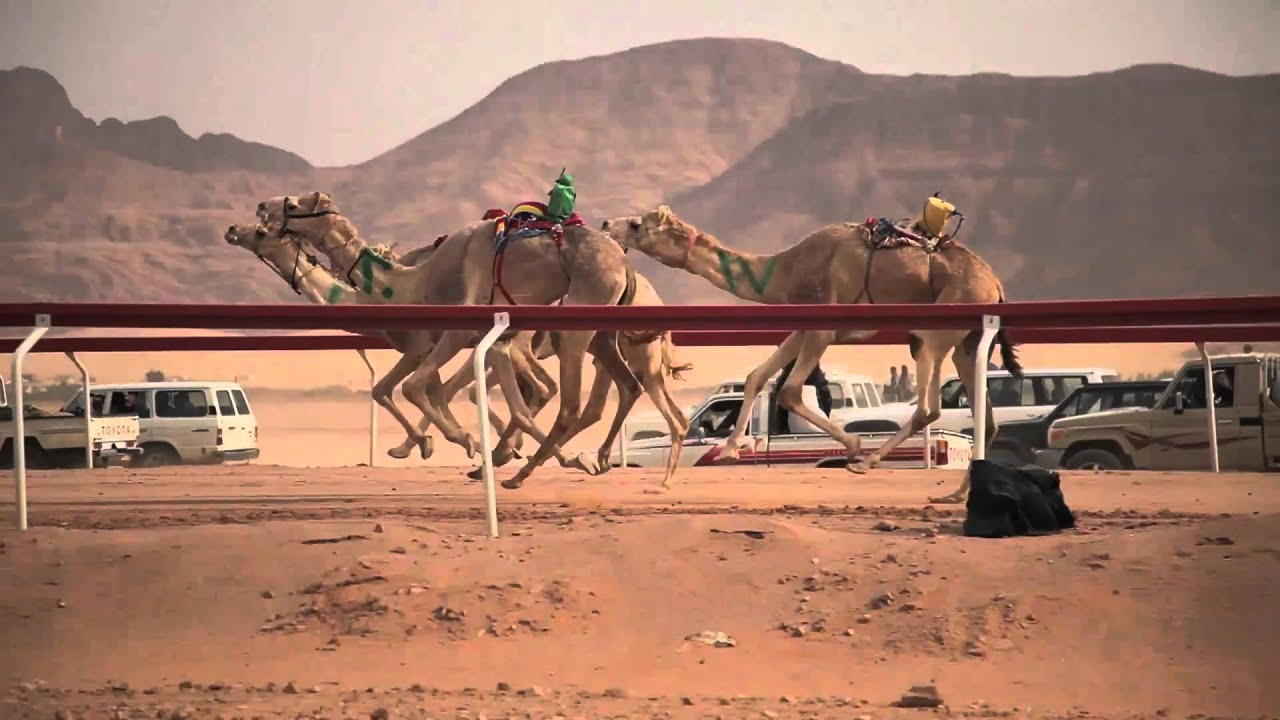
You’re standing in the middle of the Wadi Rum desert, the sun is beating down, and suddenly, a massive, gangly creature streaks past you at a speed that feels entirely wrong for its size. It’s a camel. Most of us picture camels as slow, lumbering pack animals, the "ships of the desert" drifting lazily across sand dunes at a walking pace. But if you’ve ever wondered how fast does a camel run when it actually has somewhere to be, the answer is going to catch you off guard.
They are fast. Really fast.
We’re talking about an animal that can outrun an Olympic sprinter without breaking a sweat. While a human might max out at around 27 mph (if you're Usain Bolt), a dromedary camel can hit 40 mph in a flat-out sprint. That’s faster than a Great White Shark swims and roughly the same speed as a Greyhound. But the real magic isn't just the top speed; it's the stamina. These animals are built for the long haul in conditions that would kill almost any other mammal on earth.
The Two Speeds of the Desert: Sprinting vs. Cruising
When we look at the logistics of how fast a camel runs, we have to differentiate between a panic-induced sprint and a sustainable gallop.
In a short burst, a healthy adult camel can reach 40 miles per hour (65 km/h). They don't stay at this speed for long, usually only for a few minutes during a race or if they’re genuinely spooked. However, their "marathon" pace is where things get interesting. A camel can maintain a steady 25 mph (40 km/h) for up to an hour. Think about that for a second. That is the speed of a car driving through a residential neighborhood, maintained by a beast carrying a hump full of fat across scorching sand.
It’s a bizarre sight.
Why the Gait Matters
Camels have a unique way of moving called a "pace." Unlike a horse, which moves its legs in a diagonal pair during a trot, a camel moves both legs on one side of its body at the same time. This creates a rolling, swaying motion. It looks awkward. It feels bumpy if you're the one sitting on top. But it is incredibly efficient. This lateral gait prevents their legs from interfering with each other and allows for a wider stride on soft terrain.
Not All Camels are Created Equal
If you’re talking about speed, you have to talk about the species. There’s a massive difference between the two main types of camels.
The Dromedary (One Hump)
These are the Ferraris of the camel world. Found primarily in the Middle East and Africa, they are taller, leggier, and built for heat. Because they have less body mass to lug around compared to their cousins, they are significantly faster. When you see those high-stakes camel races in Dubai or Qatar, you’re looking at Dromedaries. They are the primary focus of anyone asking how fast does a camel run in a competitive context.
The Bactrian (Two Humps)
Native to the rocky steppes of Central Asia, these guys are the heavy-duty trucks. They are stockier, covered in thick wool to survive the Mongolian winter, and generally slower. While they can still move when they want to—hitting speeds of about 20-30 mph—they lack the explosive agility of the Dromedary. They are built for endurance and surviving -40 degree temperatures, not for winning a sprint on a dirt track.
The Science of Desert Performance
Why are they so fast? It’s not just muscle; it’s biology.
First, look at their feet. Camels don't have hooves like horses. They have wide, fleshy pads that spread out when they hit the ground. It’s like wearing permanent snowshoes. This prevents them from sinking into the sand, allowing them to exert force forward rather than wasting energy digging out of a hole.
Then there’s the oxygen.
Camels have oval-shaped red blood cells. Most mammals have circular ones. These oval cells flow more easily through the bloodstream even when the blood thickens due to dehydration. This means their muscles keep getting oxygen long after another animal would have collapsed from exhaustion. It’s a natural form of "blood docking" that allows them to maintain that 25 mph cruising speed in 110-degree heat.
The Multi-Billion Dollar World of Camel Racing
In places like the United Arab Emirates and Saudi Arabia, camel racing isn't just a hobby; it’s a cultural phenomenon with prizes that include luxury SUVs and millions of dollars in cash.
Historically, young children were used as jockeys because of their light weight. However, due to human rights concerns and modern innovation, most races now use "robot jockeys." These are small, remote-controlled devices strapped to the camel’s back. The owners drive alongside the track in SUVs, honking their horns and using a remote to trigger a small mechanical whip to encourage the camel to reach its peak speed.
It’s a surreal blend of ancient tradition and Cyberpunk technology.
Professional racing camels are put on strict diets of dates, honey, alfalfa, and sometimes even cow’s milk. They are bred with the same intensity as Kentucky Derby winners. A top-tier racing camel can sell for over $1 million. When you’re paying that much, you aren't buying a pack animal; you're buying an elite athlete.
Common Misconceptions About Camel Speed
People often think camels are lazy.
That reputation comes from their behavior at tourist sites. A camel being used for rides at the Pyramids of Giza has zero incentive to run. It's hot, it's tired, and it’s bored. If you judge a camel’s speed by a tourist ride, you’re basically judging a Ferrari’s top speed while it’s stuck in a school zone.
Another myth is that the hump slows them down. Actually, the hump is the reason they can run so far. By storing fat in one localized spot rather than distributed across the body, the camel avoids the insulating effect that would cause it to overheat during a high-speed run. It’s a cooling strategy.
How They Compare to Other Animals
To give you some perspective on where the camel sits in the animal kingdom's drag race, let's look at the numbers.
A Lion can hit 50 mph, but only for a few seconds. A Horse (Thoroughbred) can hit 44 mph. The camel at 40 mph is nipping at their heels. But if the race is ten miles long through a desert? The camel wins every single time. The horse would overheat and the lion would give up.
Actually, the only thing that really beats a camel in a desert long-distance race is an ostrich. Ostriches can hit 43 mph and sustain high speeds for a remarkably long time. But you can't exactly pack 200 pounds of trade goods on an ostrich.
What to Do if a Camel Starts Running Toward You
This is a real scenario for travelers in parts of Australia (which has a massive wild camel population) or the Middle East. If a bull camel in rut (mating season) decides you’re a rival, or if a mother thinks you're a threat to her calf, they can charge.
Honestly? You aren't outrunning it.
Don't try to sprint in a straight line. If you have a vehicle nearby, get in it. If not, try to put a large obstacle between you and the animal, like a boulder or a sturdy tree. Camels are fast, but they aren't the most agile at making sharp, 180-degree turns at high speed. Their momentum is their weakness.
Maximizing Your Desert Experience
If you're traveling and want to see these animals in action, don't just settle for a slow walk around a parking lot.
- Visit the Al Marmoom Heritage Village: In Dubai, this is one of the best places to witness professional racing. You can see how fast does a camel run in a controlled, high-stakes environment.
- Check the Season: Racing usually happens in the cooler months, from October to April. In the heat of the summer, the camels are rested to prevent injury.
- Watch for the "Pace": Next time you see one moving, look at the legs on the left side. Then the right. You'll see that swaying "ship" motion that makes their speed possible.
The camel is a masterpiece of evolutionary engineering. It's an animal that looked at one of the most hostile environments on the planet and decided to become a track star. Whether they are sprinting at 40 mph or cruising at 25, they prove that you should never mistake "awkward-looking" for "slow."
Next time you see a camel, give it some respect. Underneath that shaggy coat and goofy expression is a high-performance engine built to conquer the sand.
To get the most out of a desert trip involving these animals, always prioritize reputable operators who treat their livestock well. Look for sanctuaries or racing clubs that allow public viewing from a distance, as this gives you the best chance to see their natural gait without stressing the animal. If you're heading to a race, bring binoculars; the action happens faster than you'd expect, and the dust clouds can get thick when a dozen 1,500-pound animals are vying for the lead.