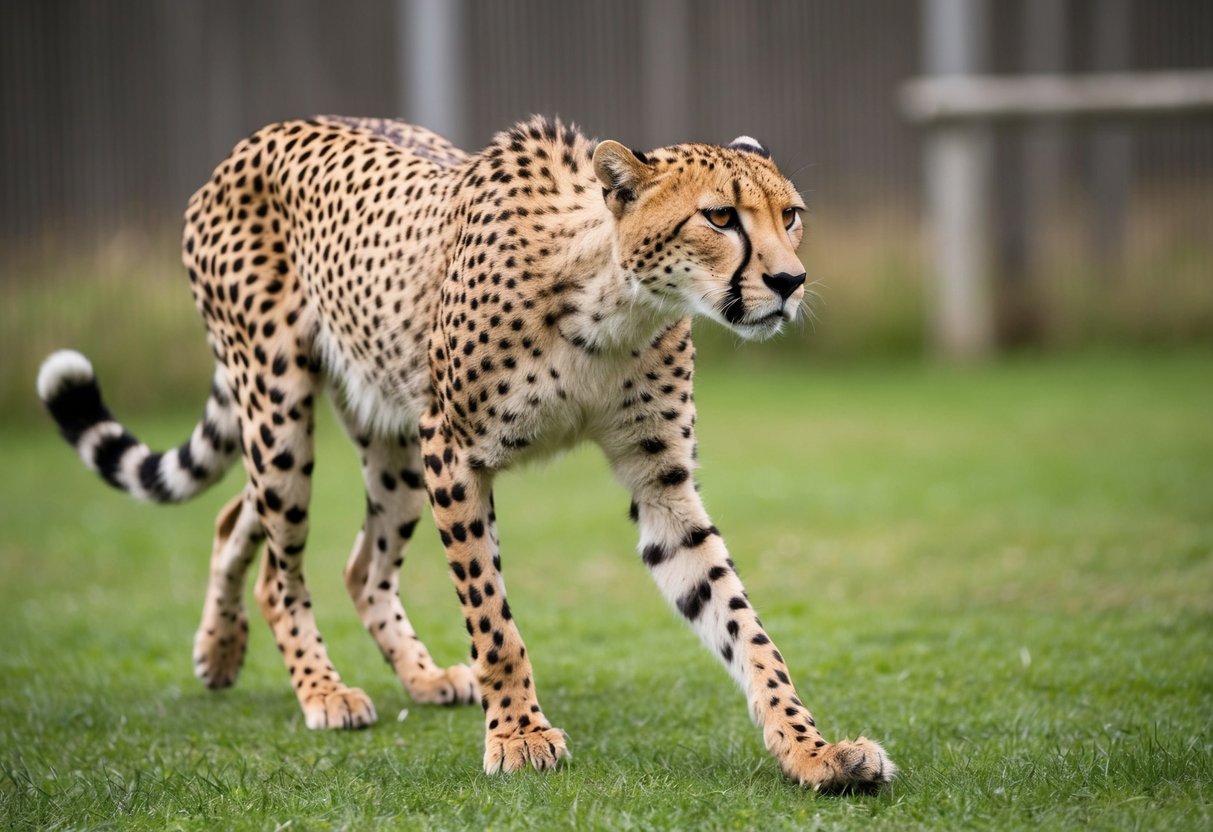
You see them in documentaries. A blur of spotted fur hitting 70 mph across the Serengeti. They're built like race cars—lean, fragile, and utterly specialized. Because of that speed, we group them with lions, tigers, and leopards. The "Big Cats." But honestly? Cheetahs are the odd ones out. When people ask has a cheetah ever killed a human, they’re usually expecting a grizzly list of tragedies.
The reality is way weirder.
Unlike almost every other large carnivore on the planet, the cheetah has a track record that is surprisingly... clean. If you look at the stats for lions or tigers, the body counts are chilling. Thousands over the decades. But the cheetah? They’re basically the only "big" cat that hasn't viewed humans as a menu item.
The Zero Percent Club: Why Cheetahs Don't Hunt Us
So, let's get the big question out of the way first. Has a cheetah ever killed a human in the wild? No. There is not a single scientifically documented case of a wild cheetah killing a human being. Not one.
Think about that for a second. We’ve been living alongside these cats in Africa and Asia for millennia. We share the same plains. We walk the same paths. Yet, while leopards are notorious for snatching people from porches and lions have claimed entire villages in historical sprees, the cheetah just... watches.
They aren't built for the fight. A cheetah's entire evolutionary gamble was speed over power. They have semi-retractable claws, more like a dog’s than a cat’s. These act like track spikes for grip, not steak knives for slashing. Their jaws are smaller to make room for massive nasal passages—they need all that oxygen to fuel those 70-mph sprints. If a cheetah picks a fight with something that fights back, it risks a broken limb. For a cheetah, a broken leg isn't just an injury. It’s a death sentence. They can’t scavenge like a hyena. They have to outrun their dinner.
Captivity: Where the Lines Get Blurry
Now, I have to be careful here. While the wild record is zero, captivity changes things. When you put a high-strung, apex predator in a cage, the rules of nature go out the window. Stress, boredom, and proximity create a different vibe.
There have been attacks. In 2017, a tragic incident occurred at a South African park where a captive cheetah bit a boy. He survived, but it was terrifying. Then there was the 2012 story of a woman in a "petting" enclosure who got pinned down. She lived to tell the tale, but she had the bruises and puncture wounds to prove it.
Even in these rare captive incidents, the goal usually isn't "food." It’s often a "play-predation" response or straight-up territorial defense. A cheetah weighs maybe 75 to 140 pounds. They aren't the 500-pound tanks that tigers are. If a human stands their ground and fights back, a cheetah usually backs off. They are, quite frankly, the "scaredy-cats" of the feline world.
The Biology of Fear
Why are they so timid? Well, they’re the underdogs of the savannah. Lions steal their kills. Hyenas bully them. Leopards will literally kill cheetah cubs just to eliminate future competition.
Cheetahs have evolved to be hyper-aware and extremely cautious. To a cheetah, a standing human looks like a tall, weird primate that might be dangerous. We don't look like gazelles. We don't move like impalas. Since we don't trigger that specific "flight" reflex that makes them chase, they generally decide we aren't worth the risk.
The One Exception? A Look at Historical Records
If you dig deep into the 19th-century colonial archives, you might find a vague mention of a "man-eating cheetah" in India. But here’s the thing: back then, people were terrible at identifying cats. Anything with spots was a "panther" or a "leopard" or a "cheetah."
Experts like the late Jim Corbett, who spent his life tracking man-eaters, almost exclusively dealt with leopards and tigers. In his writings, the cheetah is barely a footnote in terms of danger. In fact, for centuries, royalty in India and Iran used cheetahs as hunting companions. They called them "hunting leopards," though they aren't leopards at all. They’d hood them like falcons, take them out on carts, and release them to catch blackbuck. You don't do that with an animal that wants to eat your face.
What Happens if You Encounter One?
Let’s say you’re on a walking safari and a cheetah starts looking at you funny. First off, lucky you. Seeing one on foot is rare.
Second, don't run.
Running is the only thing that might actually get you hurt. It triggers the "chase" instinct that is hardwired into their DNA. If you run, you’re acting like a gazelle. If you act like a gazelle, their brain flips a switch. Instead, you just stand tall. Wave your arms. Shout. Maybe throw a shoe if they get too close. Chances are, that cheetah will turn tail and disappear into the grass faster than you can get your phone out for a photo.
The Real Danger (Is to Them, Not Us)
Honestly, the question shouldn't be whether cheetahs kill humans. It should be why we are killing them. There are fewer than 7,000 cheetahs left in the wild.
They are incredibly fragile as a species. They have very low genetic diversity—it’s believed they hit a "bottleneck" about 10,000 years ago where only a few survived. Every cheetah alive today is basically a cousin to every other cheetah. This makes them prone to disease and sensitive to habitat loss.
When farmers kill cheetahs because they think the cats are taking down cattle, it’s often a case of mistaken identity. Usually, it’s a caracal or a leopard doing the raiding. Cheetahs prefer wild prey. They like the chase. Standing around a kraal waiting for a slow cow isn't really their style.
A Quick Reality Check on Big Cat Fatalities
If you're still worried about the "what if," let’s look at the competition.
- Lions: Estimated 200+ kills per year.
- Leopards: Highly variable, but notorious for stalking villages.
- Tigers: Historically the most prolific man-eaters.
- Cheetahs: 0 wild fatalities in recorded history.
The risk is essentially non-existent for a casual traveler. You're statistically more likely to be killed by a vending machine falling on you than by a wild cheetah. Even domestic dogs pose a threat thousands of times greater than these cats.
Respecting the Boundary
The fact that has a cheetah ever killed a human yields a "no" doesn't mean they are pets. They are still powerful carnivores. They have instincts that we can't fully predict.
Modern conservationists, like those at the Cheetah Conservation Fund (CCF) in Namibia, work on this exact issue. They teach farmers how to use Anatolian Shepherd dogs to guard livestock. These dogs are huge. When a cheetah sees one, it doesn't fight. It leaves. This simple fix saves the livestock and keeps the cheetah from being shot. It’s a win-win that respects the cat's natural aversion to conflict.
Moving Forward: How to Stay Safe and Informed
If you're planning a trip to Africa or just interested in feline behavior, keep these points in mind.
- Context is everything. A cheetah in a zoo or a "touch" farm is a stressed animal. Never assume a captive animal will behave like a wild one.
- Support real conservation. If a facility allows you to pet adult cheetahs, it's likely not a reputable conservation site. These cats should have a healthy fear of humans for their own safety.
- Observation distance. Always maintain the distance recommended by your guide. Not because the cheetah will eat you, but because stress can cause them to abandon a hunt or leave their cubs vulnerable to other predators like lions.
- Identify correctly. Learn the difference between a leopard and a cheetah. Cheetahs have "tear marks"—black lines running from their eyes to their mouths. Leopards have rosette spots and no tear marks. Leopards are dangerous. Knowing the difference can literally save your life.
The cheetah is a marvel of biological engineering. It’s a specialist that has found a way to survive by being faster than everyone else and picking its battles very, very carefully. We aren't on their list of enemies, and we certainly aren't on their menu. Keeping it that way requires us to respect their space and understand their unique, non-confrontational nature.