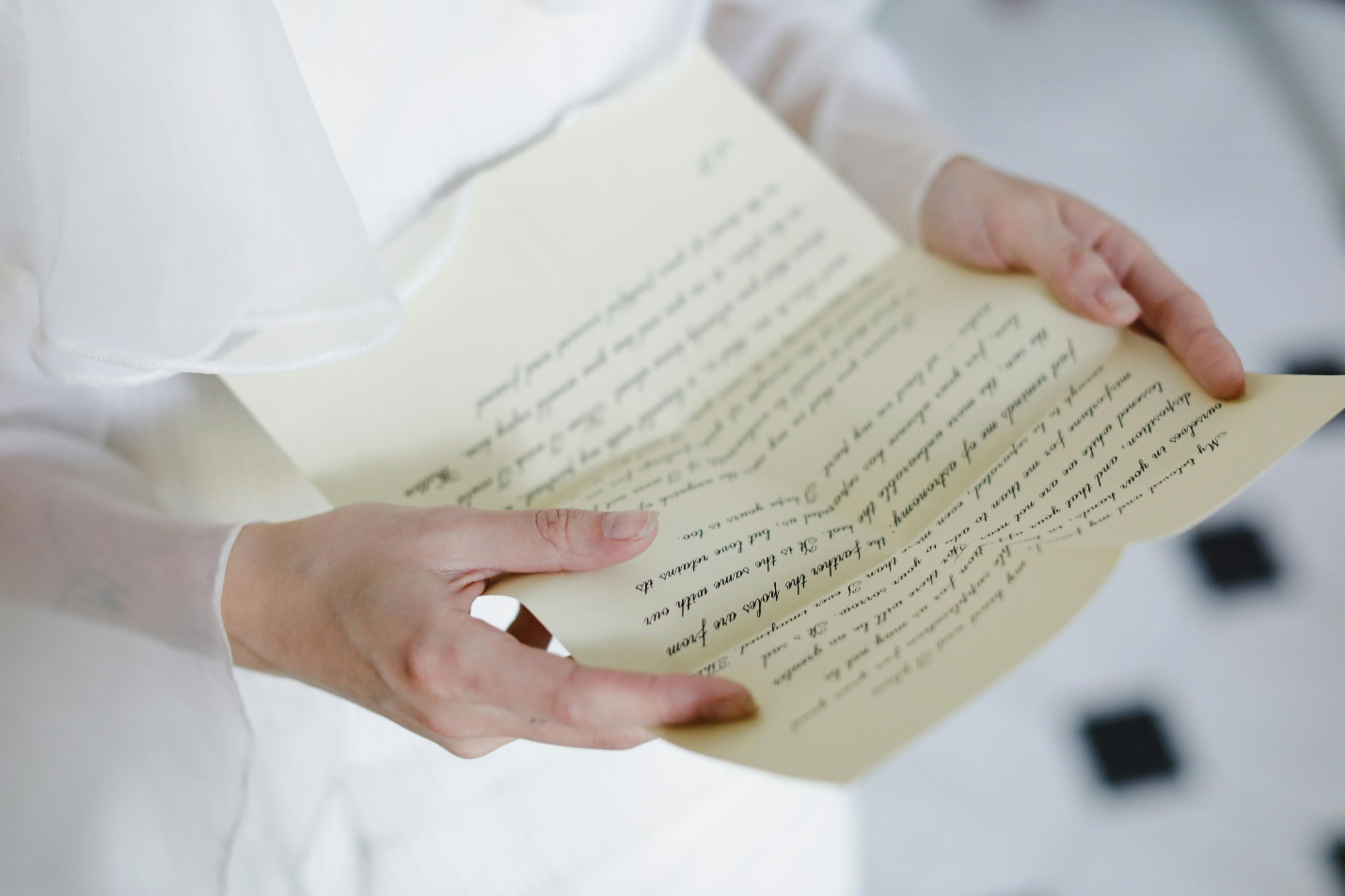
You probably don’t think about how you write. You just grab a pen, scribble a grocery list or a quick note to the mailman, and move on with your day. But if you actually look at the page, you'll likely see something weird. It’s not the rigid, looping script your third-grade teacher demanded. It’s also not the blocky, isolated letters of a primary school workbook. Instead, it’s a mutant. A hybrid. Most people call it half cursive half print handwriting, but researchers have a much fancier name for it: "mixed cursive."
It’s the way most adults actually write.
The truth is, pure cursive is dying in the wild, and pure print is too slow for a brain that’s moving at a hundred miles an hour. We’ve collectively evolved into this middle ground where we link some letters and leave others to stand alone. It’s not laziness. Honestly, it’s peak efficiency.
The Science of the "Hybrid" Script
We've been told for decades that cursive is the "fast" way to write. The idea was that by never lifting the pen, you save precious milliseconds. But when researchers actually put this to the test, the results weren't what the old-school educators expected.
A landmark study by Graham, Berninger, and Weintraub published in the Journal of Educational Psychology found that students who used a mix of both styles were consistently the fastest. They beat out the pure-cursive writers. They crushed the pure-print writers. Why? Because half cursive half print handwriting allows the hand to take the path of least resistance.
Think about the letter "b." Connecting a lowercase "b" to a "r" in traditional cursive is a mechanical nightmare. It’s awkward. It’s a literal thumb-twister. In a hybrid style, your brain subconsciously decides to break the connection there, lifting the pen for a micro-second to reset. But then, when you hit a "th" or an "ing," the pen stays down because those connections are fluid and natural. You’re basically running a real-time optimization algorithm on your notepad.
Why We Abandoned the Loops
Most of us learned the Zaner-Bloser or D’Nealian methods. These systems were designed for aesthetics and a specific type of pen technology (think fountain pens that would blot if you lifted them too often). But we don't use quills anymore. We use ballpoints, gel pens, and styluses.
The friction is different now.
When you look at the evolution of handwriting, you see a shift toward legibility over formality. Research by Virginia Berninger, a professor at the University of Washington, suggests that handwriting is deeply tied to "working memory." If you are struggling to remember how to form a complex cursive "z," you aren't focusing on the content of your thoughts. By adopting a half-and-half style, you offload that cognitive burden. You write the letters in the way that requires the least amount of "computing power" from your brain.
Is This Style Making You Smarter?
There’s a lot of fear-mongering about the "death of handwriting." You've seen the headlines. People worry that if we don't teach children how to loop their "G's," the next generation will be functionally illiterate. That’s probably an exaggeration.
However, there is a physical benefit to the hybrid style. The act of writing by hand—even if it's a messy mix of styles—engages the Reticular Activating System (RAS) in the brain. This is the filter that decides what information is important. When you type, you’re just hitting identical keys. When you use half cursive half print handwriting, your brain has to plan the unique shape of every single character.
It's tactile. It’s spatial.
The Legibility Crisis
Let’s be real for a second: pure cursive is often unreadable. We’ve all seen a doctor’s note or a grandmother’s letter that looks like a bowl of overcooked spaghetti. By mixing in print elements, we actually improve communication. Print provides the anchors—the clear, vertical lines that help the eye distinguish between an "n" and an "m." Cursive provides the speed.
It’s the best of both worlds.
In forensic document examination, this hybridity is actually a goldmine. Handwriting experts like those at the American Board of Forensic Document Examiners look for these specific "mixed" habits. Because there isn't a "standard" for half-and-half writing, the way you choose to connect a "t" to an "e" becomes a unique biometric signature. It's much harder to forge a hybrid script than a standard one because the rules are entirely your own.
The Practical Reality of Modern Script
If you go to a high-pressure environment—like a university lecture hall or a corporate strategy meeting—you won't see many people using perfect Spencerian script. You'll see the hybrid.
It's adapted for the 21st century.
We have moved away from handwriting as an art form and toward handwriting as a functional tool for "thinking on paper." When you're brainstorming, you need a medium that can keep up with your internal monologue. Half cursive half print handwriting is that medium.
- Connectivity: You likely connect letters like 'a', 'e', and 'o' to the following character.
- Isolation: You probably leave 'f', 'z', and 'b' to stand alone.
- Speed: You gain about 10-15% more words per minute compared to block printing.
- Fatigue: You experience less cramping because the pen lifts provide brief moments of muscular rest.
How to Refine Your Personal Mix
Maybe your current handwriting is a disaster. Maybe you can't even read your own notes from twenty minutes ago. That’s usually not a problem with the "hybrid" style itself, but a lack of consistency. You don't need to go back to third grade to fix it.
First, identify your "problem" letters. For most, these are the letters where cursive and print collide in a messy way. For me, it was the letter "r." I used to try to do the little cursive shelf, but it always looked like a jagged mountain. I switched to a sharp, printed "r" while keeping the rest of my flowy connections. Instant readability upgrade.
Second, check your slant. Cursive leans right. Print stands up straight. When you use half cursive half print handwriting, your hand gets confused. If you can commit to one angle—even a slight tilt—your messiest scribbles will suddenly look intentional.
Handwriting is a "use it or lose it" skill. With the rise of AI and voice-to-text, the physical act of pen-on-paper is becoming a choice rather than a necessity. But it’s a choice worth making. There is a specific kind of "deep work" that happens when you're disconnected from a screen, letting your hand flow across a page in that weird, idiosyncratic, half-cursive way.
Actionable Steps for Better Hybrid Writing
Stop trying to be perfect. The goal of handwriting in 2026 isn't to win a penmanship award; it's to facilitate your own thinking and ensure others can read your notes.
Analyze your "ligatures." Look at a paragraph you wrote recently. Circle the places where letters connect. Are those connections helping you move faster, or are they creating "ink blobs"? If a connection feels clunky, stop doing it. Lift the pen.
Standardize your capitals. Many people mix cursive and print in lowercase but get stuck on uppercase letters. Cursive capitals (like the dreaded "Q" that looks like a 2) are the primary cause of illegibility. Switch your capital letters to 100% print. This provides a clear "start" to every sentence and makes your hybrid script look significantly more professional.
Slow down the "joins." If you're going to use half cursive half print handwriting, the "join" (the line between letters) is where the magic happens. Make sure the lead-in line actually hits the next letter instead of just trailing off into the void.
Handwriting is one of the few ways we still project our personality onto a physical object. Embrace the hybrid. It’s faster, it’s smarter, and honestly, it’s just more you than a standardized font could ever be. You've spent years developing this unique way of communicating—don't feel like you have to "fix" it by going back to the rigid rules of the past.
Refine the connections that work. Discard the ones that don't. Keep the pen moving.