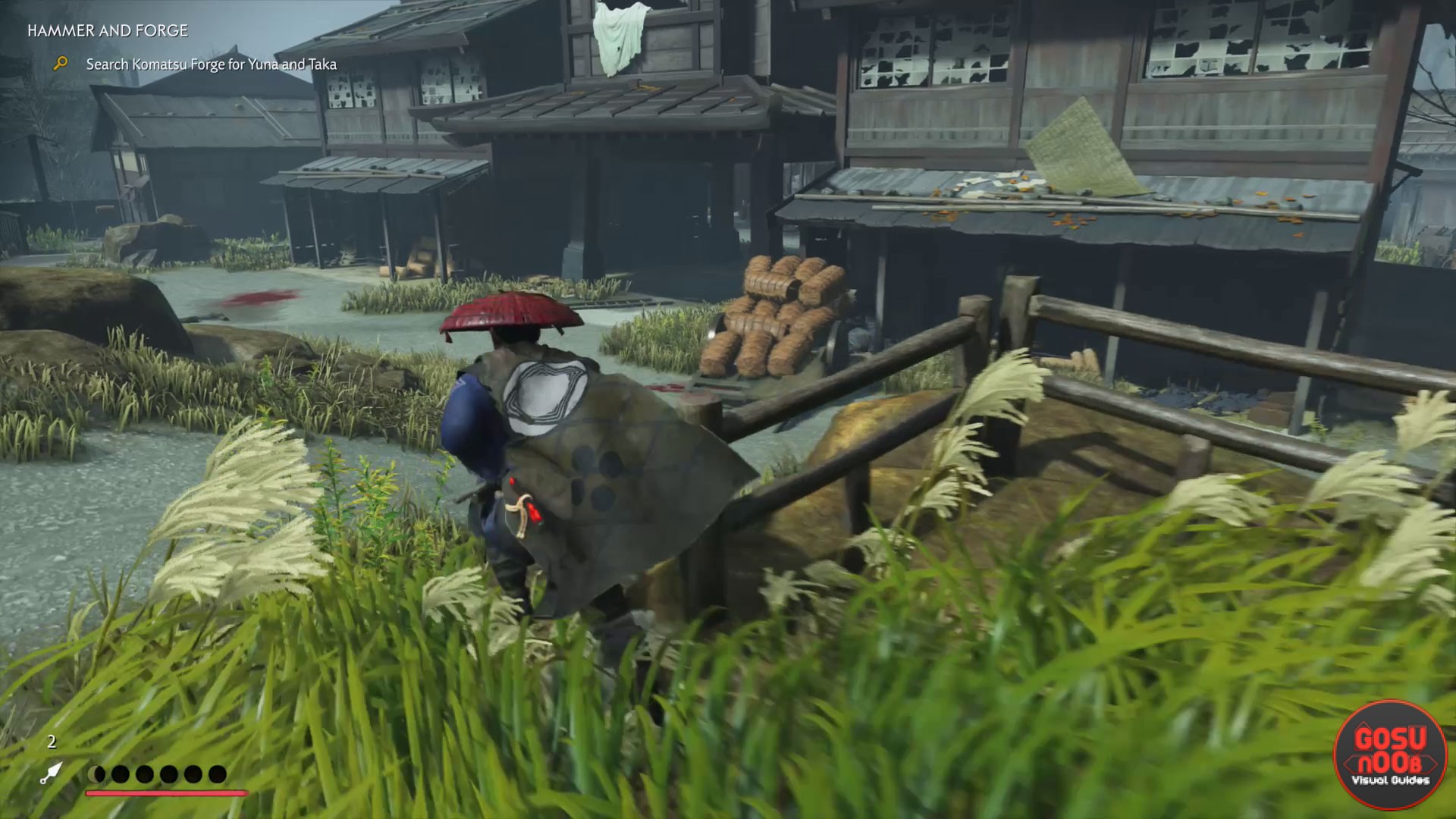
You’re riding through Azamo, dodging Mongol patrols, and honestly, the game feels like a constant uphill battle until you finally hit that specific point in the story. I’m talking about the Ghost of Tsushima Komatsu Forge mission. It’s not just another "clear the camp" objective. It’s the moment Jin Sakai stops being just a desperate samurai and starts becoming the legend everyone’s terrified of.
Most players treat Komatsu Forge as a pit stop. They run in, save the swordsmith, upgrade their katana, and bounce. But if you're paying attention to the way Sucker Punch built this world, this village is basically the beating heart of the resistance. It’s messy. It’s loud. It’s the first time you see the common people of Tsushima actually stand their ground instead of just hiding in the tall grass.
Why the Hammer and the Forge Quest is a Total Game Changer
Let's be real: your sword is your life in this game. But early on, it feels a bit like a toothpick against those shielded brutes. When you finally roll into Komatsu Forge for the "Hammer and the Forge" quest, the stakes shift. You aren't just looking for a win; you’re looking for Taka.
Taka is the soul of this section. He’s not a warrior. He’s a terrified blacksmith who somehow finds the grit to forge the tools Jin needs to bypass "honor" and actually win a war. This is where you get the Grappling Hook. Think about that for a second. Without this village, Jin is just a guy who can’t climb a cliff. The verticality of the game opens up entirely because of what happens in those smoky backrooms of the forge.
The mission itself is a chaotic sprawl. You’ve got Mongols coming from every angle, and the game forces you to use the environment. It’s a test. If you can’t defend the forge, you aren't ready for the rest of the island. Period.
The Tactical Nightmare of Defending the Village
Defending Komatsu Forge isn't like a standard outpost liberation. It’s a multi-stage siege that tests your ability to swap stances on the fly. You've got the riverbed, the narrow alleys, and the forge itself.
- The River Approach: Usually, players try to snipe from the bridge. Bad move. The Mongols will flank you through the undergrowth. I’ve found that staying mobile near the shoreline works better.
- The Forge Interior: It’s cramped. If you aren't using your Kunai here, you’re making it harder than it needs to be.
- The Final Wave: This is where the leaders show up. If you haven't unlocked the Water Stance upgrades yet, those shieldmen are going to give you a headache.
Honestly, the atmosphere during the fight is top-tier. The embers flying everywhere, the sound of the rain hitting the hot metal—it’s peak Ghost of Tsushima.
What Most People Get Wrong About Upgrading at Komatsu
Here’s a tip most people overlook. You don't just come here for the story. Ghost of Tsushima Komatsu Forge is one of the most efficient hubs for mid-game progression.
Many players wait until they get to Act 2 to really push their gear scores. That’s a mistake. The vendors here are specifically placed to get you "Kyoto-ready" before you even head North. You should be scrounging for every bit of Iron and Steel in the surrounding woods before you even talk to Taka.
Also, look at the NPCs. After you clear the area, the village fills back up. These aren't just random models. Talk to them. They offer some of the best environmental storytelling in the game, whispering about the "Ghost" and how the legend is spreading. It’s where the narrative weight of your actions actually starts to feel heavy.
Finding the Hidden Goodies
Don't just follow the wind. If you explore the rooftops around the forge, there’s a surprising amount of loot tucked away in the rafters. I’m talking about Supplies and the occasional Bamboo for your charms.
There’s also a Cricket nearby. If you’re hunting for those "Singing Crickets" to unlock new flute melodies, check the cemetery area just on the outskirts. It’s easy to miss when you’re busy dodging fire arrows, but it’s there. The weather-changing mechanic is tied to these, so it’s worth the five-minute detour.
The Emotional Core: Taka and Yuna’s Connection
We have to talk about the writing here. The relationship between Yuna, Taka, and Jin solidifies in Komatsu. Yuna is trying to protect her brother, but she’s also the one pushing Jin to be more "pragmatic."
When you’re standing in the forge and the fire is finally roaring, there’s this quiet moment of realization. Taka looks at Jin not as a lord, but as a savior. It’s the first time Jin really sees the civilian cost of the invasion. It’s not just about samurai codes and bushido anymore. It’s about making sure Taka doesn't have to pick up a sword because he’s too busy making them.
The tragedy of what comes later in the story hits ten times harder if you spend time soaking in the vibes of Komatsu Forge early on. It’s a place of hope. In a game that’s mostly blood and mud, hope is a rare resource.
Survival Tips for the Komatsu Siege
If you're playing on Lethal or Hard+ mode, Komatsu Forge can be a brick wall. The Mongols aren't playing around. They use fire arrows aggressively, and the narrow walkways make it easy to get cornered.
- Prioritize the Archers: They sit on the ridges overlooking the forge. If you don't take them out first, you'll get staggered mid-combo and it’s game over.
- Smoke Bombs are King: Use them inside the forge building. It creates enough chaos for you to chain-assassinate three or four enemies before they even realize you're there.
- Watch the Explosive Barrels: Sucker Punch put them there for a reason. Lead the heavy units near the red barrels and let an arrow do the work for you.
It’s about being smart, not just fast. The "Ghost" style of play is literally birthed in this village.
The Legacy of the Forge
Even after you finish the main missions in the area, Komatsu remains a symbol. It’s one of the few places that feels "reclaimed." Traveling back there later in the game gives you a sense of scale. You see the smoke rising from the chimneys, and you realize you actually changed the map.
Compared to other outposts that just feel like checkboxes on a list, Komatsu Forge feels like home. It’s where the gear that carries you to the end of the game—the hook, the refined blade—is born.
If you're just starting your journey or doing a New Game+ run, don't rush through this. Take the time to clear the surrounding fog. Collect the Sashimono banners hidden in the hills. The area is dense with content that rewards the patient player.
Actionable Next Steps for Your Playthrough
To make the most of your time in Komatsu, follow this specific order of operations to maximize your power spike:
- Scout the outskirts first: Grab all the Iron and Linen from the surrounding Mongol camps before starting the main "Hammer and the Forge" quest. This ensures you can buy multiple upgrades immediately once the forge is functional.
- Equip the Charm of Inari: If you don't have it yet, go find the Arrow Peak Shrine. It increases the amount of supplies you find, which you’ll desperately need for the expensive upgrades Taka provides.
- Unlock "Perfect Parry": This skill is vital for the close-quarters combat inside the forge. The timing is tight, but it’s the most effective way to handle the waves of enemies without getting overwhelmed.
- Check the rooftops: After the battle, use your new Grappling Hook to explore the highest points of the village. There are often hidden collectibles and vanity items (like headbands) that aren't marked on the map.
- Talk to the Musician: Sometimes a Musician will appear nearby to tell the Tale of the Unbreakable Gosaku. Starting this quest chain early will lead you to some of the best armor in the game for damage-heavy builds.
By focusing on these specific tasks, you turn a standard story mission into a massive leap in your character's power level.