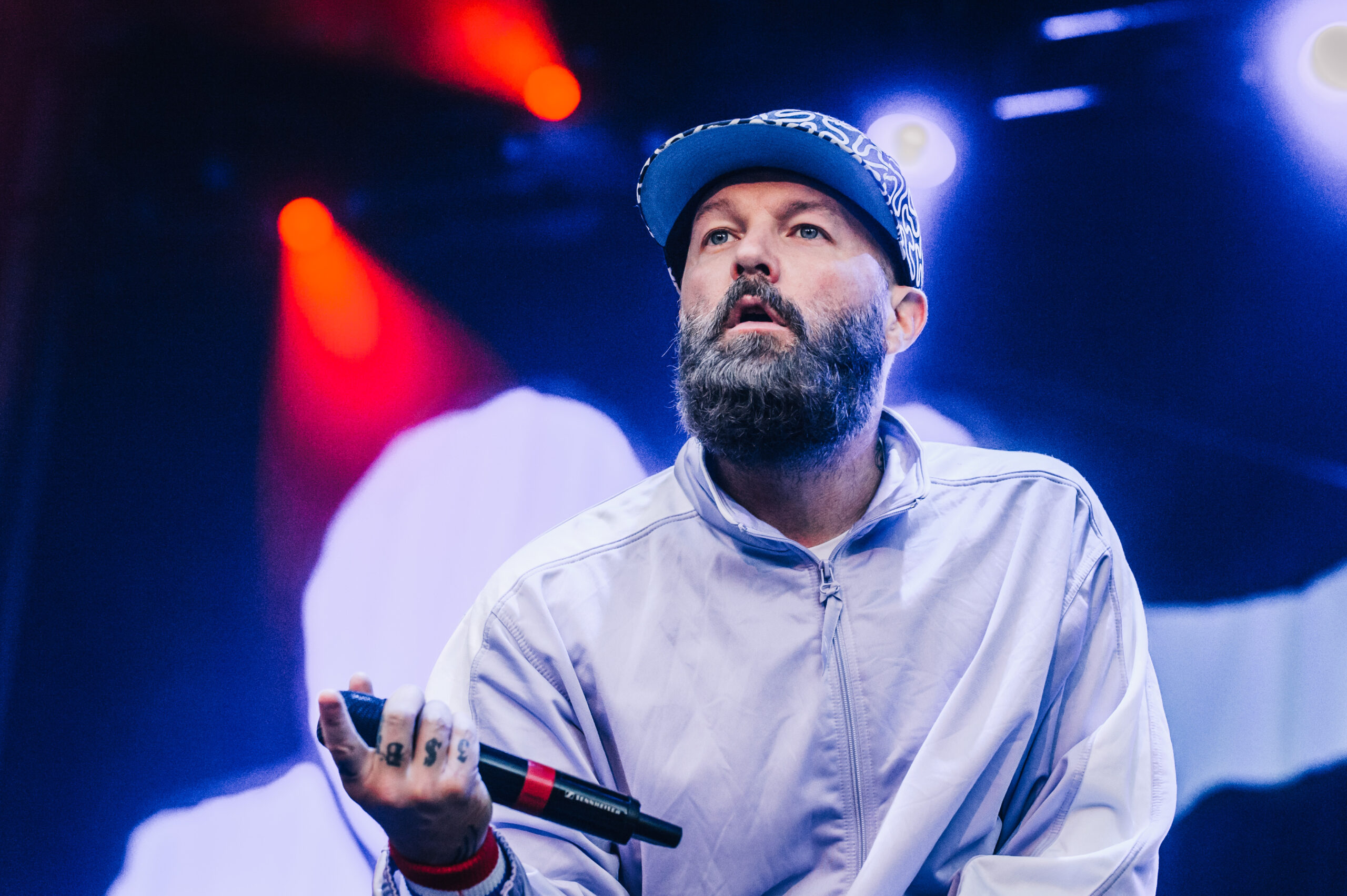
You’ve seen it a thousand times in grainy MTV clips and pixelated 90s thumbnails. A guy in a backwards red Yankees cap is leaning into a fisheye lens, knees bent, hands splayed out like he’s trying to catch the camera. It’s the fred durst nu metal pose.
It’s more than just a piece of stage choreography. For a generation of kids wearing JNCOs and chain wallets, it was a shorthand for a specific kind of raw, suburban angst. Honestly, it basically defined an entire aesthetic that most of us thought would stay buried in 2002. But here we are in 2026, and the "hands out" look is everywhere on social media again.
The Anatomy of the Classic Move
What actually makes the pose? It isn’t just standing there. You’ve got to get the "crouch" right. Fred Durst didn't just stand on stage; he existed in a perpetual state of ready-to-pounce tension.
The classic fred durst nu metal pose usually involves:
- A slight squat, as if you’re about to drop into a skate stance.
- Both hands shoved toward the viewer, fingers spread wide.
- A head tilt that frames the face between the arms.
- The "lucky" red cap, flipped backwards, pulled low.
It’s an aggressive posture. It’s "in your face," literally. When the band filmed the music video for "Nookie" in an alley in Long Island City back in 1999, this physical language was already fully formed. Durst, who actually directed many of Limp Bizkit's videos, knew exactly how to use the camera. By leaning into a wide-angle lens, he made himself look larger than life—like he was breaking out of the TV screen and into your living room.
Why Everyone Started Doing It
It wasn't just Fred. Bands like Korn, Slipknot, and Linkin Park all leaned into this visual style. Trend expert Jemaree Jay notes that the "hands out" gesture was often a way of forming a visceral connection with the audience. It’s an invitation and a confrontation at the same time.
Some fans argue it was about "reaching inside your mind." Nu metal was always obsessed with introspection and "inner demons." Pushing the hands toward the camera was a physical manifestation of that—trying to pull the viewer into the chaotic headspace of the song.
Others say it’s just skater culture. Durst was a skater. The way he stands in the fred durst nu metal pose mimics the balance and stance of someone on a board. When you mix that with the baggy "big shirt, big pants" fashion of the era, the silhouette becomes unmistakable.
That Red Hat: Not Just a Fashion Choice
We can't talk about the pose without talking about the hat. Specifically, the red 1996 New Era New York Yankees cap.
There’s a lot of lore here. Some people think it was a deep political statement or a complex brand deal. In reality, Durst has said in interviews that it was just his "good luck hat." He bought it, he liked it, and he wore it until it became a "clown costume" he couldn't take off.
Interestingly, the red Yankees hat itself has a cool history. Director Spike Lee actually requested the first red version from New Era for a photoshoot because he wanted something different. Once Fred started wearing it backwards while doing his signature crouch, it became the unofficial uniform of nu metal.
Durst eventually grew to have a complicated relationship with the look. He’s mentioned that seeing "bullies" in the front row wearing his red cap and beating people up "killed him." He felt like his lucky hat had been misinterpreted by the very people he was trying to rail against.
Why the Pose is Back in 2026
Nostalgia is a powerful drug. Gen Z has completely rediscovered the nu metal aesthetic. On platforms like TikTok, you’ll see influencers like Mad Kelly or creators like @krissdy3r rocking the spiky hair, the oversized tees, and—most importantly—the fred durst nu metal pose.
It works for the same reason it worked in 1999. It’s expressive. It looks good in a vertical video format. It captures a sense of "I don't care" energy that feels authentic in an era of over-polished content.
Whether you think it’s iconic or cringey, you can’t deny the impact. That specific way of standing, hands out, leaning into the chaos, told the world that rap and rock were officially married. And even as Durst has evolved—sporting "Dad Vibes" wigs or directing indie films—that pose remains the definitive image of the turn of the millennium.
How to Get the Look Right Today
If you’re trying to capture that Y2K energy for a shoot or just for the hell of it, remember it’s about the attitude, not just the clothes.
- Find the right angle: Low-angle shots are your friend. If you can use a 0.5x lens on your phone, even better.
- Master the crouch: Don’t just bend your knees; lean into the frame.
- The Hands: Don't be stiff. The hands should look like they are reaching for the lens, not just waving at it.
- Context matters: It’s a high-energy move. It doesn't really work if you're standing in a quiet coffee shop. You need that "guerrilla campaign" energy Durst talked about during the "Nookie" BTS.
The nu metal era was messy, loud, and sometimes embarrassing, but it was never boring. The pose is a reminder of a time when music was trying to be as loud and "in your face" as humanly possible.
Your Nu Metal Deep Dive
If you want to see the move in its purest form, go back and watch the "Break Stuff" or "Rollin'" videos. Pay attention to how the camera moves with the band. To really understand the vibe, you should check out some of the behind-the-scenes footage from the Significant Other recording sessions; it shows just how much that physical presence was baked into the band's identity from day one.