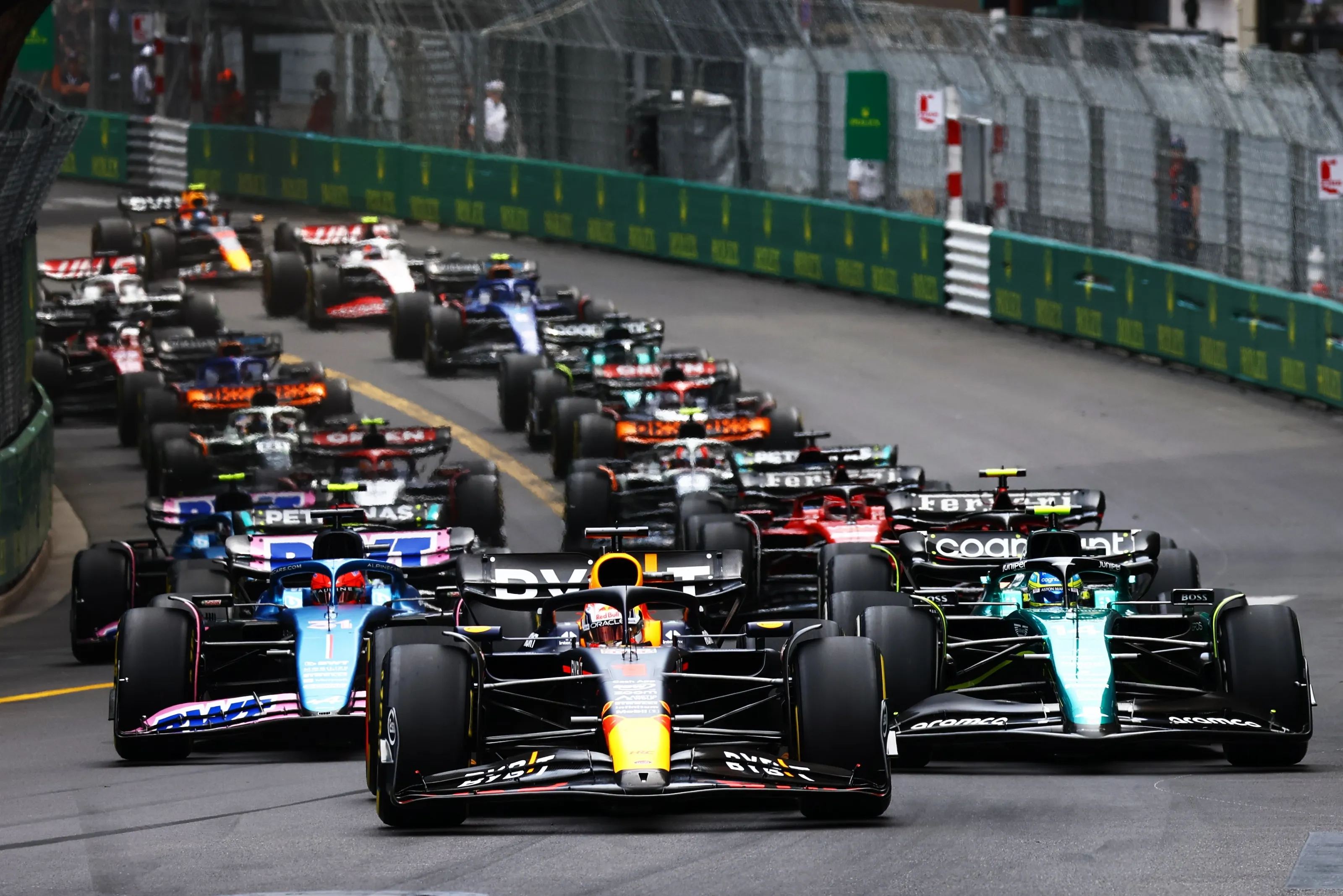
You’re sitting there, coffee in hand, staring at a blank TV screen because the race was supposed to start ten minutes ago. Or maybe you woke up at 4:00 AM only to realize the formation lap isn't for another hour. We’ve all been there. The grand prix start time is honestly one of the most frustrating things to nail down if you aren't checking the official FIA documents every single weekend. It’s not just about time zones. It’s about television contracts, "golden hours" for viewership, and the physical safety of drivers who can’t see the apex of a corner when the sun starts dipping too low in the sky.
Formula 1 isn't like a local soccer match that kicks off at 3:00 PM every Saturday. It’s a traveling circus.
The 10-Minute Shift That Annoyed Everyone
Remember back in 2018? Liberty Media, the owners of F1, decided to move the grand prix start time from the top of the hour to ten minutes past. The logic was actually kinda sound from a marketing perspective. They wanted the broadcasters to have ten minutes of "hype" time to show the grid, the celebrities, and the national anthems before the lights went out. They thought it would pull in more casual viewers who tuned in exactly at the hour mark.
It was a disaster for the purists.
Everyone hated it. Team engineers found the schedule awkward, and fans felt like they were just sitting through extra commercials. By 2021, they scrapped it. Now, races generally start right on the hour again, but that doesn't mean it's easy to track. If you're looking for the grand prix start time today, you have to account for the "European Standard." Most races held in Europe, like Silverstone or Spa, kick off at 3:00 PM local time. This hits the sweet spot for UK viewers at 2:00 PM and catches the East Coast of the US just as they're waking up.
Why Night Races Change the Math
When F1 heads to Singapore, Las Vegas, or Jeddah, the whole rulebook for scheduling gets tossed out the window. Singapore was the pioneer here. They realized that if they ran the race at 2:00 PM local time, nobody in Europe would see it because they’d be asleep or just starting their day. By moving the grand prix start time to 8:00 PM or later under the floodlights, they turned the event into a global spectacle.
Las Vegas took this to the absolute extreme.
In 2023 and 2024, the Las Vegas grand prix start time was set for 10:00 PM local on a Saturday night. Why? Because that’s 1:00 AM in New York and 6:00 AM in London. It was a logistical nightmare for the mechanics who were basically living on a nocturnal schedule, but for the "show," it was perfect. The cars looked incredible under the neon lights. But for the fans? If you lived in Europe, you were watching a "night race" over your Sunday morning breakfast. It’s weird. It’s jarring. But it’s how the money works.
The Shadow of the 2014 Japanese Grand Prix
Safety is the silent driver of the grand prix start time. We have to talk about Jules Bianchi. At the 2014 Japanese Grand Prix at Suzuka, the race start was heavily debated because of an approaching typhoon. The FIA wanted to start the race earlier to beat the worst of the rain and the fading light. However, the organizers reportedly resisted because they didn't want fans to miss out or the TV schedules to be ruined.
The race went ahead at the scheduled time. It rained. The light faded. Bianchi had a horrific accident that ultimately cost him his life.
Since then, the FIA has been much more aggressive. If there's a risk of losing light, they will move the grand prix start time up. They now have a "three-hour rule" as well. Once the race officially starts, the clock begins ticking. Even if there's a red flag for rain or a crash, the event must end within three hours of the start signal. This is why you sometimes see races end with only 75% of the laps completed. The sun doesn't wait for tire changes.
Breaking Down the Sprint Weekend Chaos
If you think Sunday is confusing, try figuring out Friday and Saturday. The "Sprint" format has completely scrambled the grand prix start time logic.
In a standard weekend, you have Practice 1 and 2 on Friday, Practice 3 and Qualifying on Saturday, and the Race on Sunday. Simple. But on a Sprint weekend? You get one practice session on Friday followed by Sprint Qualifying. Then Saturday has the Sprint Race followed by the actual Grand Prix Qualifying.
It’s easy to miss the start.
Most people don't realize that the Sprint race usually starts much earlier in the day than the main Grand Prix. For example, in Austin or Brazil, the Sprint might be at midday, while the main race on Sunday is mid-afternoon. If you tune in at the same time both days, you’re going to be looking at a replay or a podium ceremony you didn't want spoiled.
How to Actually Find the Correct Time Without Losing Your Mind
Stop using random "sports news" blogs that don't update their timezone converters. Seriously. They're often wrong by an hour because they forget about Daylight Savings Time transitions, which happen at different times in the US versus Europe.
- The F1 App: It’s actually decent. It syncs to your phone’s local clock automatically.
- The FIA Timing Documents: If you want to be a nerd about it, the FIA posts a "Full Event Schedule" PDF for every race. This is the holy grail. It lists everything down to when the pit lane opens and when the national anthem starts.
- Local Promoters: Sometimes, a track like Albert Park in Melbourne will push the grand prix start time later into the evening just to get better ratings in Europe, even if it means the drivers are squinting through a low-hanging sun.
The Sunset Problem at Interlagos and Abu Dhabi
Abu Dhabi is a "twilight" race. This means the grand prix start time is perfectly calibrated so the race begins in the orange glow of sunset and ends under total darkness. It's beautiful. But it’s a nightmare for the drivers' visors. They start with tinted visors to handle the glare and end up needing clear ones to see the track at 200 mph.
Interlagos in Brazil is another weird one. Because of the way the track is situated on a hill, the weather can change in six minutes. A 2:00 PM start might be bone dry, but a 3:00 PM start might be a monsoon. The organizers obsess over these 60-minute windows.
Actionable Tips for the Dedicated Fan
Don't let a timezone mistake ruin your weekend. Here is how you should handle your race weekend prep:
- Check the "Formation Lap" time, not the "Coverage" time. TV networks usually start their broadcast an hour before the actual grand prix start time. If the guide says 1:00 PM, the cars probably aren't moving until 2:00 PM.
- Account for the "Summer Time" gap. If you are in the US, remember that Europe changes their clocks on a different weekend than we do. This usually happens in late March and late October. For those two weeks, the "usual" time difference is off by an hour. This is how people miss the start of the Australian or Mexican Grand Prix every single year.
- Sync your digital calendar. There are several reputable third-party "F1 Calendar" sites that allow you to subscribe to a Google or Apple Calendar feed. These update in real-time if the FIA moves a session due to weather. It’s a lifesaver.
- Verify the format. Before the weekend starts, check if it's a Sprint weekend. If it is, your Saturday plans need to change because the "main" qualifying session—the one that decides the grid for Sunday—is often on Friday afternoon.
The grand prix start time is a moving target because F1 is a billion-dollar balancing act between safety, sunlight, and global TV ratings. It’s rarely about what’s best for the fans in the grandstands and almost always about what’s best for the person watching on a couch in a different hemisphere. Double-check your clocks, verify the "lights out" time specifically, and always give yourself a 15-minute buffer. You don't want to be the person frantically refreshing Twitter to see who crashed at Turn 1 while your TV is still showing a pre-race interview with a B-list celebrity.
Next Steps for Race Day:
Verify your local time zone against the official FIA "Event Timing" document located on their website. If you are attending in person, arrive at least three hours before the grand prix start time to clear security and catch the driver parade, which typically occurs two hours prior to the formation lap. Ensure your mobile device is set to "set automatically" for time zones if you are traveling across borders for a race, particularly in regions like Europe or the Middle East.