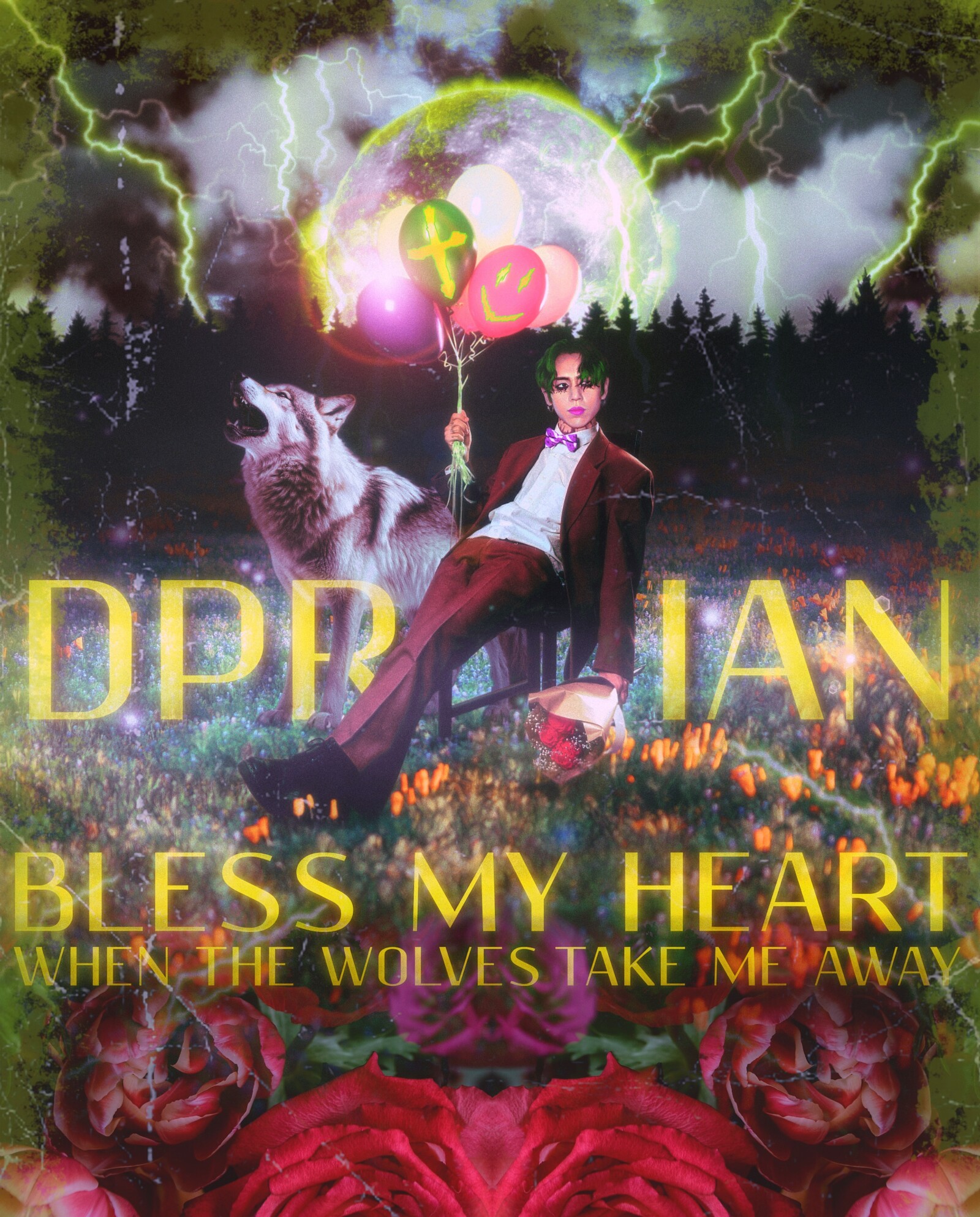
You’ve seen the dance. Maybe it was a 15-second clip on your TikTok feed or a gritty, cinematic edit on Instagram Reels. Christian Yu, better known as DPR IAN, leaning back with a manic grin, his hands moving in that sharp, hypnotic choreography while a funky, heavy bassline thumps in the background. It looks cool. It looks effortless.
But there is a lot more to dpr ian dont go insane than just a catchy hook and a viral challenge.
If you’re just scratching the surface of the DPR (Dream Perfect Regime) universe, you might be confused. Is he a K-pop idol? An indie director? A fictional character? Honestly, he’s a bit of all three, but "Don’t Go Insane" is the moment where his personal reality and his high-concept storytelling collided most violently.
The Story Behind the Madness
To understand this track, you have to talk about Mr. Insanity.
For years, Ian has built a complex narrative around his own experience with Bipolar 1 Disorder. He doesn’t just write lyrics about mood swings; he builds entire gods and monsters to represent them. In his earlier work, we met MITO, a one-eyed, black-winged entity representing his depressive lows.
dpr ian dont go insane is the centerpiece of the Dear Insanity… EP, which serves as a prequel to the MITO era. Here, we meet Mr. Insanity. Unlike the brooding, quiet MITO, Mr. Insanity is the personification of a manic high. He’s vibrant. He’s chaotic. He’s colorful, glittery, and terrifyingly fast-paced.
The song captures that exact moment when the "high" starts to sour. You can hear it in the production. It starts with a melancholy piano and the distant roll of thunder—a signature sound for Ian—before exploding into an upbeat, R&B-infused pop track. But the "up" feeling is deceptive.
Why the "Don't Go Insane" Visuals Hit Different
Ian doesn't just hire a director. He is the director. He writes, produces, and edits his own visuals, which is why the music video for "Don’t Go Insane" feels so cohesive.
The choreography, which sparked thousands of covers, isn't just for show. It’s meant to look jittery and slightly "off." He’s playing a character who is desperately trying to hold it together while his world literally falls apart.
Key elements you might have missed in the video:
- The Wolves: Throughout the song, you hear howls. Ian has often used wolves to symbolize the looming presence of a manic episode—something wild and uncontrollable that eventually catches up to you.
- The Ending: If you listen to the very end of the track, the music fades into a heavy, rhythmic bass paired with the sound of frantic breathing. It’s the sound of a panic attack. It’s the "comedown" from the mania the song just described.
- The Colors: While MITO’s world is monochrome (black and white), the "Don’t Go Insane" era is drenched in neon greens and purples. In the lore, green is the color of Mr. Insanity.
It’s Not Just "Lore"—It’s Real Life
The most compelling thing about dpr ian dont go insane is how vulnerable it actually is. In several interviews, including a notable sit-down with The Allison Hagendorf Show and SBS The Feed, Ian has been incredibly open about his mental health.
He’s admitted that he often deactivates his social media when he feels an episode coming on. Why? Because when he’s in that "Mr. Insanity" state, he feels invincible. He might post things he’ll regret later.
"Don't Go Insane" is a plea to himself. It’s the internal dialogue of someone who knows they are slipping into a state of mind that is both exhilarating and dangerous. When he sings, "I’m a saint, I’m no saint," or "I'm not sane," he’s blurring the lines between the "hero" he wants to be for his fans and the "villain" he feels like when his brain betrays him.
Breaking Down the Viral Success
Why did this song specifically blow up on social media months after the EP was released?
The "Don't Go Insane" dance challenge succeeded because it bridged the gap between the "K-pop aesthetic" and Western alternative R&B. It had the technical polish of an idol performance but the "cool factor" of an underground artist.
Fans weren’t just doing the dance; they were obsessing over the "MITO vs. Mr. Insanity" theories. It’s a rare case where the SEO-friendly "viral moment" actually led people to engage with a deeply complex, 1500-word-deep backstory about dissociative identity and bipolarity.
How to Experience the Lore Properly
If you're just getting into DPR IAN because of this song, don't stop here. The music is designed to be consumed in a specific order to understand the "cycle" Ian is describing.
- Start with "Moodswings In This Order" (MITO): This is the introduction to the "lows."
- Watch the "Dear Insanity..." short film: This provides the visual context for Mr. Insanity's birth.
- Listen to "Saint": This is where the newest character, "The Hybrid," is introduced—a mix of the high and the low that is even more volatile.
Ultimately, dpr ian dont go insane isn't just a TikTok trend. It’s a masterclass in how an artist can take their darkest, most personal struggles and turn them into a cinematic universe that resonates with millions. It’s loud, it’s groovy, and it’s deeply human.
To get the full impact of the track, watch the official music video with high-quality headphones. Pay attention to the sound design in the final 60 seconds. The transition from the funky bassline to the heavy, labored breathing is where the "story" truly lands, shifting from a danceable hit to a raw, audio-visual representation of a mental health crisis. Following the official DPR YouTube channel is the best way to keep up with the evolving MITO storyline as new chapters are released.