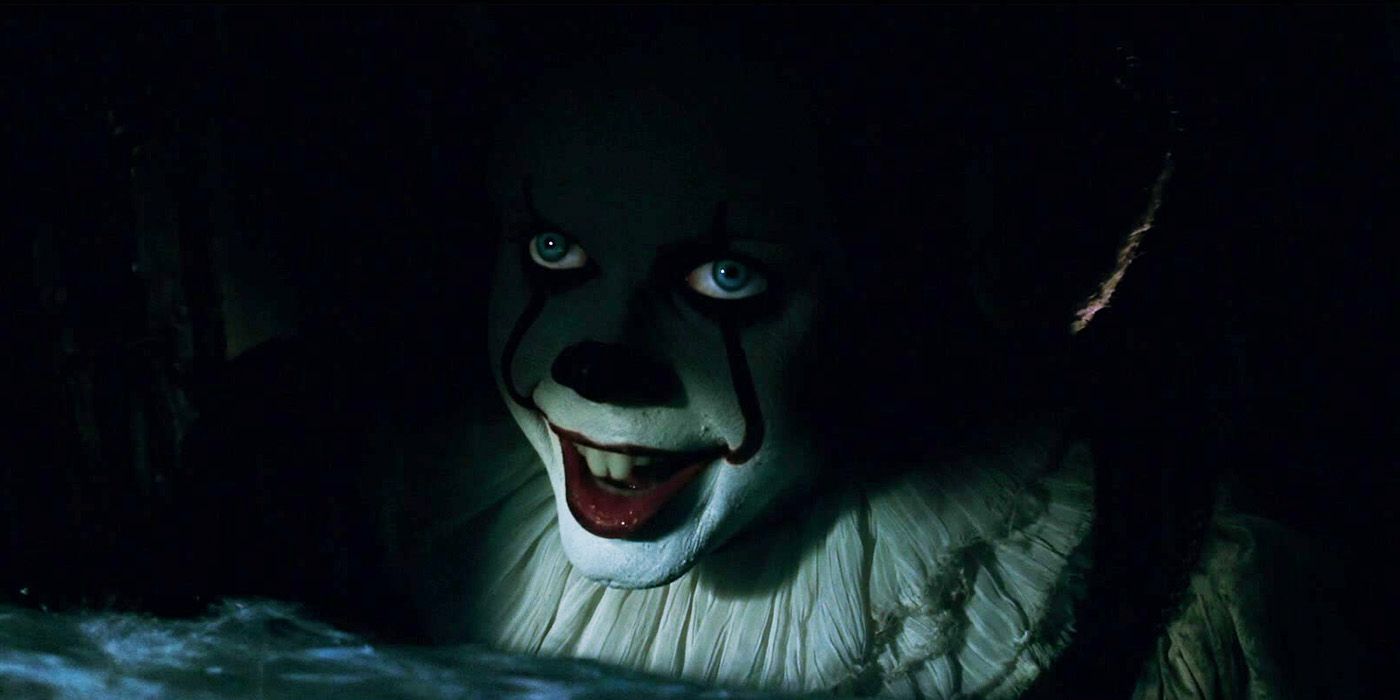
You remember the first time you saw it. That high-pitched, warbling voice coming from a sewer grate. The way one eye seemed to look at Georgie while the other stared directly into your soul. It was unsettling. It was "off." When Bill Skarsgård as Pennywise first hit the screen in 2017, the world didn’t just get a reboot; we got a masterclass in creature acting that basically redefined how we look at Stephen King’s greatest monster.
Honestly, people were skeptical at first. Replacing Tim Curry is like trying to replace a core memory. Curry’s 1990 performance was theatrical and loud. Skarsgård? He went for something ancestral. Something that feels like it’s been rotting under the streets of Derry since the dawn of time.
But here is the thing: a lot of what you think was "movie magic" or CGI was actually just Bill being weirdly talented at moving his face.
The "Biological" Horror of Bill Skarsgård as Pennywise
There’s a common misconception that the most terrifying parts of Pennywise’s face were cooked up in a computer lab. Nope. Director Andy Muschietti originally planned to use digital effects to make the clown’s eyes drift apart. He wanted that "chameleon" look where one eye stays on the prey and the other wanders.
When he told Skarsgård the plan, Bill just shrugged and said, "I can do that."
And he did. On command.
That walleyed stare that makes your skin crawl isn't a post-production trick. It’s a physical quirk Skarsgård has. He can literally disassociate his eyes. It’s a detail that adds a layer of "unnatural" to the character because your brain knows it’s seeing a real human face doing something humans shouldn't be able to do.
Then there’s the smile.
You know the one. That heavy, drooping lower lip that looks like a sharpened beak? Bill’s been doing that since he was a kid to scare his younger brothers. He calls it his "Swedish clown face." He didn't need a prosthetic lip to achieve that pointed, predatory grin. He just pulled his face into a shape that would make a plastic surgeon sweat.
Why the Drool Matters
If you watch IT Chapter One and IT Chapter Two closely, you'll notice Pennywise is constantly salivating. Like, a lot. It’s gross.
This wasn't just a choice to make him look "hungry." It was a side effect. The prosthetic teeth Skarsgård had to wear were so bulky and sat so far forward in his mouth that he literally couldn't swallow his own spit properly. Instead of fighting it, he leaned into it. He let the drool become part of the character’s "rabid dog" energy. It makes the clown look less like a guy in a suit and more like a biological entity that is physically vibrating with the urge to eat.
The Voice: Winnie the Pooh Meets a Chainsaw
Finding the voice for Bill Skarsgård as Pennywise was a process that almost drove the actor insane. He spent weeks driving around Los Angeles in his car, screaming and trying out different pitches.
Imagine being a pedestrian in LA and seeing a pale Swedish guy in a Volvo doing a demonic laugh at a red light.
He didn't want a standard "scary" voice. He wanted something that sounded like a facade breaking. The final result is this strange, breathy, high-pitched warble that occasionally cracks into a deep, guttural growl. It’s supposed to sound like the entity (the Deadlights) is trying its best to mimic a human voice but doesn't quite understand how lungs work.
Skarsgård worked with an opera coach to learn how to manipulate his diaphragm. He needed to be able to go from a whisper to a roar without shredding his vocal cords over a 14-hour shoot.
Behind the Scenes: Keeping the Kids Scared
Muschietti made a very specific executive decision during the filming of the first movie: he kept the kids away from Bill.
The "Losers Club" cast—Finn Wolfhard, Sophia Lillis, Jaeden Martell, and the others—spent weeks filming their scenes together. They bonded. They became best friends. But they never saw Pennywise. They didn't see the makeup tests. They didn't see Bill in his trailer.
The first time they actually interacted with him was during the "Slide Projector" scene and the "Well House" confrontation.
When Bill finally stepped out in the full 18th-century silk costume, standing 6'4" (and even taller with the platform shoes), some of the younger actors were legitimately terrified. Jack Dylan Grazer, who played Eddie, was reportedly fascinated, but others were visibly shaken.
Bill felt bad about it.
He’s a nice guy. Between takes, he would stay in the makeup but try to talk to them in his normal Swedish accent to remind them he was just an actor. But then the cameras would roll, and he’d go right back into the twitching, drooling monster. Talk about emotional whiplash.
The Prequel: Welcome to Derry
If you thought we were done with this version of the clown, you’re wrong. As of 2025 and 2026, the story is continuing with the HBO series It: Welcome to Derry.
Initially, there was a lot of back-and-forth about whether Skarsgård would even come back. He’s gone on record saying how "exhausting" the role is. It’s not just the two and a half hours in the makeup chair; it’s the physical toll of contorting his body and screaming for months on end.
But he’s back.
This time, as an executive producer too. The prequel explores the 1960s cycle of Pennywise’s return and the origins of the curse. Reports from the set suggest that Skarsgård is pushing the "physicality" even further. We’re seeing a version of the clown that is slightly less "refined" than the one in the movies—more feral, more experimental.
How to Appreciate the Performance
To really get why this performance works, you have to look past the jump scares. Skarsgård isn't just playing a clown. He’s playing an Eldritch god who is bad at being a clown.
- Watch the eyes: Notice when they move independently. It usually happens right before he strikes.
- Listen for the "Click": There’s a clicking sound Skarsgård makes with his tongue. It’s a predatory trait, like a dolphin using sonar but much more murdery.
- Look at the hands: He uses "balletic" movements. His fingers are often splayed in weird, elongated positions to make his limbs look longer than they are.
Actionable Insight for Horror Fans
If you want to dive deeper into the lore that fueled Bill’s performance, don't just re-watch the movies. Read the "Smoke Hole" chapter in King’s original novel. It explains the "Macroverse" and the "Deadlights." When you understand that Pennywise is actually a massive, interdimensional spider-thing that just pretends to be a clown to lure kids, Skarsgård’s weird, twitchy, non-human movements make a lot more sense.
The performance isn't just about being "scary." It’s about being "alien." And that is exactly why Bill Skarsgård as Pennywise will be talked about alongside icons like Freddy Krueger and Michael Myers for the next fifty years.
He didn't just play a monster; he created a new way for us to be afraid of the dark. Now, if you'll excuse me, I’m going to stay far away from any storm drains for the foreseeable future.