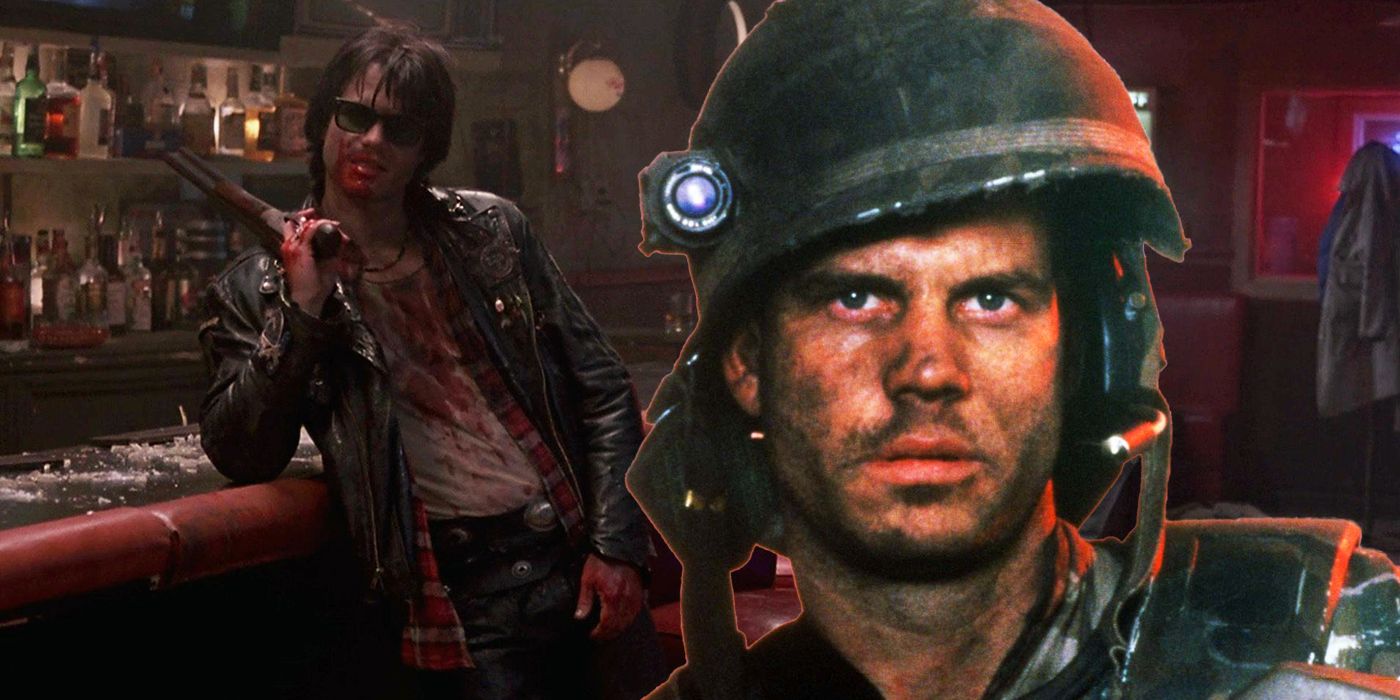
Let's be real for a second. Most movie vampires are kind of a drag. They're usually these moping, aristocratic dudes in velvet capes who spend a hundred years crying over a lost love while playing the piano in a drafty castle. It’s a bit much.
But then there’s Bill Paxton. Specifically, Bill Paxton in 1987’s Near Dark.
If you’ve seen it, you know exactly what I’m talking about. If you haven't, you've missed out on the most unhinged, charismatic, and genuinely terrifying performance in the history of the genre. Paxton didn't play a vampire; he played a "Severen." He was a grease-stained, leather-clad, spur-wearing nightmare who treated immortality like a never-ending bender at a roadside dive bar.
The Aliens Reunion You Forgot About
It’s wild to think about now, but Near Dark was basically a family reunion for the cast of Aliens. James Cameron and Kathryn Bigelow were dating at the time (they’d later marry), and Bigelow basically poached half of Cameron's Colonial Marines. You’ve got Lance Henriksen as the weary patriarch Jesse, Jenette Goldstein as the fierce Diamondback, and of course, Bill Paxton.
In Aliens, Paxton was Hudson—the guy who was "ultimate badass" until the floor fell out, giving us the legendary "Game over, man!" energy.
In Bill Paxton Near Dark, that energy gets weaponized. Severen isn't scared of anything. He’s the guy who would look at a Xenomorph and ask it if it wanted to go get a beer.
There’s a great story from the set that Paxton and Henriksen used to tell. They’d be driving around in full, gory vampire makeup between night shoots and pull up next to random cars at stoplights. Paxton, with half his face looking like it had been shredded, would just stare at the drivers until they started to freak out. Then Henriksen would lean over and say, "If you think he looks bad, you should see the other guy."
That's the vibe they brought to the movie. They weren't actors playing monsters; they were a pack of wolves having the time of their lives.
That Bar Scene: A Lesson in Chaos
If you want to understand why Bill Paxton Near Dark is such a specific, high-water mark for 80s horror, you only need to watch the bar scene. It’s about 12 minutes of pure, sustained tension that explodes into a one-sided massacre.
Severen enters this "shit-kicker heaven" and immediately starts messing with the locals. He isn't using mind control or turning into a bat. He’s just a bully with a supernatural edge. He jumps up on the bar, spurs jangling, and starts kicking shot glasses off the counter like a cat that’s bored and wants to watch something break.
Then he does the thing.
He slashes a man's throat using the razor-sharp spur on his boot. It’s brutal. It’s messy. And the whole time, Paxton is grinning like he just won the lottery. He even licks the blood off the bar. It sounds gross—and it is—but Paxton makes it feel like Severen is just a guy enjoying a particularly good steak.
Honestly, the dialogue in this movie is top-tier 80s grit. When the new kid, Caleb, asks what’s going on, Severen hits him with: "It ain't what's goin' on, son. It's what's comin' off. Your face. Clean off." He’s having a blast. That’s the secret sauce. Most vampires act like being immortal is a heavy burden. Severen treats it like he’s got a VIP pass to a riot.
The Cowboy Vampire Aesthetic
Kathryn Bigelow and co-writer Eric Red (the guy who wrote The Hitcher) didn't actually want to make a vampire movie. They wanted to make a Western. But Westerns were box-office poison in the mid-80s. So they slapped some fangs on it—well, actually, they didn't.
Notice something if you watch it again: nobody ever says the word "vampire." There are no fangs. No crosses. No holy water.
Severen is a creature of pure id. To get into the headspace, Paxton reportedly read Anne Rice's Vampire Chronicles, but he also mixed in a heavy dose of Jim Morrison. He wanted that rockstar-on-the-edge-of-oblivion feel. He wore silver rings, a beat-up leather jacket held together with duct tape, and a bolo tie. He looked like a drifter who had been kicked out of every trailer park in the Southwest.
It's a "Bonnie & Clyde" story, but with more fire and less pulse.
Why it Flopped (and Why We Care Now)
Near Dark came out in 1987, the same year as The Lost Boys.
Joel Schumacher’s movie had the "Coreys," it had a killer soundtrack, and it had a massive marketing budget. It was MTV-ready. Near Dark was the grimy, R-rated stepchild that nobody knew how to sell. It bombed.
But here’s the thing: The Lost Boys feels very "1987." It’s a time capsule. Bill Paxton Near Dark feels like it could have been shot yesterday. The Tangerine Dream score gives it this hazy, neon-noir dreaminess that hasn't aged a day.
And then there’s Paxton’s ending. No spoilers if you’re a first-timer, but it involves a stolen truck and a very literal "baptism of fire." It’s one of the few times a movie villain goes out in a way that feels both earned and spectacular.
How to Experience Near Dark Today
If you’re looking to dive into this era of Paxton’s career, you've got to be a bit of a sleuth. Because of rights issues, Near Dark is notoriously hard to find on major streaming platforms. It pops up on YouTube or Shudder occasionally, but if you see a physical Blu-ray or 4K copy, grab it. It's a collector's item for a reason.
What to do next:
- Watch the "Bar Scene" on YouTube. Even if you don't have time for the full movie, watch those 12 minutes. Pay attention to how Paxton uses his eyes—he never stops hunting.
- Pair it with "Aliens." Watch them back-to-back. Seeing Paxton go from the panicked Hudson to the predatory Severen in the span of a year is a masterclass in range.
- Listen to the Score. Find the Tangerine Dream soundtrack on Spotify. It’s perfect driving music for late-night highway trips.
Bill Paxton was a legend for a lot of reasons—Twister, Apollo 13, Titanic—but Severen was where he showed us he could be truly dangerous. He took a tired monster trope and gave it a leather jacket and a middle finger. That’s why we’re still talking about it nearly 40 years later.