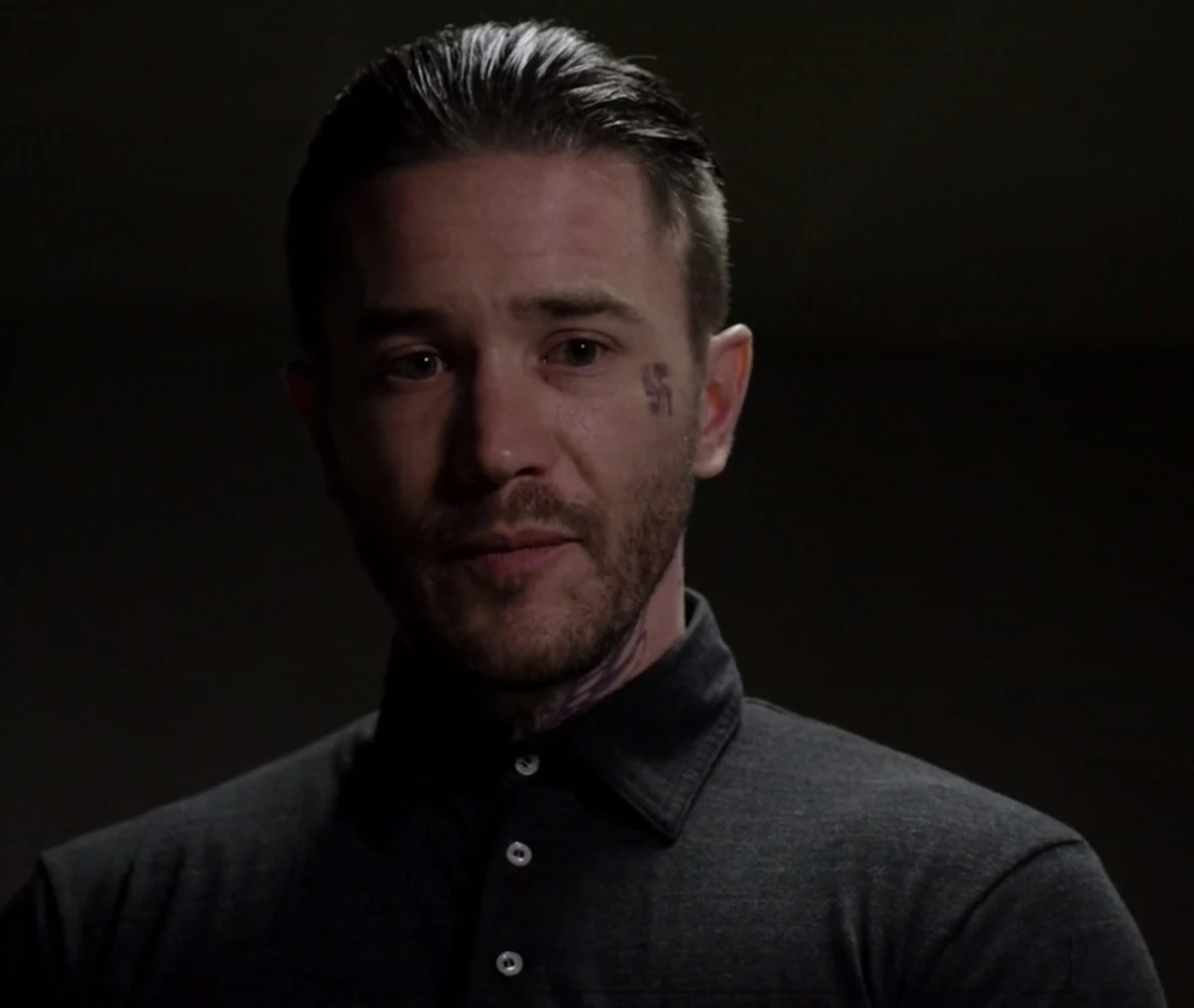
Most shows would treat a guy covered in swastikas as a throwaway villain or a one-note monster. In the Banshee TV show Kurt Bunker didn't start that way, and he certainly didn't end that way. When he first walked into the Banshee Sheriff’s Department (BSD), looking for a job while covered in white supremacist ink, most of us probably thought, "Oh, here we go. Another psycho for Lucas Hood to punch."
But then the show did something weird. It made us care.
Honestly, Kurt Bunker is probably the most layered character in the entire series, and that’s saying something for a show where the lead is a diamond thief pretending to be a cop. Played with raw, vibrating intensity by Tom Pelphrey, Bunker became the soul of the later seasons. He wasn't just a reformed neo-Nazi; he was a guy who was actively, painfully trying to claw his way out of hell every single day.
Why the Banshee TV show Kurt Bunker Arc Hits Different
Bunker wasn't born hateful. Like a lot of kids in real-world extremist pipelines, he was groomed. He grew up in an abusive house where his father beat him. Then came "Tank," a guy who offered protection and a sense of belonging. The cost? His soul and a skin full of hate-filled tattoos.
By the time we meet him in Season 3, he’s done. He’s left the movement, but the movement hasn't left him. He literally tries to burn the tattoos off his chest with a blowtorch because he can't stand looking at them. It’s brutal. It's hard to watch. But it tells you everything you need to know about his desperation for redemption.
The Siege at the Cadi
The moment Bunker really cemented his place was during the Redbone attack on the sheriff's station. While everyone else was scrambling, Bunker stood his ground. He didn't just fight; he protected the civilians. He proved to Lucas Hood—and to the audience—that he wasn't just a guy with a past; he was a guy with a purpose.
Hood eventually gives him the badge, which is kinda poetic. One guy is pretending to be a cop to hide his crimes, and the other is becoming a cop to atone for his. It's a messy, beautiful dynamic.
The Brotherly Feud: Kurt vs. Calvin
If Kurt is the light trying to break through, his brother Calvin (Chris Coy) is the darkness that refuses to let go. This is where the Banshee TV show Kurt Bunker storyline gets truly tragic. Kurt actually brought Calvin into the Brotherhood. He feels responsible for the monster his brother became.
Watching them interact in Season 4 is like watching a slow-motion car crash. Calvin is pure, unadulterated rage. He’s the leader of the local Brotherhood chapter, and he views Kurt’s "betrayal" as the ultimate sin.
The conflict isn't just ideological; it's personal. Kurt ends up having an affair with Calvin’s wife, Maggie. Now, before you judge, remember that Calvin was an abusive nightmare. Kurt was trying to save her and her son, Hank, from the same cycle of violence that ruined his own life.
That Final Fight
The showdown between the two brothers in the series finale is one of the grittiest brawls in the show's history. It isn't a "cool" action scene. It’s clumsy, emotional, and devastating. When Kurt eventually kills Calvin, he isn't cheering. He’s broken. He had to kill the only family he had left to stop the cycle.
How Tom Pelphrey Stole the Show
You can't talk about Kurt Bunker without mentioning Pelphrey. Before he was blowing everyone's minds in Ozark as Ben Davis, he was putting in masterclass work here. To prepare for the role, Pelphrey actually researched the neo-Nazi movement and started lifting heavy to get that "brawler" physique.
But it’s his voice work that really lands. He has this way of speaking—soft, controlled, but with a slight tremor—that makes you feel like he's always one second away from a breakdown. He told interviewers back then that he saw Bunker as a "boiling pot of water." The lid is on, but the pressure is insane.
What Most People Miss About Bunker
A lot of fans argue that Bunker was introduced too late. He only showed up in the tail end of Season 3. But honestly? The timing worked. By that point, the show was getting incredibly dark, and we needed a character who actually believed in the badge.
Think about it. Brock Lotus is the only "real" cop left, and even he's jaded. Bunker brings this almost naive devotion to the law because, for him, the law is the only thing keeping him from becoming a murderer again.
Key Lessons from the Bunker Narrative
- Redemption is a verb: It's not something you achieve; it's something you do every day.
- The past is permanent, but your reaction to it isn't: He couldn't erase the tattoos, but he could change what they meant.
- Trauma cycles are real: Bunker’s struggle to keep young Hank away from Calvin was the emotional heart of the final season.
If you're looking for a blueprint on how to write a "reformed villain," this is it. Bunker isn't forgiven by the town. He isn't suddenly "cured" of his anger. He just chooses, every single morning, to be better than he was yesterday.
For fans wanting to revisit the best of Bunker, start with Season 3, Episode 5 ("Tribal"). It’s the siege at the Cadi and contains his best character work. Then, jump to the Season 4 finale to see the tragic conclusion of the Brotherhood storyline. It's a heavy watch, but for anyone who likes their action with a side of deep psychological trauma, it’s the gold standard.