It is hard to believe that we have been cringing at Alan Partridge for over thirty years. That is a long time to spend with a man who once wore a thong made of sports-casual fabric and managed to get his foot impaled on a spiked fence while trying to climb into a country estate. But that’s the magic of the Alan Partridge TV series; it is a masterclass in the slow-motion car crash of the human ego. Most sitcom characters evolve or find some sort of peace, but Alan? He just finds new ways to fail.
Honestly, if you look back at the early nineties, nobody expected a sports reporter from a spoof radio show called On the Hour to become a national institution. He was just a voice—a panicked, ill-informed voice desperate to sound authoritative. When Steve Coogan brought him to television, he didn't just create a character; he created a personality disorder that millions of us recognize in our bosses, our uncles, and, if we are being painfully honest, ourselves.
The Evolution of the Alan Partridge TV series
The journey started properly with Knowing Me, Knowing You. It was a pitch-perfect parody of the vacuous chat shows that dominated the era. You had the set that looked like a neon fever dream and the house band, Glenn Ponder and Chalet. Alan wasn't just a bad host; he was a dangerous one. He accidentally shot a guest. He punched a child. He offended entire nations. It was brilliant because it captured that specific brand of 1990s celebrity desperation.
Then everything changed.
The "fall from grace" era gave us I’m Alan Partridge. This is arguably the peak of the Alan Partridge TV series canon. Alan is divorced, living in a travel tavern, and reduced to hosting the early morning slot on Radio Norwich. "King of Anglian Air" he calls himself, while eating a "break-fast" that includes a kidney. The shift from the glossy chat show studio to the damp, beige reality of a roadside hotel was a stroke of genius by writers Peter Baynham, Armando Iannucci, and Coogan himself. It turned a caricature into a three-dimensional tragic figure.
You’ve got to admire the commitment to the mundane. While other comedies were chasing big high-concept plots, Partridge was arguing about whether a Lexi (the plural of Lexus) is better than a Ford Mondeo. Or he was trying to impress a disinterested executive from the BBC, Tony Hayers, with pitches like "Monkey Tennis" and "Youth Hostelling with Chris Akabusi." We’ve all been in that position—desperately selling an idea to someone who clearly hates us. That’s why it hits so hard.
From the Travel Tavern to the Digital Age
After a long hiatus, many thought the character was done. The 2002 second series of I’m Alan Partridge was polarizing. Some loved the increased absurdity—the giant shoes, the Bond marathon, the breakdown involving a distracted driving incident—while others felt it was getting a bit too "cartoonish." But Alan is a survivor. He transitioned to the web with Mid Morning Matters, which took a fly-on-the-wall approach.
The format was simple: a fixed camera in a radio studio. It stripped away the laugh track and the slapstick, focusing instead on the excruciating minutiae of local radio. Sidekick Simon (played by Tim Key) provided the perfect foil—a man who clearly found Alan pathetic but was stuck in the same orbit. This era proved that the Alan Partridge TV series format could adapt to any medium because the core of the character—the insecurity—is timeless.
Why Alan Partridge is the Ultimate British Anti-Hero
What is it about a small-minded, pedantic, and often casually bigoted man that we find so endearing? It’s not that we agree with him. It’s that we recognize the struggle. Alan represents the "Little Englander" who is terrified of a changing world. He’s obsessed with status symbols that don't matter. He wants to be part of the "Top Gear" crowd, but he’s stuck in a bungalow in Hemsby.
- The Language of Alan: He speaks in a very specific way. He uses corporate jargon incorrectly. He tries to sound sophisticated but ends up saying things like "it’s sa-sad, isn't it?" or referring to a lady as a "lady-person."
- The Physicality: Steve Coogan’s performance is subtle. It’s in the way he adjusts his tie when he’s nervous or the way his voice goes up an octave when he’s being challenged.
- The Pathos: Every now and then, you feel for him. When he’s alone in his room, singing the theme to The Spy Who Loved Me while pretending to be an international man of mystery, it’s heartbreaking. Sorta.
The Modern Era: This Time and Beyond
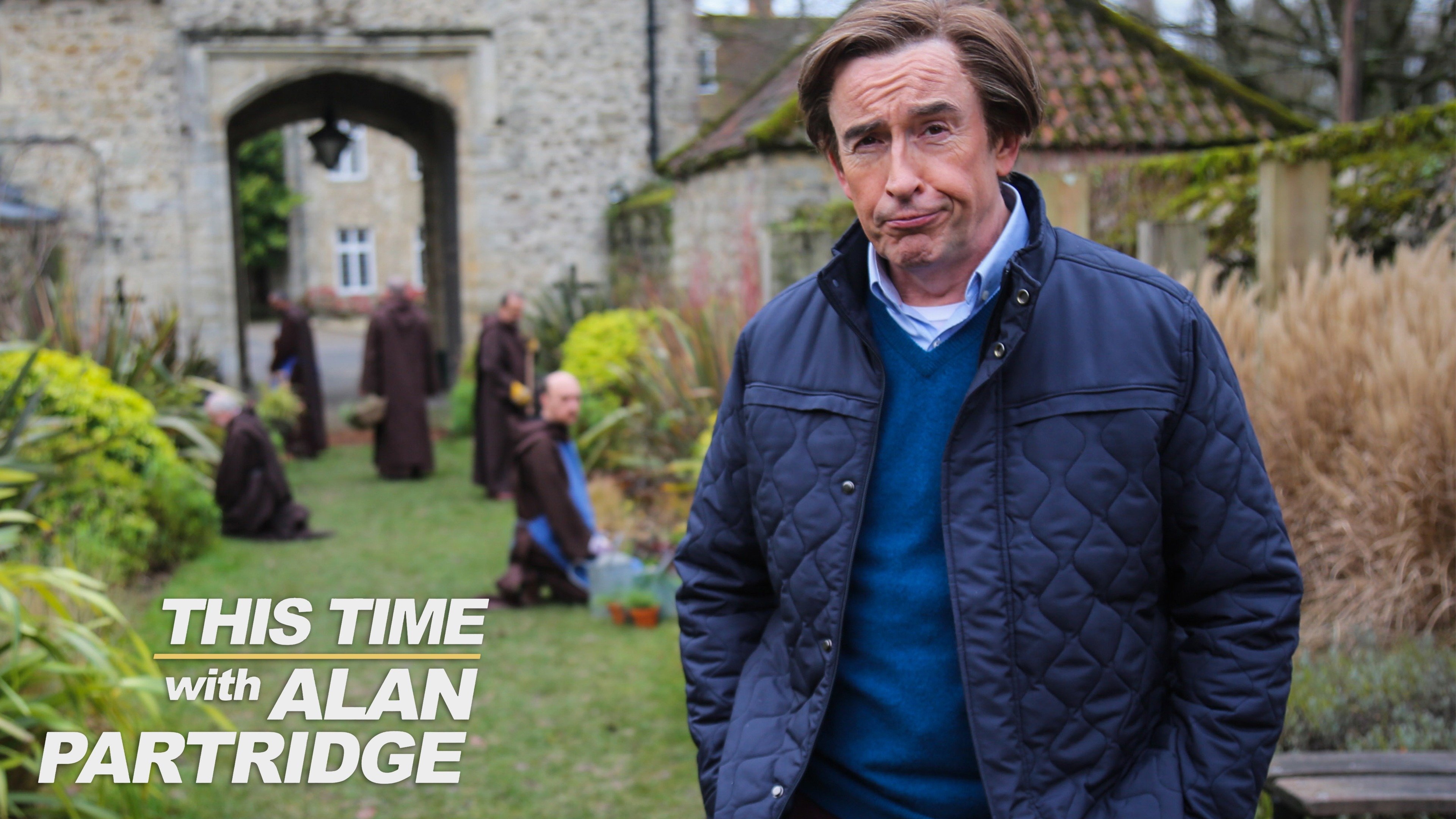
The recent return to the BBC with This Time with Alan Partridge was a risky move. It brought Alan back into the big leagues, co-hosting a One Show-style magazine program. It worked because it weaponized the modern "cancel culture" anxiety. Alan is terrified of saying the wrong thing, yet he almost always says the wrong thing. He’s a relic of the past trying to navigate a world of hashtags and social consciousness.
The chemistry with his co-host Jennie Gresham (Susannah Fielding) is electric. She represents the professional, competent broadcaster that Alan thinks he is. Watching her mask her utter contempt for him while the cameras are rolling is one of the highlights of the modern Alan Partridge TV series. It’s a different kind of cringe—more polished, more corporate, but just as painful to watch.
The Supporting Cast that Makes the World Real
You can’t talk about Alan without talking about Lynn Benfield. Felicity Montagu’s portrayal of Alan’s long-suffering assistant is the backbone of the show. She is the only person who truly cares for him, yet he treats her with a mix of dismissal and mild disgust. Their relationship is one of the most complex in British comedy. Then there’s Michael, the Geordie handyman and veteran. Their friendship is built on mutual misunderstanding. Alan can’t understand Michael’s accent or his trauma, but he needs him because Michael is the only person "below" him on the social ladder.
How to Watch the Alan Partridge TV Series in Order
If you are a newcomer, don’t just dive into the latest stuff. You need to see the descent.
- Knowing Me, Knowing You (1994): See him at his "peak" before it all goes wrong.
- I’m Alan Partridge Series 1 (1997): The definitive sitcom experience. The travel tavern years.
- I’m Alan Partridge Series 2 (2002): The "static home" years. More bombastic, more aggressive.
- Mid Morning Matters (2010-2016): Pure, distilled character study.
- This Time with Alan Partridge (2019-2021): The return to the spotlight.
There are also the specials, like Welcome to the Places of My Life, where Alan does a mockumentary about Norfolk. It’s essential viewing for understanding his warped pride in his home county. And of course, the film Alpha Papa, which managed the rare feat of taking a TV character to the big screen without losing the essence of what made him funny.
The Enduring Legacy of Partridge
Why does this character still work in 2026? Because the "Partridge-esque" figure hasn't gone away; they’ve just moved to LinkedIn and YouTube. We see "Alans" every day—people who are desperate to be seen as thought leaders while having absolutely nothing of substance to say. The Alan Partridge TV series remains relevant because it lampoons the very human desire to be important.
Coogan has often said he tried to kill the character off, but he keeps coming back. There is something addictive about writing for a man who has no self-awareness. It allows for a level of honesty that you don't get with more "likable" characters. Alan says the things we think but are too polite to say, usually at the worst possible moment.
Actionable Ways to Appreciate the Genius
To truly get the most out of the Partridge universe, you have to look past the catchphrases. "A-ha!" is iconic, but it’s the least interesting thing about him.
- Listen to the Audiobooks: I, Partridge: We Need to Talk About Alan and Nomad are perhaps the funniest things Coogan has ever done. Hearing Alan narrate his own life story adds layers of delusion that the TV show can only hint at.
- Watch the background: In the TV series, the set design is doing a lot of heavy lifting. Look at the books on his shelf or the way he decorates his room. It tells you everything about his inner vacuum.
- Study the pauses: The comedy in Partridge often happens in the silence after he says something horrific. It’s the look of realization on his face as he tries to backtrack.
The Alan Partridge TV series isn't just a collection of jokes. It is an accidental sociological study of a specific type of British masculinity. It’s awkward, it’s petty, and it’s occasionally very loud. But it is also, consistently, the funniest thing on television.
To start your journey or refresh your memory, begin with I'm Alan Partridge Season 1, Episode 1 ("A Room with an Audience"). Pay close attention to the meeting with Tony Hayers. It is a perfect five-minute masterclass in how to destroy a career through sheer desperation. From there, move to the audiobooks to hear the internal monologue that drives the madness. This provides the necessary context for the later, more subtle performances in This Time. Understanding the "history" of his failures makes his modern-day "successes" much more precarious and entertaining to witness.